Office Cleaning Schedule Planner
Select an area of your office to see the recommended professional cleaning frequency and the specific tasks required to maintain a healthy workspace.
General Workspace Maintenance
Daily Tasks:
- Empty waste and recycling bins
- Vacuum carpets and mop hard floors
- Sanitize high-touch points (doorknobs, elevator panels)
- Wipe reception desks and entryways
Weekly Tasks:
- Detailed dusting of shelves and vents
- Glass partition polishing
- Edge vacuuming (corners and baseboards)
Kitchen & Breakroom Hygiene
Required Actions:
- Apply degreasers to stoves and microwave exteriors
- Abrasive scrubbing of sink areas to remove bacterial biofilms
- Sanitize coffee machine handles and microwave buttons
- Clear old food from fridges to avoid odors and pests
Restroom Sterilization
Daily Requirements:
- Use caustic cleaners for toilets/urinals (remove limescale/uric acid)
- Heavy-duty disinfectant mopping of floors
- Polish mirrors to remove splashes
- Restock consumables (soap, paper towels, toilet paper)
Technology & Hardware Care
Safe Cleaning Methods:
- Apply Isopropyl Alcohol to microfibre cloths for keyboards/mice
- Use compressed air to clear dust from server/CPU cooling fans
- Wipe monitors with specialized non-abrasive cloths
- Focus on removing skin oils from high-use peripheral devices
Quarterly/Deep Cleaning
Restorative Tasks:
- Carpet Steam Cleaning: Hot water extraction to remove deep pollutants
- Exterior Windows: Professional water-fed pole system cleaning
- High-Reach Dusting: Clearing ceiling vents and top-of-cabinet grime
- Upholstery Refresh: Deep cleaning of office chairs and fabric sofas
*Schedule these tasks after hours or on weekends to avoid business disruption.
Walking into a workspace that smells fresh and looks spotless doesn't just make a company look good-it actually changes how people work. Most people assume cleaning a business is just like cleaning a house but with bigger vacuum cleaners, but that's a mistake. A professional office cleaning setup is a strategic operation designed to stop germs from spreading, protect expensive electronics, and keep employees from calling in sick every other Monday.
Key Takeaways for a Clean Workspace
- Daily maintenance prevents grime buildup and maintains a professional image.
- High-touch points (doorknobs, keyboards) require specific disinfection protocols.
- Deep cleaning tasks, like carpet steaming, must be scheduled to avoid business disruption.
- Proper waste management includes separating recyclables and hazardous electronic waste.
- Air quality depends on frequent dusting and vacuuming to remove allergens.
The Daily Basics: Keeping the Momentum
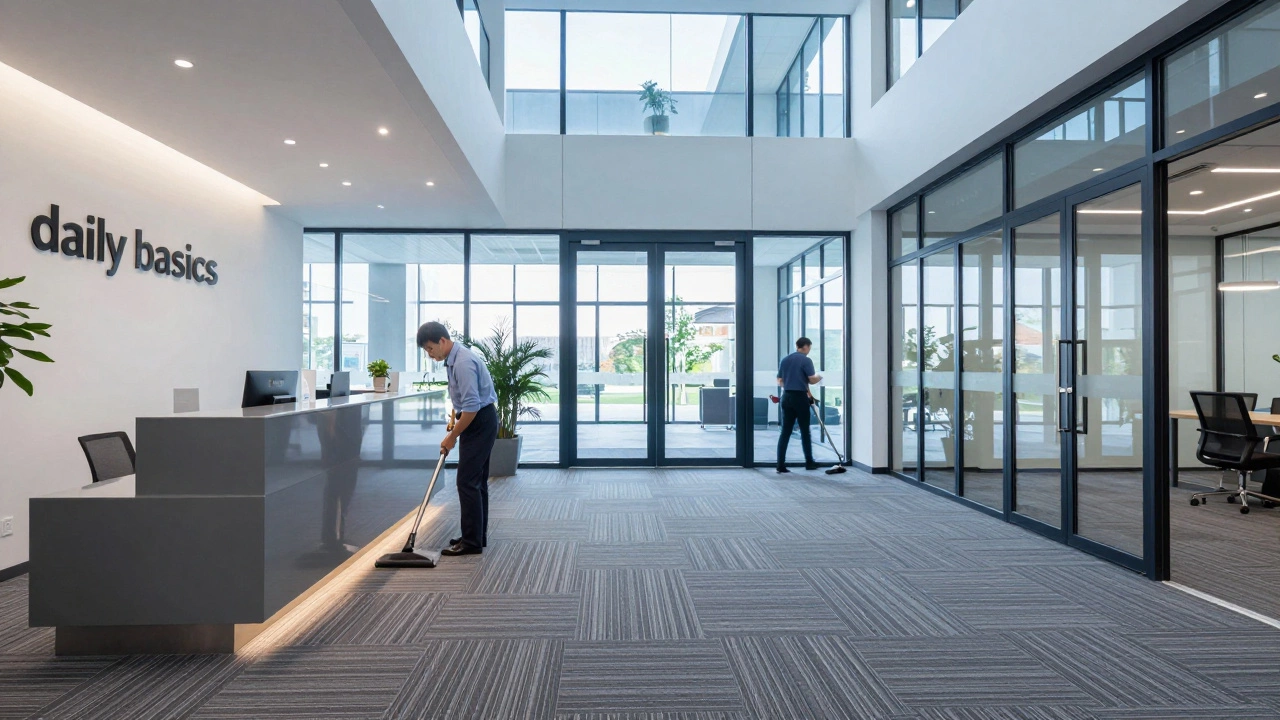
The goal of daily cleaning isn't perfection; it's consistency. If you let the dust settle for a week, you're not just cleaning dust anymore-you're scrubbing bonded grime. Most professional services focus on the "visual" areas first. This means emptying waste bins, wiping down reception desks, and ensuring the entryway is free of footprints.
One often overlooked part of the daily routine is the High-Touch Point Disinfection is the process of sanitizing surfaces that are touched by multiple people throughout the day to break the chain of infection . Think about the coffee machine handle, the microwave button, or the elevator panel. These are hotspots for bacteria. Using a microfibre cloth and a hospital-grade disinfectant ensures that a cold sweeping through the office doesn't turn into a full-blown epidemic.
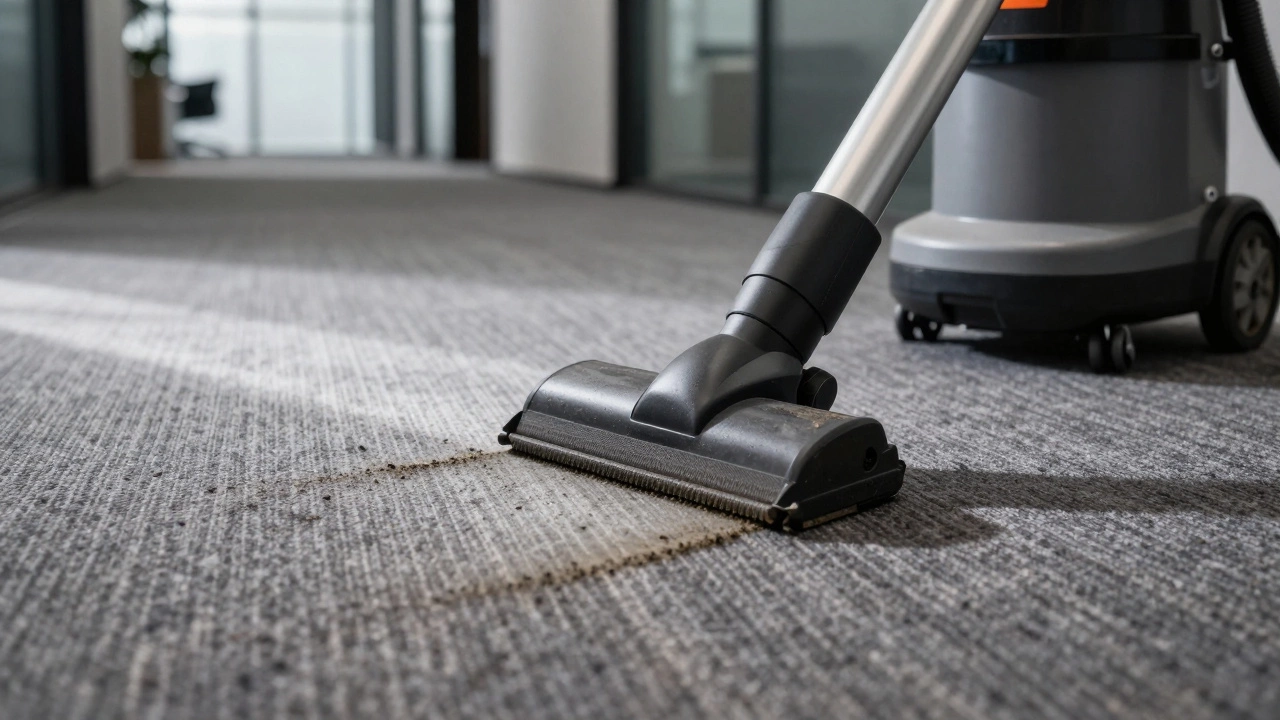
Floor care is also a daily battle. In a busy office, dirt is tracked in from the street every single minute. A quick vacuum of the carpets and a damp mop of the hard floors keep the environment looking sharp and prevent dirt from being ground into the flooring material, which would permanently damage the assets.
The Heavy Lifting: Deep Cleaning Tasks
Daily wipes aren't enough. Every office needs a schedule for "deep cleans"-tasks that take too long or are too disruptive to do while employees are at their desks. This is where you move from surface cleaning to restorative cleaning.
For instance, Carpet Steam Cleaning is a method using hot water extraction to remove deep-seated dirt, allergens, and stains from fabric flooring . Doing this quarterly prevents the "grey look' that happens when carpets get worn down in high-traffic corridors. It also removes trapped pollutants that can trigger asthma or allergies in staff members.
Windows are another big one. While a quick wipe of the interior glass happens often, the exterior usually requires a professional setup. Using a water-fed pole system allows cleaners to reach high windows without risking safety on ladders, ensuring that natural light actually gets into the room instead of being blocked by a film of urban smog.
| Task | Daily | Weekly | Monthly/Quarterly |
|---|---|---|---|
| Trash Removal | Yes | - | - |
| Desk Sanitization | Yes | - | - |
| Detailed Dusting (Shelves/Vents) | - | Yes | - |
| Carpet Shampooing | - | - | Quarterly |
| Window Polishing (Exterior) | - | - | Monthly |
The Danger Zones: Kitchens and Bathrooms
If the rest of the office is the face of the company, the kitchen and bathrooms are the heart. This is where the most bacteria live, and where the most complaints originate. A smelly restroom can ruin a client's entire impression of a business in ten seconds.
In the kitchen, the focus is on food safety. Crumbs in the toaster or old milk in the fridge aren't just gross; they attract pests. Professionals use degreasers to tackle the buildup around stoves and microwaves. They also focus on the sink area, which is often a breeding ground for Biofilms are slimy layers of bacteria and microorganisms that adhere to wet surfaces . Scrubbing these away requires more than just a quick rinse; it requires abrasive cleaners and thorough drying.
Bathrooms require a different approach entirely. The goal here is total sterilization. This involves cleaning the toilets, urinals, and sinks with caustic cleaners to remove limescale and uric acid crystals. Mirrors are polished to remove splashes, and floors are mopped with heavy-duty disinfectants. A key part of this process is restocking consumables-toilet paper, hand soap, and paper towels-so the office never runs out during a busy Tuesday.
Tech Care: Cleaning Without Breaking Things
You can't just spray a bottle of glass cleaner onto a computer screen and wipe it with a paper towel. That's a fast way to destroy an expensive monitor or fry a keyboard. Tech cleaning is a specialized part of office maintenance.
Cleaners use Isopropyl Alcohol is a fast-evaporating solvent used to clean electronics because it doesn't leave residue and doesn't damage most circuits . This is applied to a microfibre cloth, never sprayed directly onto the hardware. The focus is on the keyboard and mouse-areas where skin oils and food crumbs accumulate, which can actually lead to hardware failure over time.
Servers and computer towers also need attention. Dust buildup in the cooling fans leads to overheating, which slows down the entire company's network. Using compressed air to blow out dust from the vents is a critical preventative measure that keeps the IT infrastructure running smoothly.
Waste Management and Sustainability
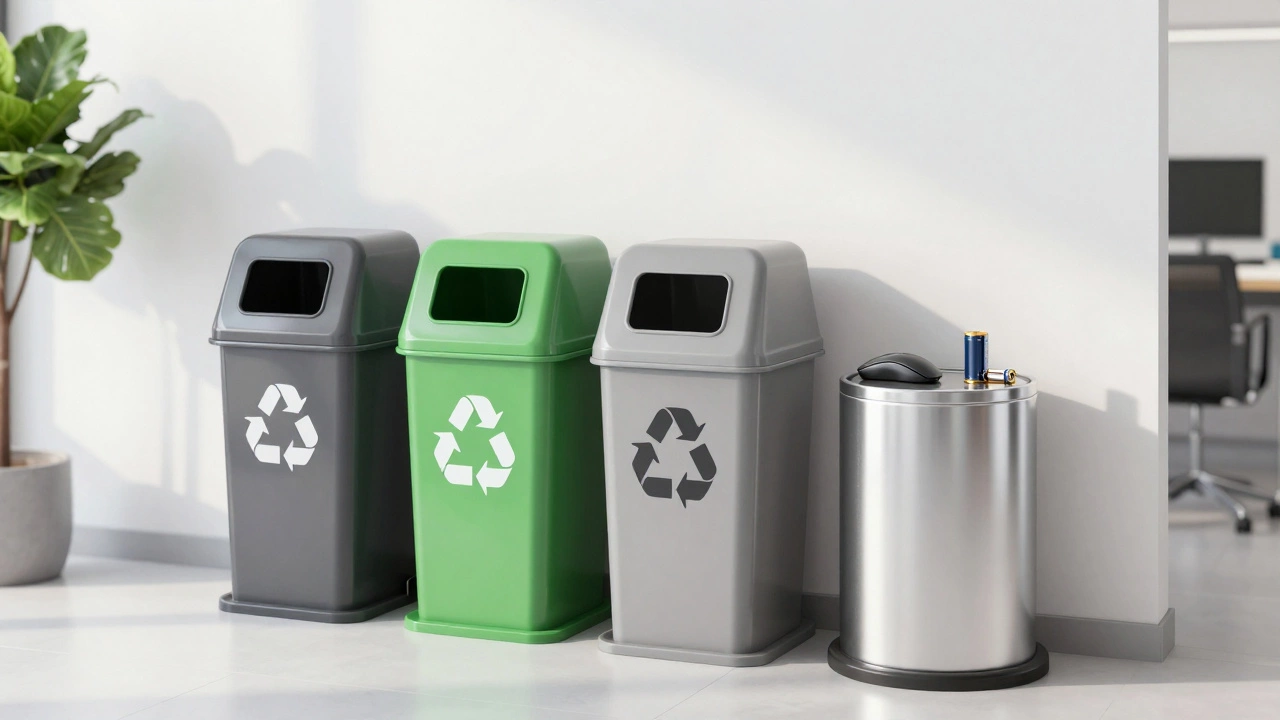
Modern office cleaning isn't just about making things shine; it's about managing what leaves the building. Most companies now have a Waste Hierarchy is a framework used to prioritize waste management by focusing on reduction, reuse, and recycling over landfill disposal . This means cleaners aren't just emptying bins; they are sorting materials.
Paper waste, plastics, and aluminum are separated into recycling streams. However, the trickiest part is E-waste. Old batteries, broken mice, and dead monitors can't go in the regular trash. A professional cleaning service often helps identify these items and ensures they are sent to certified recycling centers to avoid environmental fines and pollution.
Sustainability also extends to the chemicals used. Many offices are switching to "green" cleaning agents. These are biodegradable and non-toxic, meaning employees aren't breathing in harsh bleach fumes all day. This shift not only helps the planet but also reduces the number of respiratory complaints from staff members who are sensitive to strong chemicals.
Do office cleaners usually work during business hours?
Most commercial cleaning happens "after hours" or early in the morning. This prevents cleaners from disturbing employees and allows them to use certain chemicals or heavy machinery, like floor buffers, that would be too noisy or intrusive during a standard workday.
How often should an office be deep cleaned?
While daily cleaning keeps the place tidy, a full deep clean (including carpets, upholstery, and high-reach dusting) should typically happen every 3 to 6 months depending on the number of employees and the amount of foot traffic.
What is the difference between janitorial services and office cleaning?
Janitorial services are usually more comprehensive and ongoing, often involving an on-site presence to handle immediate needs like spills or restroom restocking. Office cleaning is often a scheduled service-like a crew coming in three nights a week-to perform specific tasks.
Are specialized chemicals needed for office furniture?
Yes. Modern offices use a mix of laminate, powder-coated steel, and fabric. Using a harsh bleach on a laminate desk can strip the finish, while a gentle soap won't remove the oils from a leather chair. Professionals use pH-neutral cleaners to protect these assets.
How does cleaning affect employee productivity?
A clean environment reduces stress and distractions. More importantly, proper disinfection reduces the spread of viruses (like the common cold or flu), which means fewer sick days and a more consistent workflow for the company.
What to Do Next
If you're managing an office and aren't sure if your current setup is working, start with a simple audit. Walk through your space and look at the places people ignore-the top of the fridge, the baseboards in the hallway, and the vents in the ceiling. If there's a layer of grey dust, your cleaning frequency needs an update.
For those hiring a new service, don't just ask for a price. Ask for their specific process for tech cleaning and their waste sorting policy. A company that can explain exactly how they handle a computer screen versus a bathroom floor is a company that understands the nuances of commercial maintenance.