Oven Glass Stain Diagnostic & Treatment Guide
Answer the following questions to determine the most effective cleaning strategy.
Step-by-Step Instructions:
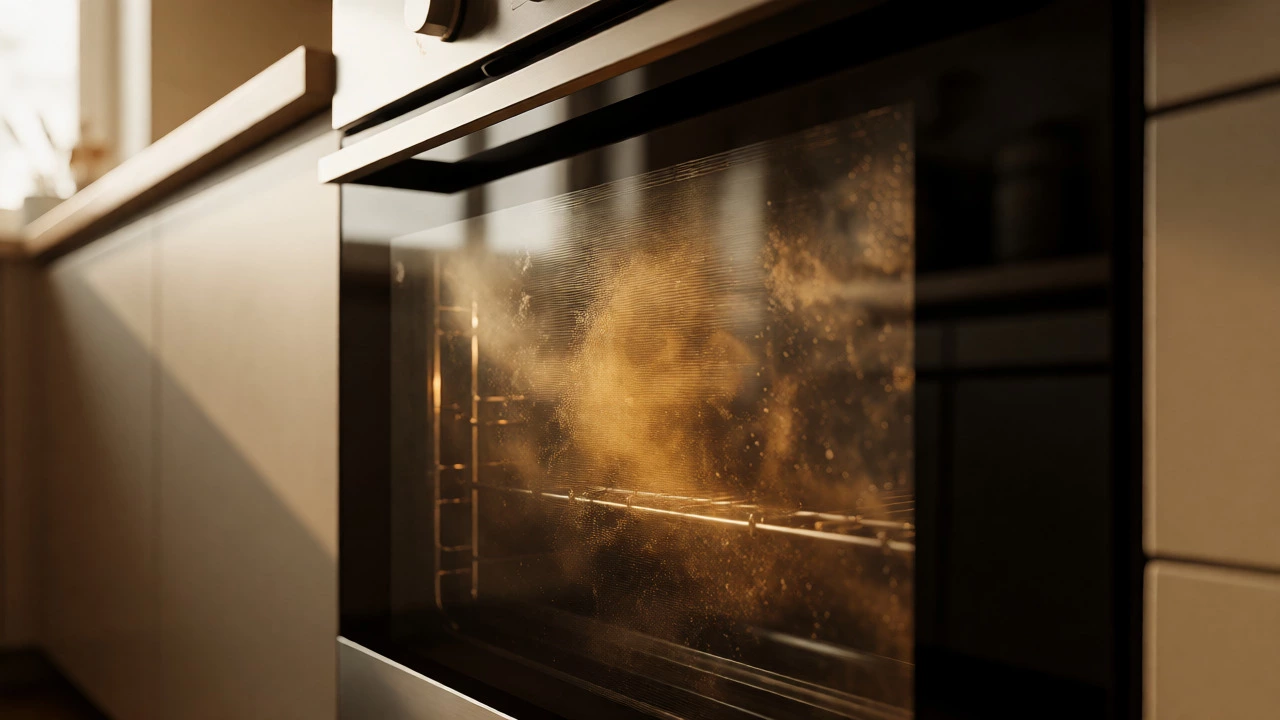
You know that feeling. You open your oven to check on a roast, and instead of seeing golden-brown potatoes, you see a cloudy, yellowish-brown haze stuck between the panes of your glass oven door. It’s not just dirty; it looks aged. That stubborn discoloration isn’t just surface grime-it’s often baked-on grease or mineral deposits trapped inside the double-glazed unit. And no amount of standard spray seems to touch it.
If you’re staring at this mess wondering if you need a new door or a professional service, take a breath. In most cases, you can fix this yourself with things already in your kitchen cabinet. The trick isn’t scrubbing harder; it’s understanding where the stain lives and using chemistry to break it down. Let’s walk through exactly how to clear up those brown marks without scratching your glass or damaging your seals.
Why Is My Oven Door Glass Turning Brown?
Before we start scrubbing, we need to diagnose the problem. Not all brown stains are created equal, and treating them the same way is why many people fail. Generally, these stains fall into two categories: external buildup or internal infiltration.
External Grease Buildup: This is the easy one. Over time, splatters from cooking seep into the frame gaps and bake onto the outer glass. Heat carbonizes these oils, turning them dark brown or black. If you can scratch it off with your fingernail, it’s likely external.
Internal Mineral Deposits: This is the tricky one. Modern ovens use double-glazed doors for insulation. Sometimes, the seal between the inner and outer glass fails slightly, allowing moisture and cleaning agents to get trapped inside. When this water evaporates, it leaves behind hard mineral salts (limescale) or reacts with grease to form a permanent brown film. If the stain feels smooth when you run your finger over the outside, but the cloudiness persists, it’s likely internal.
Knowing which type you have saves you hours of frustration. External stains respond to degreasers. Internal stains usually require a paste left to sit for hours, or even overnight, to draw out the residue.
The Baking Soda and Vinegar Method: Your First Line of Defense
This classic combo works because of simple chemistry. Baking soda is an abrasive alkali that breaks down fats, while white vinegar is an acid that dissolves mineral deposits. Together, they create a fizzing reaction that helps lift dirt from pores in the glass.
Here is the safest way to do it without making a huge mess:
- Cool Down: Never clean a hot oven door. Thermal shock can crack the glass. Ensure the oven has been off for at least 30 minutes.
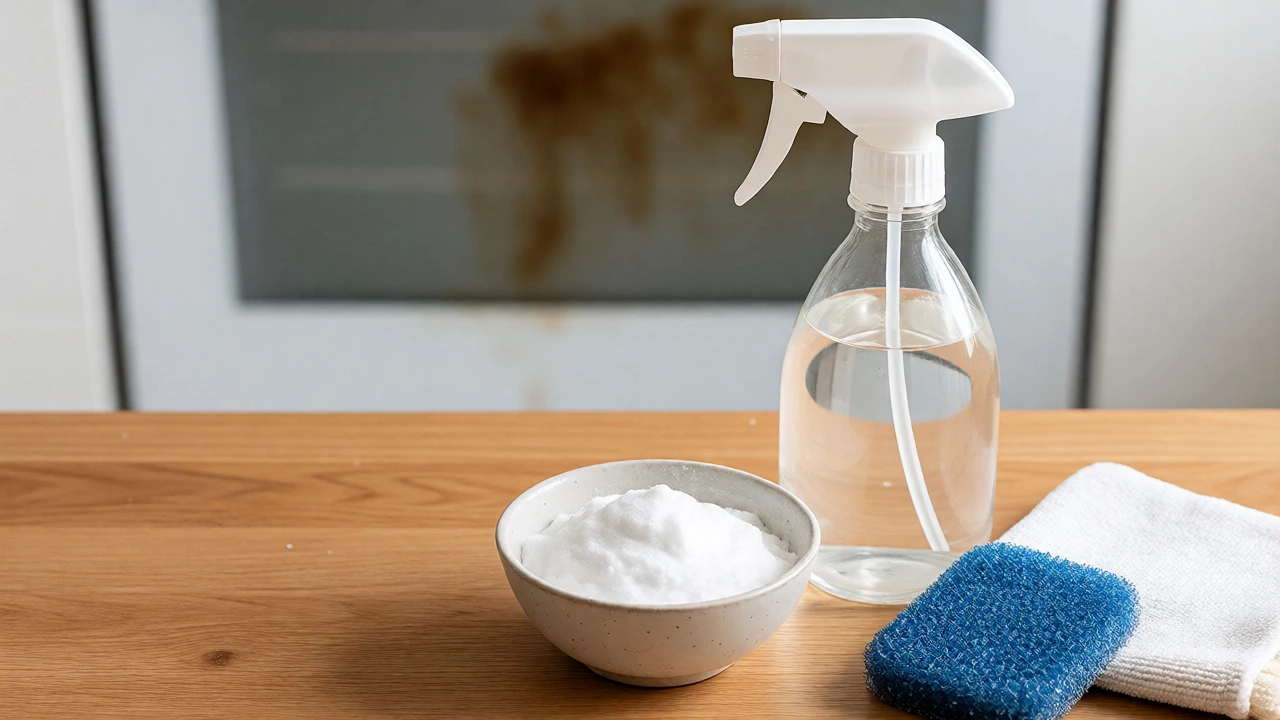
- Make the Paste: Mix three parts baking soda with one part water in a small bowl. Stir until it forms a thick spreadable paste, like toothpaste. If it’s too runny, add more powder.
- Apply Generously: Use a spatula or an old spoon to spread the paste directly over the stained areas on the outside of the glass. Don’t worry about getting it on the handle yet; focus on the pane.
- Add the Vinegar: Pour some white vinegar into a spray bottle. Mist it over the baking soda paste. You’ll hear it fizz. This reaction helps penetrate the grime.
- Let It Sit: This is crucial. Leave the mixture on the glass for at least 30 minutes. For heavy brown staining, leave it for an hour or even overnight. The longer it sits, the more it breaks down the carbonized grease.
- Wipe and Rinse: Take a damp microfiber cloth and wipe away the dried paste. Follow up with a clean wet cloth to remove any gritty residue. Dry with a dry towel to prevent water spots.
If the stains disappear, great! You’re done. But if the brown haze remains, especially if it looks like it’s *inside* the glass, you need to move to step two.
Dealing with Stubborn Internal Stains
If the baking soda method didn’t work, the stain is likely trapped between the glass panes. You cannot reach this area with a sponge. You have two options here: aggressive external treatment or disassembly.
Aggressive External Treatment: Sometimes, the seal isn’t fully broken, but the glass is porous enough to absorb oils. Try applying a thicker layer of baking soda paste and covering it with cling film (plastic wrap). This prevents the paste from drying out too quickly and keeps the moisture active against the glass. Leave it for 12 hours. Afterward, scrub gently with a non-scratch scouring pad (like a blue Scotch-Brite pad).
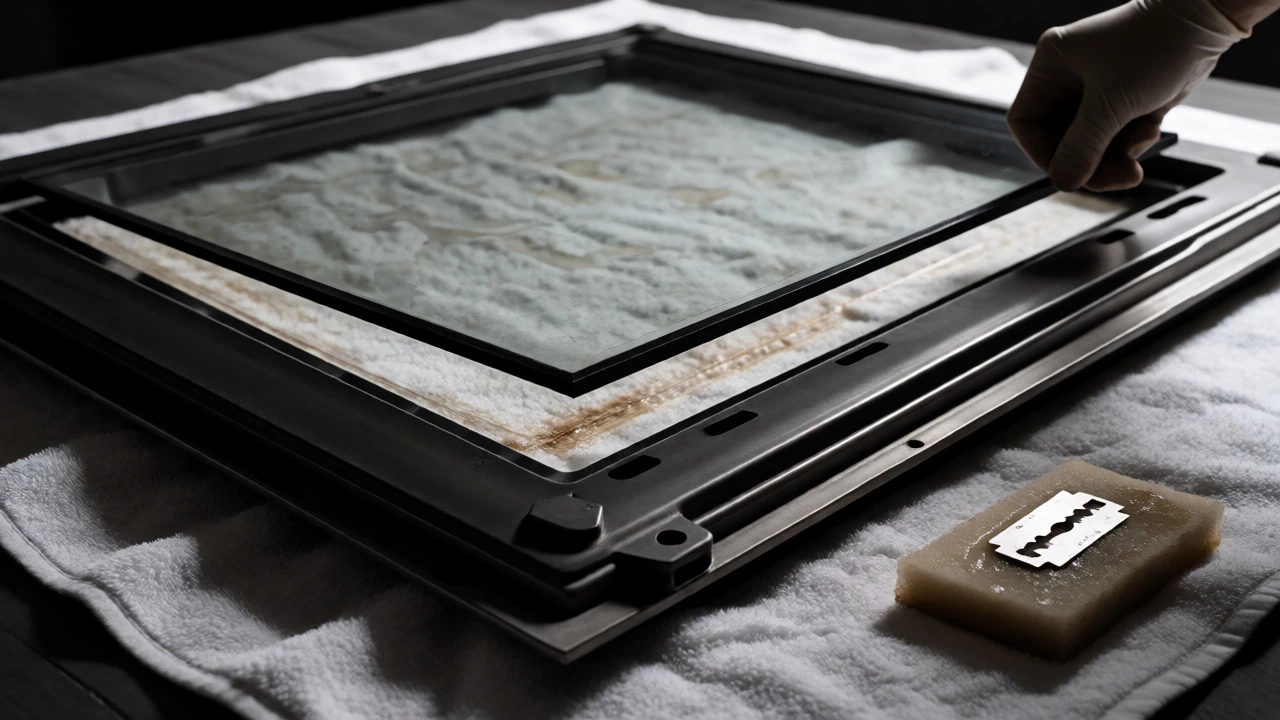
Disassembly (The Nuclear Option): If the stain is clearly internal and persistent, you may need to separate the glass panels. Most oven doors have screws hidden under plastic caps on the top edge or side hinges. Check your manual first-some modern ovens have sealed units that cannot be opened without breaking them.
| Method | Best For | Time Required | Risk Level |
|---|---|---|---|
| Baking Soda & Vinegar | Surface grease, light mineral stains | 45 mins - 2 hours | Low |
| Dishwasher Tablet Soak | Heavy baked-on carbon | 2 - 4 hours | Medium (requires soaking) |
| Steam Cleaning | Maintenance, fresh spills | 15 mins | Low |
| Glass Disassembly | Trapped internal moisture/stains | 1 - 2 hours | High (risk of breakage) |
To disassemble safely, lay the door flat on a bed of towels. Unscrew the visible screws carefully. Lift the inner glass panel slowly. Clean both sides of the glass with warm soapy water and a razor blade scraper (held at a shallow angle to avoid scratching). Reassemble only when completely dry.
What About Commercial Oven Cleaners?
You might be tempted to grab a can of heavy-duty oven cleaner from the supermarket. Brands like Mr Muscle or HG Oven Cleaner are powerful, but they come with caveats when used on glass.
Most caustic oven cleaners contain sodium hydroxide. This chemical eats through grease fast, but it can also etch aluminum trim and damage rubber seals if left too long. More importantly, if the cleaner gets into the gap between the glass panes, it can cause corrosion that worsens the appearance over time.
If you choose to use a commercial product:
- Look for "non-caustic" or "gel" formulas specifically labeled safe for glass.
- Apply only to the exterior surface.
- Do not let it dry completely on the glass.
- Wear gloves and ventilate the room well.
In my experience working in Bristol homes, I’ve seen more damage from improper use of caustic cleaners than from the stains themselves. Always test a small corner first.
Preventing Future Brown Stains
Cleaning is reactive; prevention is proactive. Once you’ve got that crystal-clear view back, you want to keep it that way. Here’s how to stop the brown haze from returning.
Use a Splatter Screen: These mesh covers go over dishes in the oven. They catch fat splatters before they hit the walls or door. They cost about £5-£10 and pay for themselves by saving you cleaning time.
Line Your Trays: Place a silicone mat or parchment paper under roasting trays. This stops juices from boiling over onto the bottom of the oven, which eventually rises as steam and settles on the cooler glass surfaces.
Wipe While Warm: Every time you finish cooking, while the oven is still warm (not hot), wipe the inside of the door with a damp cloth. Fresh grease wipes away easily. Old grease turns into concrete.
Check the Seals: Once a year, inspect the rubber gasket around the door. If it’s cracked or brittle, replace it. A bad seal lets steam escape and cool condensation enter, leading to those mysterious internal stains.
Troubleshooting Common Issues
Scratches: Did you accidentally use a steel wool pad? Steel wool scratches glass permanently. If you have fine scratches, try a specialized glass polish (cerium oxide based) available online. Deep scratches won’t buff out.
Cloudy Residue After Cleaning: If your glass looks milky after using baking soda, you didn’t rinse it enough. Baking soda leaves a chalky film. Wipe again with a solution of half water, half white vinegar, then dry immediately.
Stain Won’t Move: If you’ve tried everything and the stain remains, it might be etching. Etching happens when acidic substances (like lemon juice or tomato sauce) sit on glass during high heat. This is permanent physical damage to the glass surface, not dirt. No cleaner will remove it; you’d need to replace the glass panel.
Frequently Asked Questions
Can I use WD-40 on my oven glass?
Yes, but with caution. WD-40 is excellent for loosening sticky residues and removing adhesive labels. However, it is oil-based. If you use it, you must follow up with a thorough degreaser or dish soap wash to remove the oily film. Leaving WD-40 on glass can attract dust and create a smoky smell when the oven heats up next time.
Will bleach clean brown stains on oven glass?
Bleach is generally not recommended for oven glass. While it disinfects, it doesn't effectively break down carbonized grease or limescale, which are the main causes of brown stains. Additionally, bleach fumes can be harsh in a confined kitchen space, and if it drips into the oven cavity, it may react with other residues. Stick to alkaline cleaners like baking soda or specific oven sprays.
How do I clean the gap between the oven door glass?
If the gap is narrow, use a thin strip of cardboard wrapped in a microfiber cloth dipped in vinegar. Slide it along the seam to wipe the edges. For wider gaps or internal stains, you may need to remove the screws holding the door assembly together to access the inner pane. Consult your oven's user manual before attempting disassembly, as some models have sealed units.
Is it safe to use a razor blade on oven glass?
Yes, a single-edge razor blade held at a 30-degree angle is very effective for scraping off hardened, flaky debris. Keep the glass wet with soapy water or vinegar while scraping to lubricate the surface. Never use a dull blade, and never scrape dry glass, as this increases the risk of scratching.
Why does my oven door look rainbow-colored?
A rainbow sheen is usually caused by a thin film of oil or detergent residue interfering with light refraction. It’s not a stain but a coating. To fix it, wash the glass with a mild dish soap solution, rinse thoroughly with distilled water (to avoid tap minerals), and dry with a lint-free cloth. If it persists, apply a small amount of rubbing alcohol to a cloth and buff the area.