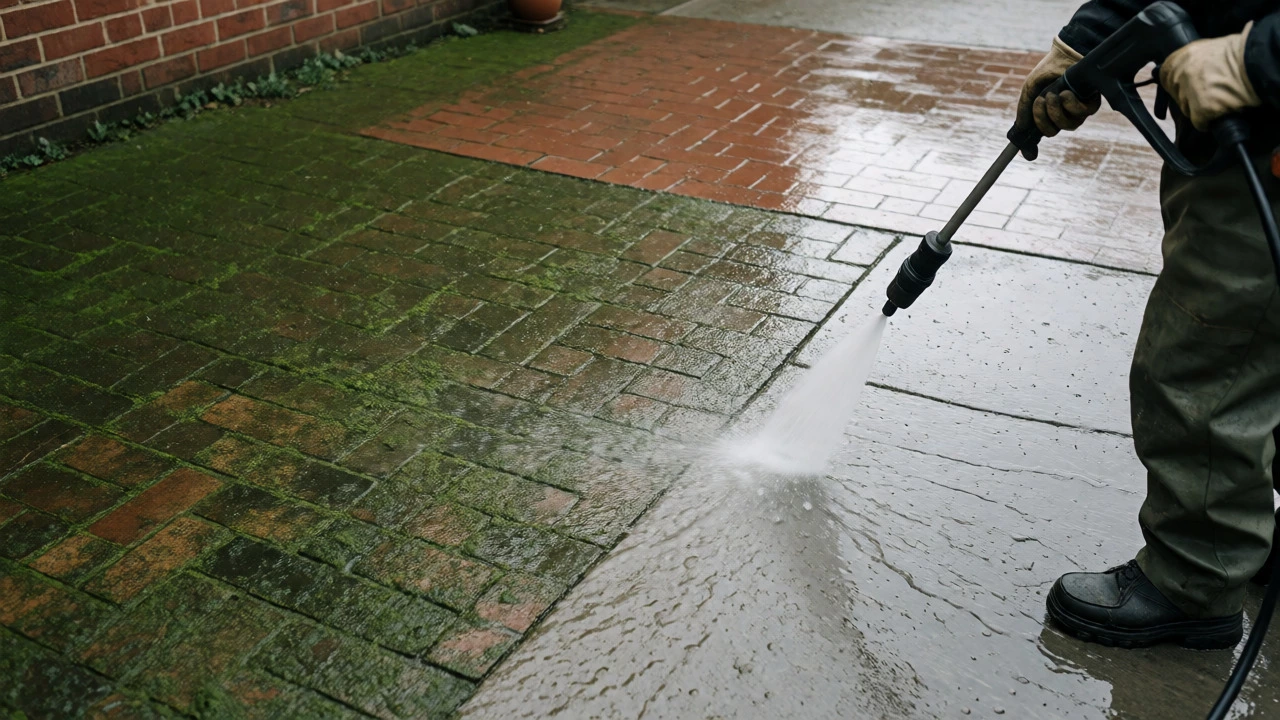
Pressure Washer Nozzle & Surface Compatibility Checker
Select a nozzle tip and choose a surface type to see the risk level and recommended technique.
Select Your Setup
Safety Analysis
Ready to Check
Select a nozzle and surface to see the risk assessment.
Most people see a power washer and think it’s just a hose with a fancy nozzle. They’re wrong. It’s a precision tool that can strip paint off wood or blast concrete clean without cracking it. If you’ve ever watched someone turn a grimy driveway into a pristine path in ten minutes, you’ve probably wondered how to become a power washer yourself. It looks easy. It isn’t always. But the barrier to entry is low, the demand is steady, and if you know what you’re doing, you can make decent money before lunch.
This guide breaks down exactly what it takes to go from holding a wand for the first time to running your own route. We’ll cover the gear you actually need (not just what the sales guy pushes), the skills that separate amateurs from pros, and how to get your first paying clients. Whether you want a side hustle or a full-time career, here’s the real deal.
Understanding the Trade Before You Buy Gear
Before you spend thousands on a machine, understand what this job actually involves. Power washing, or pressure washing, uses high-pressure water spray to remove loose paint, mold, grime, dust, mud, and dirt from surfaces and objects such as buildings, vehicles, and concrete surfaces. It’s physically demanding. You’ll be standing for hours, often in awkward positions, handling heavy hoses and loud machinery. The noise is constant. The water is cold unless you have a hot-water unit. And yes, you will get wet.
But it’s also satisfying. There’s an immediate visual reward-seeing a blackened patio turn grey again is addictive. Plus, most residential jobs take between one and three hours. That means you can do multiple properties a day. In the UK, where damp and moss are constant enemies of outdoor surfaces, the work rarely runs out.
Choosing Your First Pressure Washer
The biggest mistake beginners make is buying the wrong machine. Homeowner-grade units from DIY stores are fine for learning, but they won’t survive daily commercial use. You need to look at two key specs: PSI (pounds per square inch) and GPM (gallons per minute).
- PSI: This measures force. For driveways and brick, you want 3000+ PSI. Too low, and you’re scrubbing by hand anyway. Too high, and you risk damaging softer surfaces like vinyl siding or old mortar.
- GPM: This measures flow. High PSI cleans small spots; high GPM cleans large areas fast. A pro unit usually has a balance, around 2.5 to 4 GPM. More water means faster rinsing and less heat buildup.
For starters, consider a petrol-powered cold water pressure washer. Brands like Kärcher Professional, Nilfisk, or Comet offer reliable mid-range models. Avoid electric units for serious work-they lack the power and portability needed for large jobs. Petrol units let you work anywhere, no extension cords required. Just remember: petrol engines need regular maintenance. Check oil levels every few hours. Clean the air filter weekly if you’re working in dusty areas.
| Feature | Homeowner Grade | Pro-Grade Entry |
|---|---|---|
| PSI Range | 1800-2200 | 2500-3500 |
| GPM Range | 1.5-2.0 | 2.5-4.0 |
| Engine Type | Electric | Petrol/Diesel |
| Lifespan | 1-2 years (light use) | 5+ years (daily use) |
| Approx. Cost (UK) | £150-£300 | £600-£1,200 |
Mastering Technique: The Difference Between Cleaning and Damage
Owning the machine doesn’t mean you know how to use it. I’ve seen more damaged fences than dirty ones because someone held the nozzle too close. Here’s the golden rule: distance controls pressure. Start far away and move closer until you see results. Never point the wand directly at joints, seals, or painted surfaces without testing first.
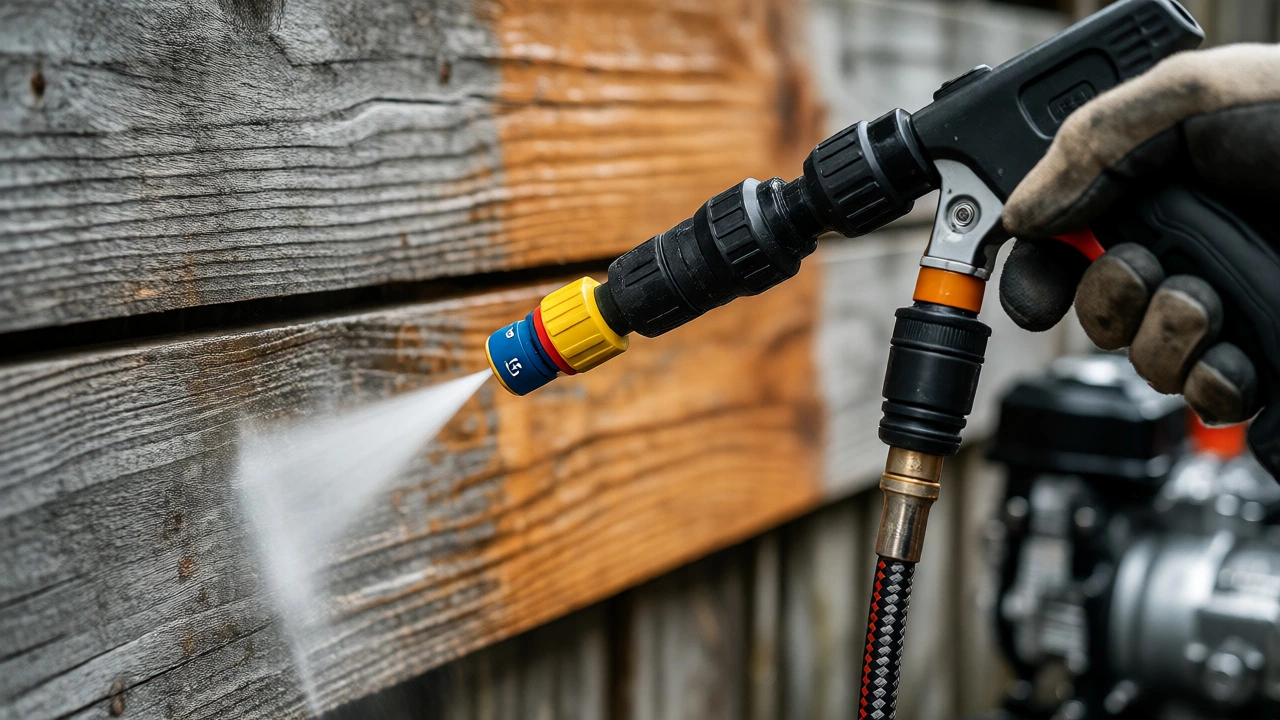
Learn about nozzle tips. They come in color-coded angles:
- Red (0°): Laser-like stream. Use sparingly. Great for removing gum or stubborn stains on concrete. Dangerous on wood.
- Yellow (15°): Narrow fan. Good for stripping paint or cleaning dense grime.
- Green (25°): Medium fan. Your everyday tip for general cleaning.
- White (40°): Wide fan. Safe for delicate surfaces, windows, and final rinses.
- Black (Soap): Low pressure. Used for applying detergent, not cleaning.
Always work top-to-bottom. Gravity helps rinse away debris. Work in overlapping passes, keeping the wand moving. Stopping in one spot etches lines into the surface. Practice on scrap wood or hidden corners before tackling visible areas.
Chemicals and Surface Knowledge
Water alone doesn’t solve everything. Sometimes you need chemicals. But using the wrong one can ruin a client’s property. Sodium hypochlorite (bleach-based cleaners) kills algae and mold effectively. It’s cheap and works fast. But it can bleach fabrics and harm plants if not diluted properly. Always pre-wet surrounding greenery.
For concrete, alkaline cleaners break down oils and grease. For brick, acidic cleaners dissolve efflorescence (the white salt deposits). But acid etches stone if left too long. Timing matters. Apply, agitate if needed, dwell for the recommended time, then rinse thoroughly. Never let chemicals dry on the surface.
Keep a simple kit: a pump sprayer for applying solutions, a stiff-bristle brush for agitation, and neutral pH cleaner for sensitive materials. Learn which surfaces are porous. Brick, stone, and unsealed concrete absorb water and chemicals. Vinyl, metal, and sealed tiles don’t. Porous surfaces require lower pressure and gentler chemicals.
Getting Insured and Licensed
You can start informally, but once you charge money, protect yourself. In the UK, there’s no specific "power washing license," but you need public liability insurance. If you slip and crack a client’s paving slab, or your hose whips and shatters a window, you’re liable. Insurance typically costs £100-£300 annually for basic coverage. Don’t skip this.
If you hire employees, you’ll need employer’s liability insurance too. Register as self-employed with HMRC if you’re operating solo. Keep records of income and expenses. Most tools and fuel are tax-deductible. If you buy a van, that’s deductible too.
Consider joining a trade body like the British Window Cleaning Academy or similar local cleaning associations. It adds credibility and gives you access to training courses. Some councils require permits for washing streets or commercial frontages, so check local rules.
Finding Your First Customers
Don’t wait for word-of-mouth. Go out and knock on doors. Look for houses with visibly dirty driveways, patios, or garden walls. Offer a free quote. Take before-and-after photos on your phone. These are your best sales tools.
Start with neighbors. Do a discounted job for them in exchange for permission to photograph the result and ask for referrals. Post these images on local Facebook groups and Nextdoor. People trust visuals more than promises.
List your services on platforms like Bark.com or Checkatrade. Set competitive prices initially to build reviews. A typical driveway cleaning in Bristol might cost £100-£200 depending on size and condition. Patios range similarly. Garden walls vary widely based on height and length.
Upsell gently. After cleaning a driveway, mention the garage door or bin store area. Small add-ons boost your average ticket price without much extra effort. Bundle services: "Driveway + Patio" packages encourage larger jobs.
Scaling Up: From Solo Operator to Business Owner
Once you’re booked solid, you face a choice: stay solo or grow. Growing means hiring help. Train new workers on safety and technique first. Bad work ruins reputations faster than slow work.
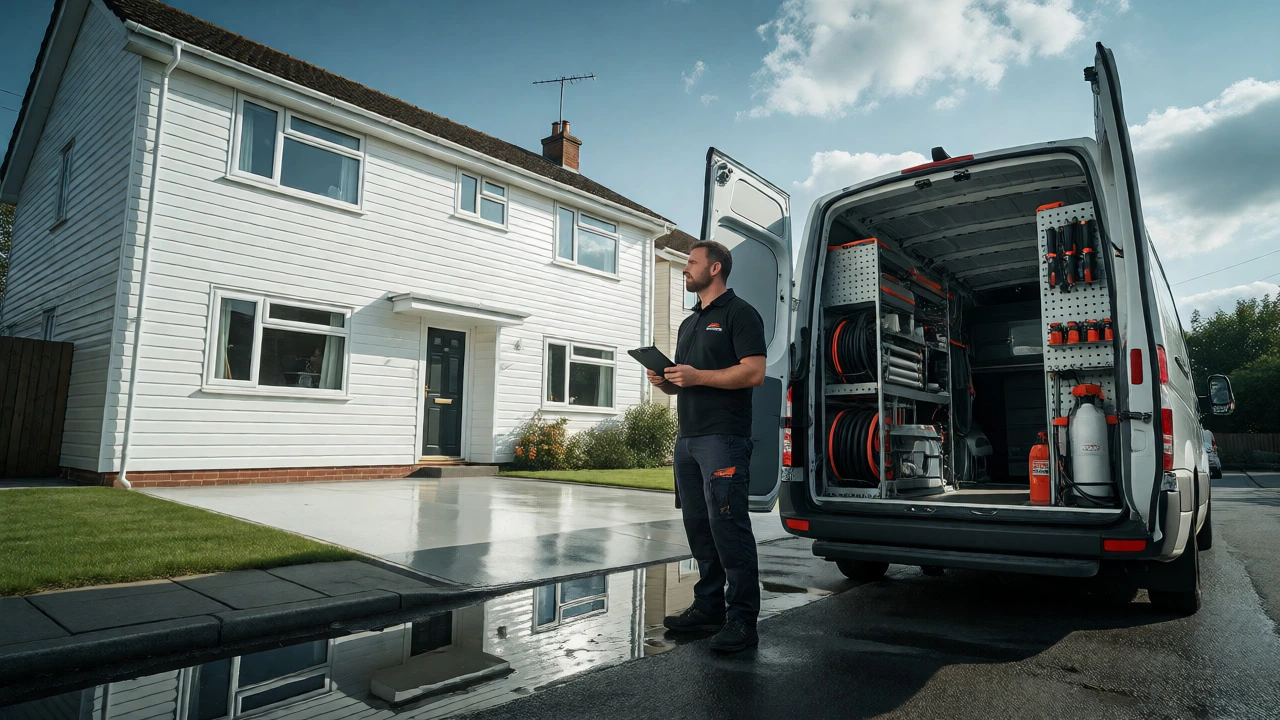
Invest in better equipment as revenue allows. A hot-water unit expands your service range to include grease removal and winter work. A surface cleaner attachment speeds up flat areas dramatically. Van racking systems keep gear organized and professional-looking.
Track your metrics. How long does each job take? What’s your hourly rate after fuel and wear? Adjust pricing accordingly. Don’t undercharge forever. Raise rates gradually as your reputation grows. Clients pay for reliability and quality, not just the lowest price.
Maintain your machines religiously. Flush pumps after every use. Store hoses coiled, not kinked. Replace O-rings when they leak. A well-maintained rig lasts years; a neglected one fails mid-job, costing you time and trust.
Do I need formal qualifications to become a power washer?
No formal degree or certificate is legally required to start power washing in the UK. However, completing a short training course from a recognized provider can teach safe handling techniques and chemical usage, reducing the risk of damage or injury. Many experienced operators learn through apprenticeships or hands-on practice.
What is the average earnings for a power washer in the UK?
Earnings vary by location, experience, and workload. Solo operators in urban areas like London or Bristol can earn £20,000-£40,000 annually. Those with vans, teams, and commercial contracts can exceed £50,000. Seasonal fluctuations occur, with spring and autumn being peak times due to weather conditions.
Can power washing damage my house?
Yes, if done incorrectly. High pressure can erode mortar, strip paint, break roof tiles, or force water behind siding. Professionals adjust pressure and nozzle angle based on surface type. Always hire insured operators who assess surfaces before starting.
Is power washing eco-friendly?
It depends on the chemicals used. Water-only washing is very eco-friendly. When detergents are needed, biodegradable options minimize environmental impact. Proper disposal of runoff prevents contamination of drains and soil. Modern equipment also reduces water usage compared to traditional hosing methods.
What equipment should I buy first?
Start with a reliable petrol-powered cold water pressure washer (2500+ PSI, 2.5+ GPM), a set of quick-connect nozzles, a surface cleaner attachment for flats, a pump sprayer for chemicals, and protective gear (boots, goggles, gloves). Add insurance before taking paid jobs.