Mattress Steam Cleaning Checklist
Follow these steps for a deep, hygienic clean. Check off each stage as you complete it.
You spend roughly one-third of your life in bed. That’s about eight hours every night, totaling over 2,500 hours a year. During that time, you shed skin cells, sweat, and breathe out moisture directly into the fabric. If you haven’t cleaned your mattress recently, it might be harboring more than just dreams. It could be home to millions of dust mites, bacteria, and accumulated grime that regular vacuuming simply can’t reach.
Many people think steam cleaning is too complicated or risky for mattresses. Will it soak through? Will it smell like mildew tomorrow? The truth is, when done correctly, steam cleaning is one of the most effective ways to sanitize a mattress without harsh chemicals. It uses high-temperature vapor to kill allergens and lift dirt from deep within the foam or springs. But there is a catch: if you use too much water, you risk creating a damp environment where mold thrives. So, how do you get the benefits without the risks? Let’s break down exactly how to steam clean a mattress properly, step by step.
Why You Should Steam Clean Your Mattress
Before we grab the machine, let’s talk about why this method beats spot-cleaning with soap and water. Traditional wet cleaning often leaves behind detergent residues that attract more dirt later. Steam cleaning uses superheated water vapor to sanitize surfaces without chemical agents. This makes it ideal for bedrooms, especially if you suffer from allergies or asthma.
The heat generated by modern steam cleaners typically reaches temperatures between 120°C and 150°C (248°F to 302°F). At these temperatures, common household pests like dust mites die almost instantly. According to the American Academy of Allergy, Asthma & Immunology, dust mites are a leading trigger for indoor allergies. They thrive in warm, humid environments-exactly what an uncleaned mattress provides. By using steam, you’re not just cleaning; you’re resetting the hygiene level of your sleep space.
Additionally, steam penetrates porous materials better than surface wiping. Whether you have a memory foam hybrid or a traditional spring unit, the vapor gets into the fibers where sweat and dead skin accumulate. It neutralizes odors caused by bacteria rather than masking them with perfume. For pet owners or families with young children, this non-toxic approach is a game-changer.
Gathering the Right Tools and Prep Work
You don’t need professional-grade equipment, but you do need the right tools. A standard handheld steam cleaner works fine for most home mattresses. Avoid using industrial pressure washers, as they force too much water into the mattress core. Here’s what you’ll need:
- A steam cleaner with a upholstery attachment (a brush head is best).
- A powerful vacuum cleaner with a HEPA filter.
- Baking soda (for deodorizing and absorbing moisture).
- Clean white microfiber cloths.
- Optional: Enzyme cleaner for biological stains like urine or blood.
Start by stripping the bed completely. Remove sheets, pillowcases, and mattress protectors. Wash these separately in hot water. Next, take the mattress outside if possible, or at least stand it upright against a wall to access all sides. If you can’t move it, ensure the room has good ventilation. Open windows and turn on fans. Drying speed is critical here.
Vacuum the entire surface thoroughly. Use the crevice tool to get along the edges and seams. Don’t skip the top, sides, and bottom. This step removes loose debris, hair, and larger particles of dust. If you skip vacuuming, the steam will turn this dry dust into mud, which is harder to extract. Spend at least five minutes per side vacuuming. It sounds tedious, but it saves you from having to re-clean later.
The Step-by-Step Steam Cleaning Process
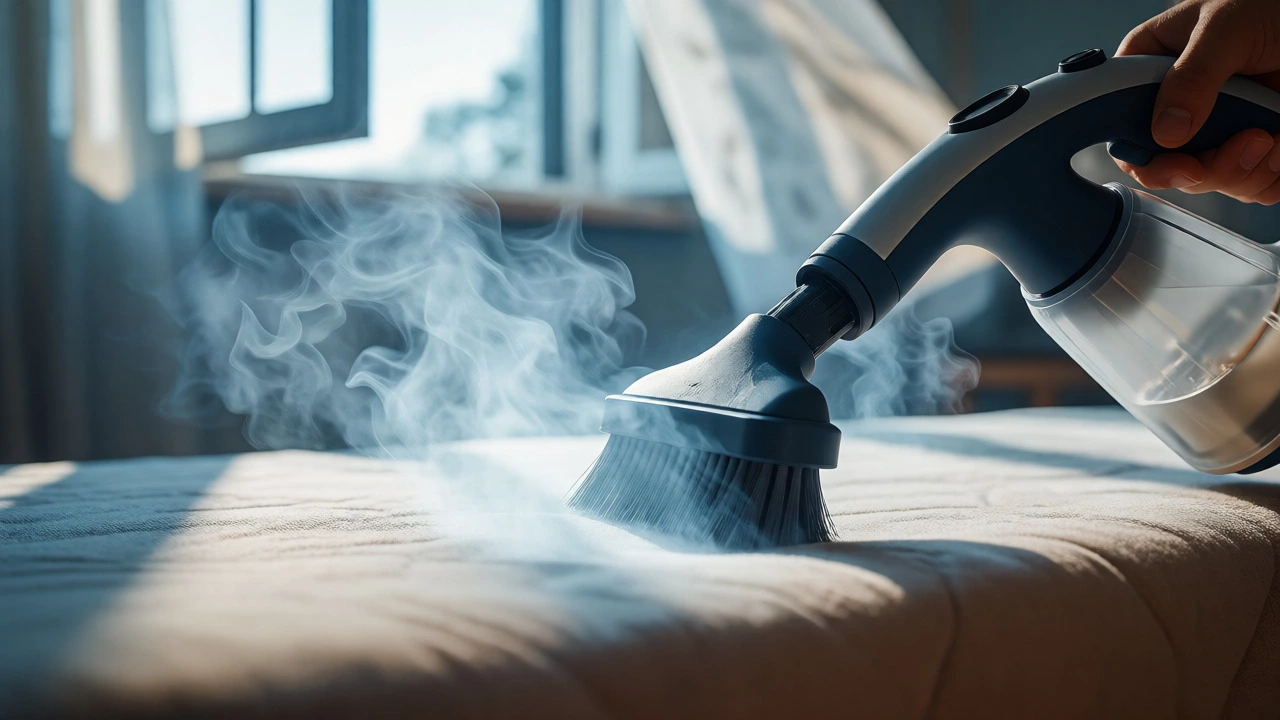
Now comes the main event. Fill your steam cleaner with distilled water. Tap water contains minerals that can leave white residue spots on dark fabrics or clog the machine’s nozzle. Once filled, let the unit heat up until it produces consistent, strong steam.
Attach the brush head. The bristles help agitate the fabric slightly while the steam penetrates. Hold the nozzle about two inches away from the mattress surface. Move slowly. This is the most important rule: slow passes allow the heat to work and the suction (if your machine has it) to pull back moisture. If you rush, you’ll leave the mattress soaking wet.
| Mattress Type | Recommended Heat Level | Moisture Output | Pass Speed |
|---|---|---|---|
| Memory Foam | Low/Medium | Minimal | Very Slow |
| Innerspring/Hybrid | Medium/High | Moderate | Slow |
| Latex | Low | Minimal | Very Slow |
| Fabric Top | Medium | Moderate | Slow |
Work in overlapping rows across the top surface. Then move to the sides. Be careful around any existing stains. For tough spots, hold the steam jet directly on the stain for a few seconds before moving on. Do not scrub aggressively with the brush on delicate fabrics, as this can fray the threads. If your steam cleaner lacks a vacuum function, immediately blot the area with a dry microfiber cloth after steaming. Press firmly to absorb as much moisture as possible.
For biological stains like sweat rings or accidents, pre-treat with an enzyme cleaner before steaming. Enzymes break down the proteins in bodily fluids. Let the cleaner sit for ten minutes, then steam over the area. The combination of enzymatic action and heat sanitization is highly effective.
Drying: The Most Critical Step
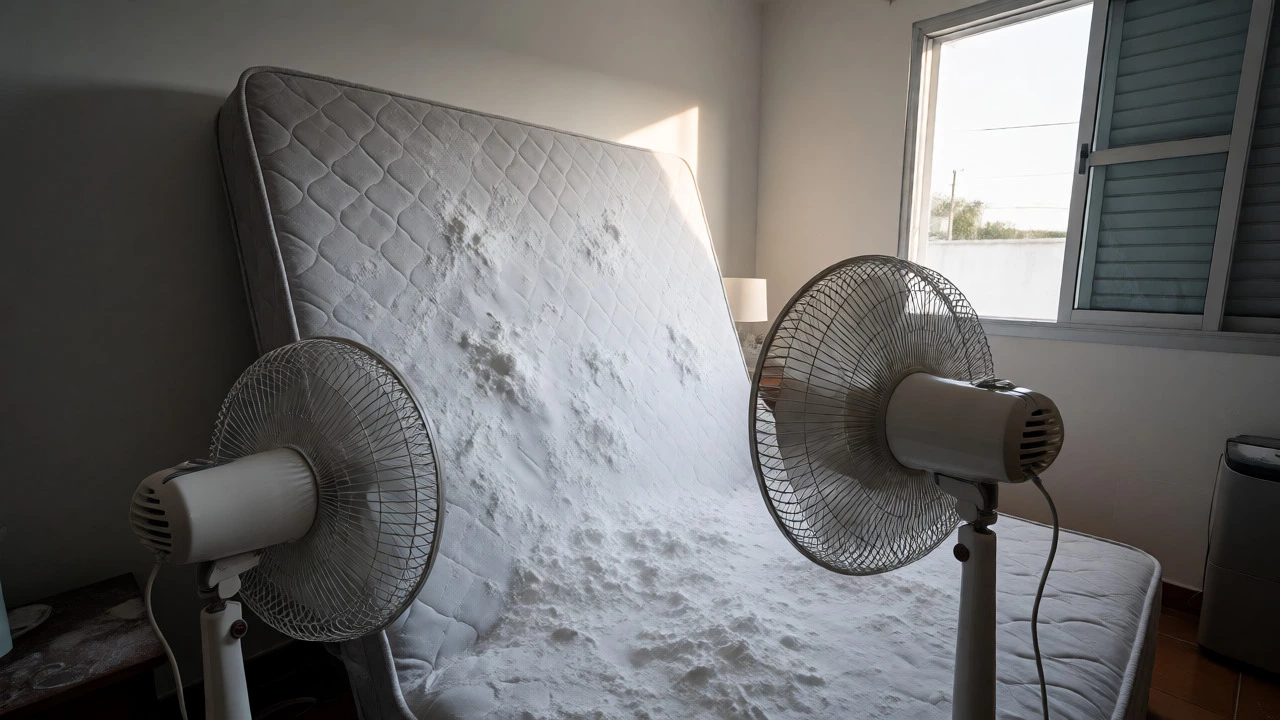
If you do everything else right but fail here, you’ve wasted your time. A damp mattress is a breeding ground for mold and mildew. After steaming, the mattress will feel cool and slightly damp. This is normal. Now, sprinkle a generous layer of baking soda over the entire surface. Baking soda absorbs residual moisture and neutralizes odors. Let it sit for at least 30 minutes, or ideally, several hours.
While the baking soda sits, maximize airflow. Point fans directly at the mattress. If the weather is nice, open windows to create cross-ventilation. Dehumidifiers are excellent allies here, especially in humid climates. Aim to get the relative humidity in the room below 50% during the drying process.
Once the baking soda has clumped together or feels dry to the touch, vacuum it up thoroughly. Check the mattress again. Press your hand firmly into the center. Does it feel cold or damp? If yes, keep the fans running. Do not put sheets back on until the mattress is completely dry to the core. This usually takes 4 to 6 hours, depending on thickness and airflow. Sleeping on a damp mattress can lead to musty smells and potential health issues.
Troubleshooting Common Issues
Sometimes things don’t go perfectly. Here are common pitfalls and how to fix them.
Problem: The mattress smells sour after drying.
This indicates trapped moisture. Mold may have started growing. Solution: Vacuum the area again, apply a mixture of white vinegar and water (1:1 ratio) lightly with a spray bottle, and let it air dry completely. Vinegar kills mold spores and its smell dissipates quickly once dry.
Problem: Water stains remain.
Mineral deposits from tap water can cause spots. Solution: Wipe the affected areas with a cloth dampened with distilled water and white vinegar. Blot dry and fan dry.
Problem: The fabric looks fuzzy or damaged.
You likely used too high a heat setting or pressed the brush too hard. Solution: Gently brush the area with a soft-bristle brush to restore the nap. In the future, test a small, inconspicuous corner first.
Problem: Stains won’t come out.
Old set-in stains might need more than steam. Solution: Apply a paste of hydrogen peroxide and baking soda to the stain. Let it bubble for 15 minutes, then wipe clean with a damp cloth. Test for colorfastness first.
Maintenance Tips to Keep Your Mattress Fresh
You don’t need to steam clean your mattress every month. Doing so too often can degrade the materials faster. A thorough steam clean every six months is sufficient for most households. However, daily maintenance matters more.
Use a waterproof mattress protector. This is the single best investment for mattress longevity. It stops sweat and spills from reaching the actual mattress material. Wash the protector weekly in hot water. Rotate your mattress head-to-foot every three months to ensure even wear and prevent body impressions.
Vacuum your mattress monthly. Just five minutes with a vacuum attachment keeps dust levels low. Flip the mattress if it’s double-sided. Air it out by leaving it uncovered in sunlight occasionally. UV light is a natural disinfectant and helps reduce moisture buildup.
Can I steam clean a memory foam mattress?
Yes, but be cautious. Memory foam absorbs water easily and dries slowly. Use the lowest heat setting and minimal steam output. Ensure the mattress is bone-dry before putting sheets back on, which may take longer than other types.
Will steam cleaning remove yellow stains?
Steam alone may not fully remove old yellow stains caused by sweat or urine. It helps lift surface dirt, but for stubborn discoloration, combine steam with an enzyme cleaner or a hydrogen peroxide and baking soda paste.
How long does a mattress take to dry after steam cleaning?
Typically 4 to 6 hours with good airflow. Factors include mattress thickness, room humidity, and temperature. Always check by pressing your hand into the center; if it feels cool or damp, wait longer.
Is steam cleaning safe for all mattress types?
Mostly, yes. However, avoid steam cleaning mattresses with delicate silk covers or certain glued components that might loosen under high heat. Always check the manufacturer’s care label first.
Can I use a carpet cleaner instead of a steam cleaner?
It depends. Carpet cleaners inject water and suck it back up. If you use one, ensure it extracts as much moisture as possible. Excess water left in a mattress is worse than no cleaning. Handheld steam cleaners offer more control for vertical surfaces.
Does steam cleaning kill bed bugs?
Direct contact with steam at 160°C+ kills bed bugs and eggs. However, steam doesn’t penetrate deep into the mattress core effectively enough to treat a severe infestation alone. Professional treatment is recommended for active bed bug problems.
How often should I steam clean my mattress?
Every 6 months is a good baseline. If you have pets, allergies, or children who frequently have accidents, consider doing it every 3-4 months.
What happens if I don't dry the mattress completely?
Trapped moisture leads to mold growth, mildew smells, and potentially structural damage to foam layers. It can also exacerbate allergies. Never rush the drying process.