Couch Steam Cleaning Frequency Calculator
Determine how often you should steam clean your couch based on your household conditions. This tool helps you maintain your upholstery without over-cleaning or waiting too long.
Ever steam cleaned your couch and wondered where the dirt actually went? You see the grime lifting off the fabric, the steam rising, the water soaking in-and then you’re left with a clean-looking sofa but no visible mess. Did it just vanish? It’s a common question, and the answer isn’t as mysterious as it seems.
Steam Cleaning Isn’t Magic-It’s Physics
Steam cleaning works because of heat, pressure, and absorption. When you run a steam cleaner over your couch, you’re not just spraying hot water. You’re releasing water vapor at temperatures between 180°F and 212°F (82°C-100°C). That heat breaks down grease, oils, and organic debris stuck in the fabric fibers. The pressure forces the steam deep into the upholstery, loosening dirt that vacuuming alone can’t touch.
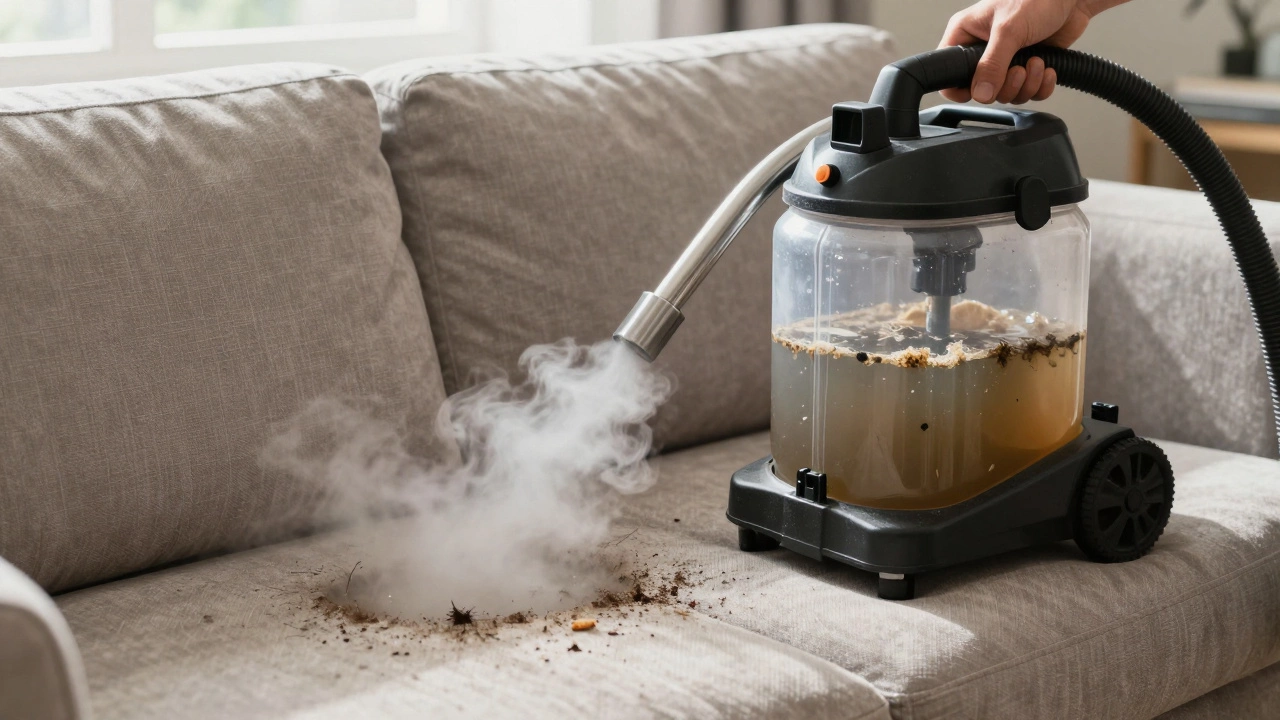
But here’s the key: steam cleaners don’t just spray-they also suck. Most professional-grade and even many home steam cleaners come with a vacuum extraction system. That’s the part you might overlook. The machine doesn’t just push steam into the fabric; it immediately pulls the dirty water back out through a separate hose. The dirt doesn’t disappear-it gets trapped in the machine’s dirty water tank.
What Kind of Dirt Are We Talking About?
Let’s get specific. The dirt on your couch isn’t just dust. It’s a mix of:
- Dead skin cells (you shed about 30,000-40,000 every hour)
- Hair from pets and people
- Food crumbs and oily residues from snacks
- Sweat and body oils from sitting
- Pollen, dust mites, and outdoor pollutants tracked in on shoes
- Stains from drinks, makeup, or ink
When steam hits these, the heat liquefies oils and breaks down proteins. That’s why coffee stains lift better with steam than with plain water. The dirt turns from solid or sticky residue into a liquid slurry that the vacuum can pull away.
Why You Can’t See the Dirt After Cleaning
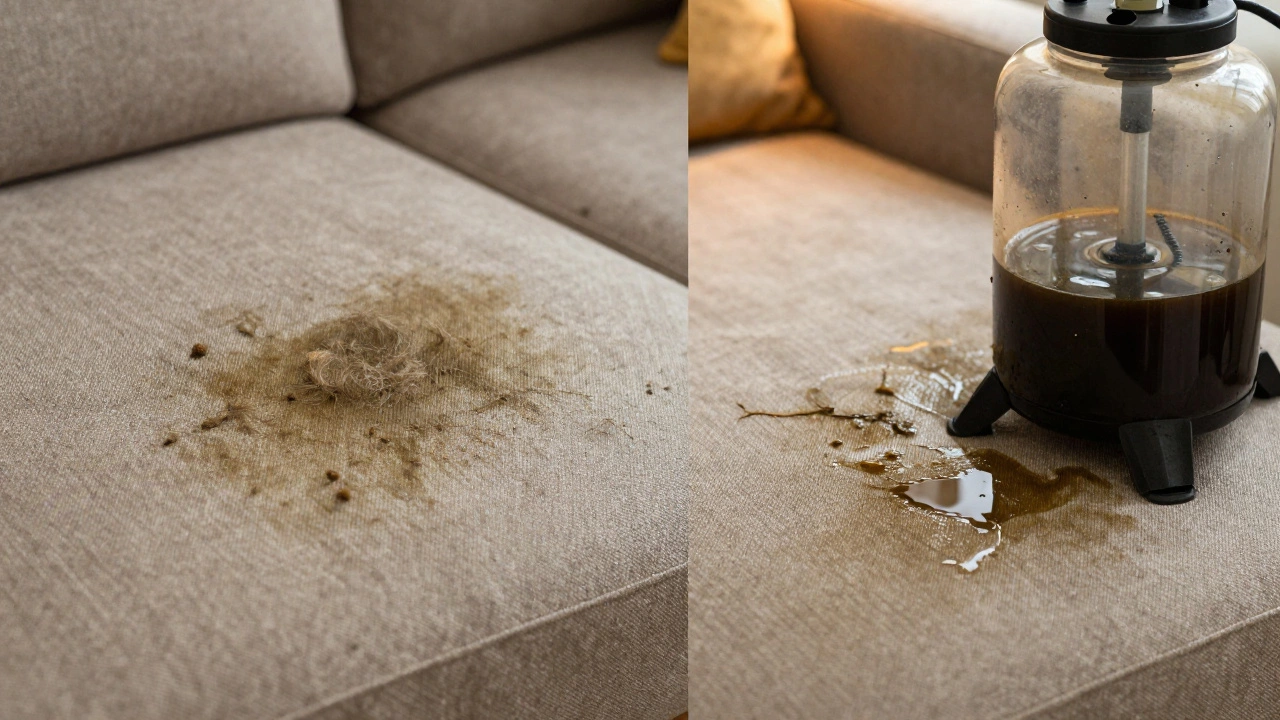
You might expect to see a pile of gunk on the floor after cleaning. But that’s not how it works. The dirty water is collected inside the machine’s tank-usually a clear compartment you can see. After cleaning, you’ll find a cloudy, brownish liquid in that tank. That’s your couch’s dirt, dissolved and suspended in water.
If you’ve ever cleaned a couch and then emptied the tank, you’ve seen it: dark sludge, bits of lint, even tiny crumbs. That’s the physical proof. The dirt didn’t vanish. It was moved from your sofa to the machine’s holding tank.
What Happens If You Don’t Use Extraction?
Some people use steam-only cleaners without suction. They think the heat alone cleans everything. That’s a mistake. Without vacuum extraction, the loosened dirt just sits in the fabric, waiting to dry back in. You might think it’s clean because the surface looks fresh, but once it dries, the dirt resettles. That’s why some couches get dirtier faster after steam cleaning-they weren’t properly extracted.
Always use a steam cleaner with a built-in vacuum. If your machine doesn’t have one, it’s not designed for deep upholstery cleaning. Stick to spot cleaning or hire a professional with the right equipment.
How Much Dirt Really Comes Out?
It varies. A couch that hasn’t been cleaned in 3-5 years can hold up to 2-3 liters of trapped debris. That’s not just dust-it’s a mix of organic matter, allergens, and oils. In one test done by the British Upholstery Cleaning Institute, a heavily used three-seater sofa released 1.8 liters of dirty water after steam cleaning. That’s roughly the volume of a large bottle of wine.
That’s why people notice a smell after cleaning. The odor isn’t from the steam-it’s from the organic matter being pulled out. Pet dander, sweat, mold spores-all of it gets flushed out. That’s why your couch smells fresher after cleaning, even if you didn’t use any scented cleaners.
Common Myths About Steam Cleaning
There are a few myths floating around that make people think steam cleaning is either too risky or not worth it.
- Myth: Steam ruins fabric. Truth: Properly used steam at the right temperature won’t damage most upholstery fabrics. Synthetic blends, microfiber, and cotton handle it well. Always test a hidden area first.
- Myth: Steam kills all germs. Truth: Heat does kill bacteria and dust mites, but only if the fabric reaches 160°F+ for at least 10 seconds. Not all steam cleaners deliver that consistently.
- Myth: You don’t need to dry the couch afterward. Truth: Moisture left in the padding can lead to mold. Always let it air dry for 4-6 hours. Use fans or open windows.
What to Do After Steam Cleaning
Once you’ve cleaned your couch, the job isn’t done. Here’s what you should do:
- Empty and rinse the dirty water tank immediately. Let it dry to prevent mold.
- Leave the couch uncovered and well-ventilated. Don’t cover it with blankets or throw pillows until fully dry.
- Run a dry vacuum over the surface after 24 hours to pick up any residual lint or dried particles.
- Apply a fabric protector if you want to slow future stains. Look for ones labeled safe for steam-cleaned upholstery.
When to Call a Professional
Steam cleaning works great for routine maintenance. But if your couch has:
- Deep-set stains from wine, ink, or pet urine
- Water damage or musty odors in the padding
- Delicate fabrics like silk, wool, or antique upholstery
- Signs of mold or mildew inside the frame
…then it’s time to call in a specialist. Professionals use industrial-grade machines with higher heat, stronger suction, and specialized detergents. They also inspect the frame and padding-something home units can’t do.
Final Thought: The Dirt Goes Where You Can See It
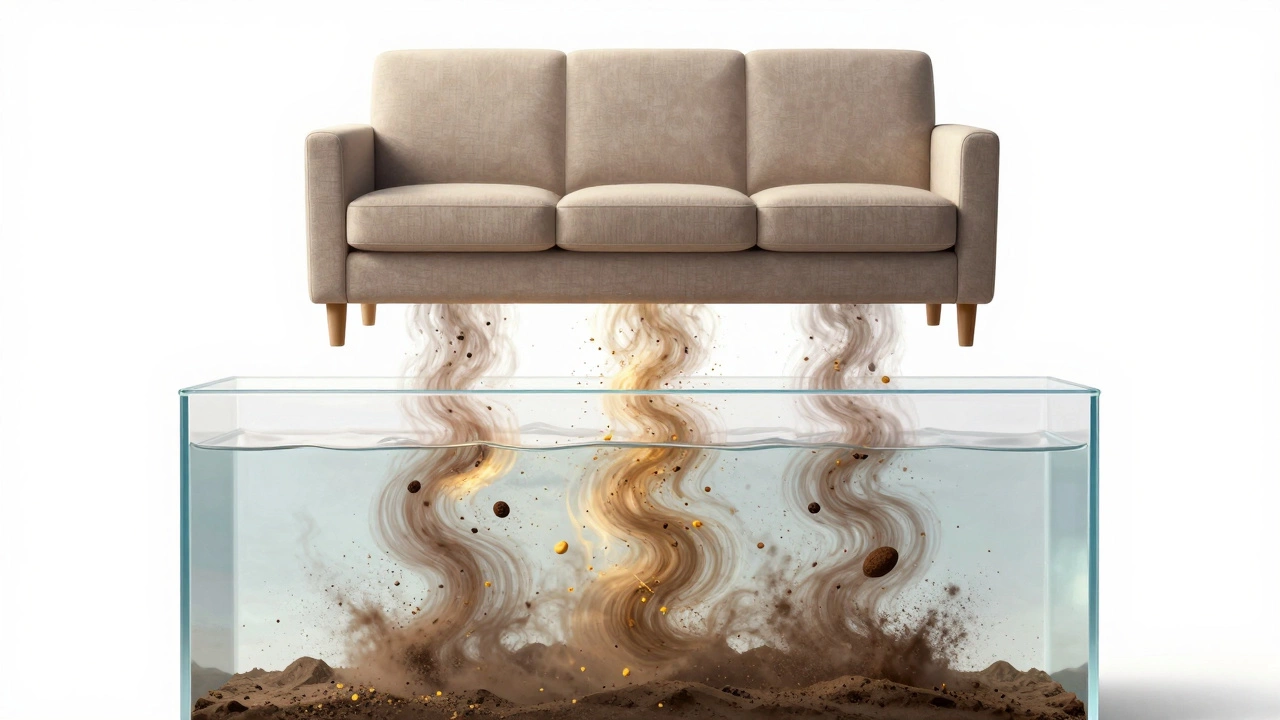
So, where does the dirt go? It doesn’t vanish. It doesn’t float into the air. It gets pulled into the machine’s tank, where you can see it, smell it, and empty it. Steam cleaning doesn’t hide dirt-it moves it. And that’s the whole point. You’re not just making your couch look better. You’re removing allergens, bacteria, and years of accumulated grime from your living space.
Next time you steam clean, check the tank. You’ll see exactly what your couch has been holding onto. And you’ll realize: cleaning isn’t magic. It’s just physics, done right.
Does steam cleaning remove allergens from a couch?
Yes, steam cleaning is one of the most effective ways to remove allergens like dust mites, pet dander, and pollen from upholstery. The high heat (above 160°F) kills dust mites on contact, and the vacuum extraction removes their waste and dead bodies. A 2023 study by the Allergy and Asthma Foundation showed steam cleaning reduced allergen levels in sofas by 89% after one treatment.
Can I steam clean a leather couch?
No, you should never steam clean real leather. The heat and moisture can dry out the material, cause cracking, and strip away protective finishes. Leather should be cleaned with a pH-balanced leather cleaner and conditioned regularly. If you’re unsure, check the manufacturer’s care label-usually marked with an "L" for leather-safe cleaners.
How often should I steam clean my couch?
For most households, steam clean your couch once every 6 to 12 months. If you have pets, kids, or allergies, aim for every 4 to 6 months. Heavy use, like a family room where people eat or sleep on the sofa, may require cleaning every 3 months. Waiting longer than a year lets dirt build up to the point where it starts to degrade fabric fibers.
Why does my couch smell funny after steam cleaning?
That smell is the organic matter being pulled out-dead skin, pet dander, sweat, and trapped food particles. It’s not a bad odor like mold; it’s more like wet dog or old dust. The smell fades within a few hours as the couch dries. If it lingers, the padding may be damp or contaminated. Use a fan to speed drying, and if the smell stays, consider professional deep cleaning.
Can I use vinegar or detergent with steam cleaning?
Only if your steam cleaner’s manual says it’s safe. Most steam cleaners are designed to use plain water. Adding vinegar or detergent can damage internal components, clog nozzles, or leave residue that attracts more dirt. If you need extra cleaning power, use a pre-treatment spray designed for upholstery, then steam over it. Never pour chemicals into the water tank.