Upholstery Cleaning Method Advisor
Have you ever tried to clean a stubborn wine stain from your sofa using household products, only to find the spot darker or even permanent? It is frustrating. You followed the instructions on the bottle, scrubbed hard, and still ended up with a mess. The difference between a DIY attempt and a pristine-looking couch usually comes down to two things: specialized equipment and industrial-grade chemistry. Professional upholstery cleaners do not just use stronger versions of what you buy at the supermarket. They use a specific toolkit designed to lift dirt without damaging delicate fibers.
Understanding what pros use can help you decide whether to hire someone or invest in better gear for yourself. It also helps you avoid common mistakes that ruin fabrics. Let’s look at the actual tools and chemicals sitting in the vans of experienced technicians.
The Power of Hot Water Extraction
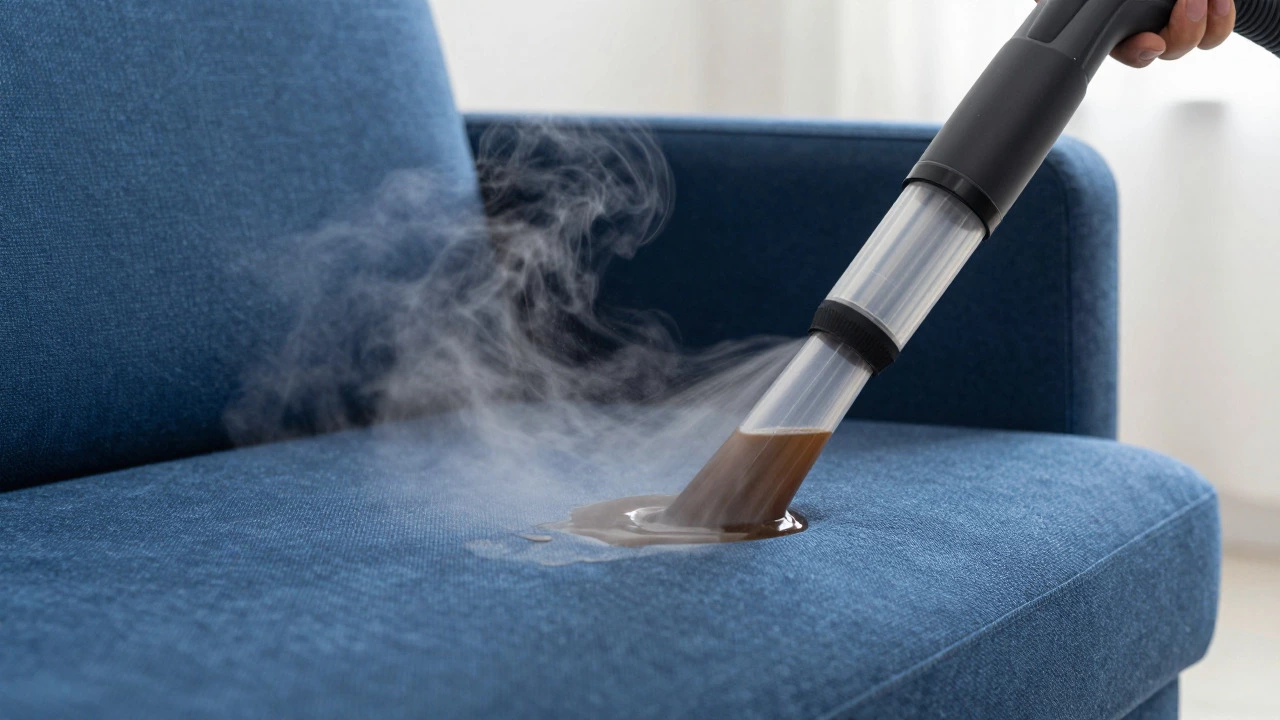
If there is one piece of equipment that defines professional cleaning, it is the truck-mounted or portable hot water extraction machine (also known as steam cleaning). Despite the name, these machines rarely use actual steam. Instead, they inject a mixture of hot water and cleaning solution deep into the fabric pile under high pressure. Immediately after injection, powerful suction pulls the water, along with dissolved dirt, bacteria, and allergens, back out.
| Method | Depth of Clean | Drying Time | Best For |
|---|---|---|---|
| Hot Water Extraction | Deep fiber level | 4-8 hours | Heavy soil, allergens |
| Dry Foam Cleaning | Surface level | 1-2 hours | Delicate fabrics, silk |
| DIY Spray & Wipe | Top layer only | 30 minutes | Minor spills |
Why does this matter? Household vacuums remove surface dust. They cannot reach the base of the fibers where ground-in dirt lives. Professional extractors have suction power measured in inches of water lift (often over 60 inches), which is significantly higher than consumer-grade units. This strong suction prevents over-wetting, which is a major cause of mold growth and fabric shrinkage.
Industrial-Grade Chemical Solutions
The chemistry used by professionals is formulated for speed and safety. Unlike consumer products that might contain harsh bleaches or leave sticky residues, professional solutions are often pH-balanced and biodegradable. Here are the key types of chemicals you will see:
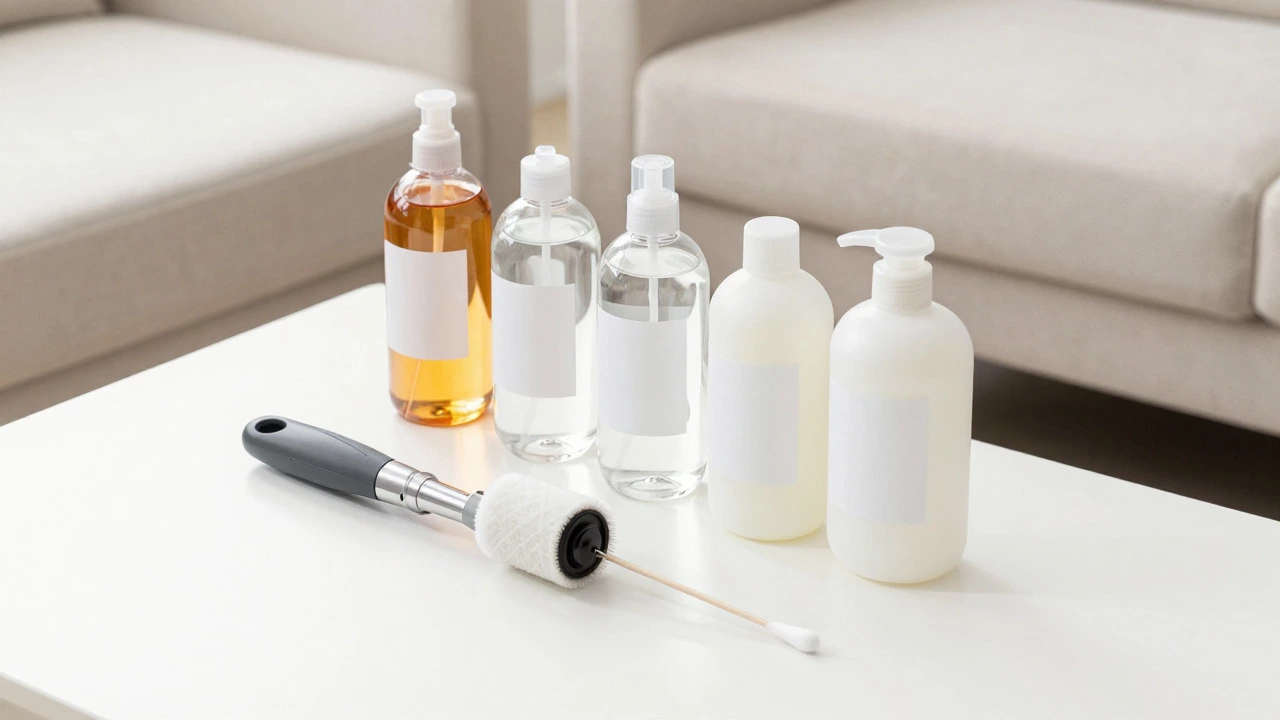
- Prewconditioners: These are sprayed onto the fabric before extraction. They contain enzymes or surfactants that break down protein-based stains (like blood or food) and oily soils. They need dwell time-usually 5 to 10 minutes-to work effectively.
- Solvent-Based Spot Removers: For grease or oil stains that water cannot touch, pros use solvent-based cleaners. These dissolve the oil without spreading it. They are volatile, meaning they evaporate quickly, leaving no residue.
- Fabric Protectors: After cleaning, many technicians apply a fluoropolymer-based protector. This creates an invisible barrier that repels liquids and dirt. It does not make the fabric stain-proof, but it gives you more time to wipe up spills before they set.
A common mistake amateurs make is using too much soap. Professional cleaners know that excess detergent attracts dirt faster, causing the upholstery to re-soil quickly. They rinse thoroughly to ensure no residue remains.
Specialized Vacuuming Tools
Cleaning starts long before water touches the fabric. Professionals use heavy-duty commercial vacuums equipped with specialized attachments. A standard upright vacuum head is too large and lacks the necessary suction for upholstery.
Instead, they use motorized brush rolls specifically designed for fabric. These brushes agitate the fibers to loosen embedded dust mites and pet hair. Some vacuums have HEPA filtration systems, which capture microscopic particles rather than blowing them back into the room’s air. This is crucial for households with allergies or asthma.
You will also see crevice tools and upholstery wands. These narrow attachments allow cleaners to get into tight spaces between cushions, along seams, and around buttons where dirt accumulates unnoticed. Regular vacuuming with these tools every week can extend the life of your furniture significantly.
Stain Removal Techniques
Knowing what chemical to use is only half the battle; technique matters just as much. Professionals follow the "blot, don’t rub" rule. Rubbing spreads the stain deeper into the weave and damages the fiber structure. Blotting lifts the liquid out.
For specific stains, the approach varies:
- Ink Stains: Treated with alcohol-based solvents applied with a cotton swab to isolate the area.
- Blood Stains: Require cold water and enzymatic cleaners. Heat sets blood proteins, making them permanent.
- Coffee/Tannin Stains: Addressed with acidic pre-treatments that neutralize the tannins before extraction.
Pros always test any chemical on a hidden area first, such as the back of the sofa or underneath a cushion. This checks for colorfastness. If the dye runs, they switch to a dry-cleaning method instead of wet extraction.
Equipment for Delicate Fabrics
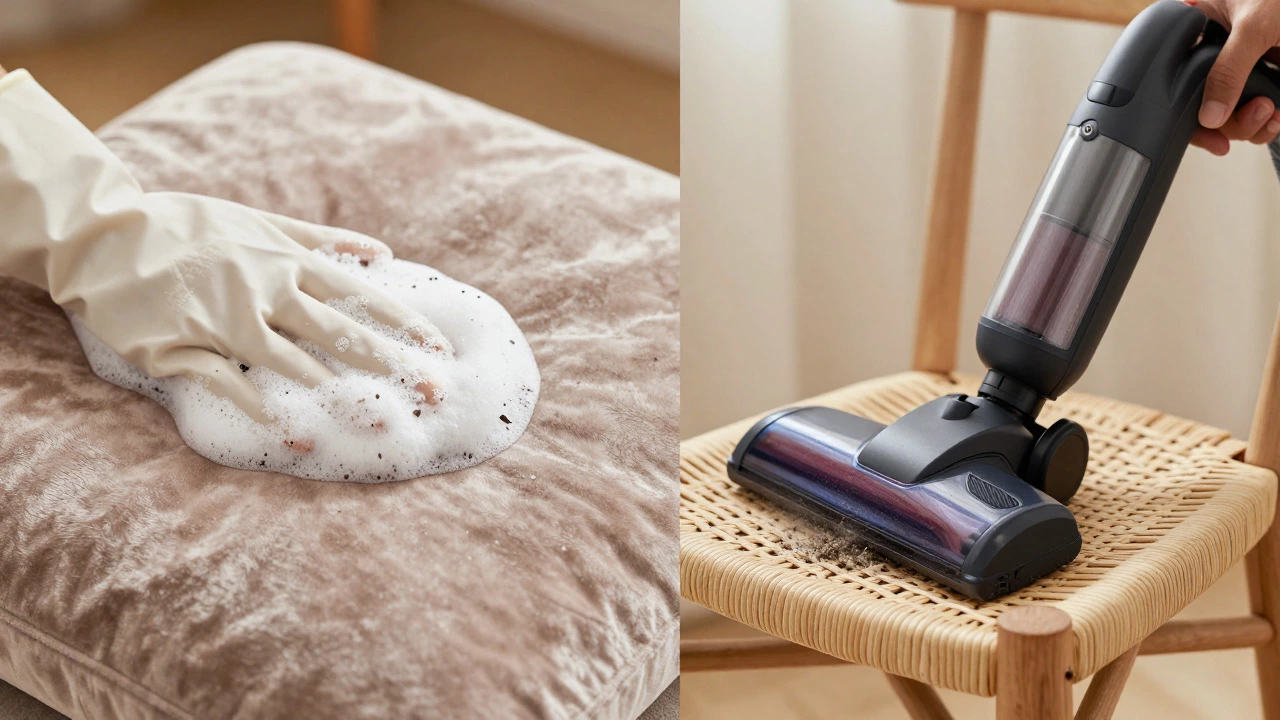
Not all upholstery is tough cotton or polyester. Silk, velvet, and antique fabrics require gentler handling. For these materials, professionals often skip hot water extraction entirely. Instead, they use dry foam cleaning or encapsulation methods.
Dry foam involves applying a low-moisture foam that traps dirt. As the foam dries, it crystallizes, and the dirt is vacuumed away. This method minimizes water usage, reducing the risk of water rings or shrinkage. Encapsulation uses a polymer solution that surrounds dirt particles, turning them into a powder that is easily removed by vacuuming once dry.
Maintenance and Longevity Tips
Using professional-grade tools doesn’t mean you need to hire a pro every month. Understanding their methods allows you to maintain your furniture better. Rotate cushions regularly to ensure even wear. Vacuum weekly with a soft brush attachment. Treat spills immediately with a clean, white cloth and cold water. Avoid direct sunlight, which fades colors over time.
If you plan to invest in home equipment, consider a mid-range extractor with good suction power. Look for brands that offer separate tanks for clean and dirty water, preventing cross-contamination. Pair it with a mild, residue-free cleaner designed for your specific fabric type.
Can I use vinegar to clean upholstery?
Vinegar can be effective for removing odors and some light stains due to its acidity. However, it is not a complete cleaning solution. It lacks the surfactants needed to lift oily soils. Always dilute vinegar with water (1:1 ratio) and test on a hidden spot first, as acid can damage certain synthetic fibers or natural dyes.
How often should professional upholstery cleaning be done?
For most households, professional cleaning every 12 to 18 months is sufficient. If you have pets, children, or smokers in the home, aim for every 6 to 12 months. High-traffic areas like office chairs may need quarterly attention. Regular vacuuming extends the time between professional services.
Is steam cleaning safe for all fabrics?
No. Steam cleaning (hot water extraction) is not suitable for delicate fabrics like silk, wool, or some velvets. These materials can shrink, felt, or lose their nap when exposed to heat and moisture. Always check the manufacturer’s care label. Codes like 'S' indicate dry cleaning only, while 'W' indicates water-based cleaning is safe.
What is the best vacuum attachment for upholstery?
A motorized brush roll attachment is best for deep cleaning woven fabrics as it agitates dirt loose. For delicate surfaces, use a soft bristle brush or a plain nozzle without a brush to prevent snagging. Ensure your vacuum has adjustable suction control to avoid pulling threads.
Do fabric protectors really work?
Yes, fabric protectors create a hydrophobic barrier that causes liquids to bead up rather than absorb. This gives you more time to clean up spills. However, they wear off over time with friction and cleaning. Reapplication is typically needed every 1-2 years depending on usage. They do not prevent staining from oils or pigments indefinitely.