Oven Deep Clean Checklist & Timer
Follow this proven routine to remove baked-on grease without harsh chemicals. Check off steps as you go.
Wait Time Timer
Baking soda needs time to work. Set a reminder for when you can wipe it down.
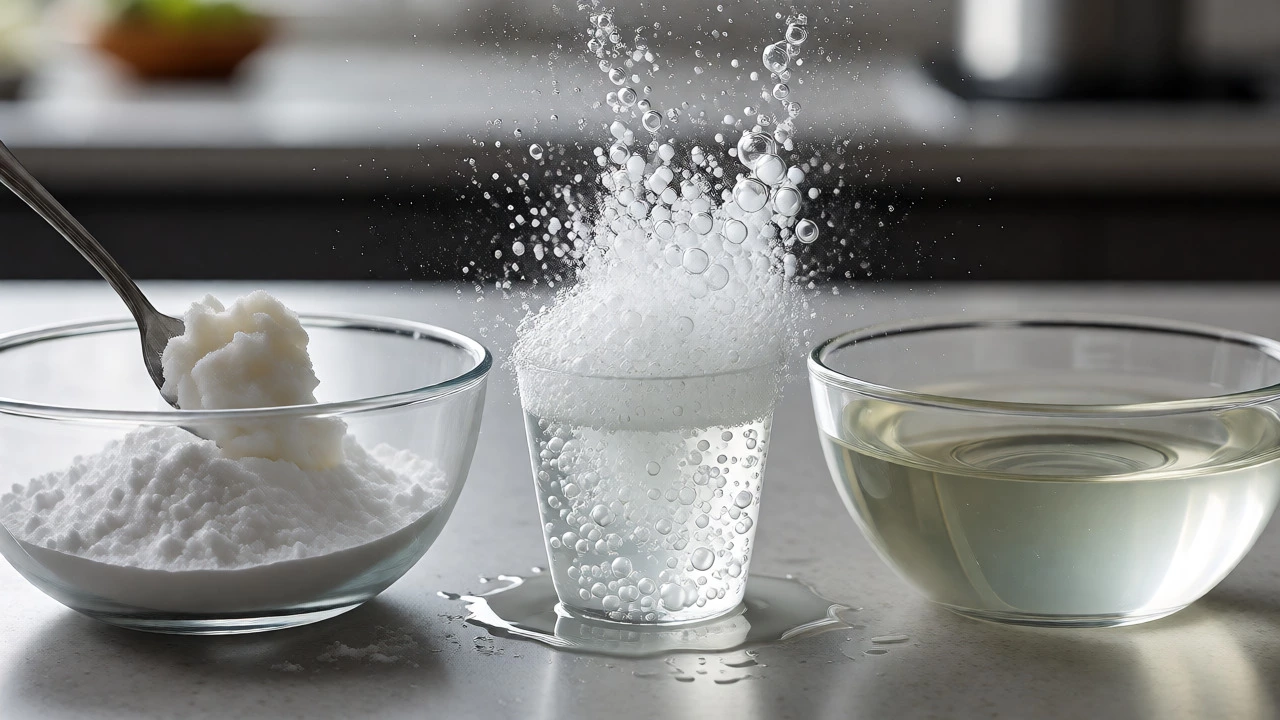
You’ve probably seen the viral videos: a fizzy purple explosion in a toilet bowl or a bubbling cauldron in a sink. It looks satisfying, doesn’t it? But if you’re staring at a baked-on layer of grease inside your oven, wondering if that same fizz will save you from scrubbing until your arms fall off, the answer is more complicated than a simple yes or no. Baking soda and vinegar are powerful household staples, but they don't actually dissolve grease together; they neutralize each other. That’s right. When you mix them, you get carbon dioxide bubbles (the fizz) and sodium acetate (basically salt water). You lose the cleaning power of both ingredients to create a chemical reaction that mostly just makes noise.
So, why do people still use them? Because individually, they are fantastic. The trick isn't mixing them into a slurry before applying it; it's using them sequentially or for different stages of the cleaning process. If you want a sparkling oven without harsh chemicals, you need to understand how these two substances interact with fat, heat, and time. Let’s break down exactly what works, what wastes your time, and how to tackle that stubborn grime on your glass door.
The Chemistry of Fizz vs. Grease
To understand why the "mix-and-scrub" method often fails, we have to look at the chemistry. Grease is non-polar. This means it doesn't like water. Water is polar. They repel each other. To remove grease, you need something that can either emulsify it (break it into tiny droplets so water can wash it away) or saponify it (turn it into soap).
Vinegar is acetic acid. Acids are great at dissolving mineral deposits like limescale or hard water stains. They cut through alkaline residues. But acids are generally poor at breaking down fats and oils. If you pour straight vinegar on a greasy pan, it might smell good, but the grease stays right where it is.
Baking soda, or sodium bicarbonate, is a mild alkali. Alkalis are the secret weapon against grease. When baking soda mixes with water, it creates a slightly basic solution. More importantly, when heated or left to sit on organic matter, it acts as a gentle abrasive and helps break down acidic soils and proteins. While not as strong as industrial degreasers, its pH level is high enough to help lift some types of burnt-on food and loosen grease bonds.
When you combine an acid (vinegar) and a base (baking soda), they neutralize. The resulting liquid has a pH close to 7-neutral. Neutral liquids are terrible at cutting grease. So, if you make a paste of baking soda and then immediately spray vinegar on it, you are essentially washing your oven with salty, fizzy water. You aren't dissolving the grease; you're just moving it around.
Why Baking Soda Alone Is Your Best Friend
If you want to clean an oven naturally, baking soda should be your primary tool. It works best when applied as a thick paste. Here is why this method outperforms the vinegar mix:
- Abrasive Action: Baking soda crystals are small but hard. When you scrub, they physically scour away burnt residue without scratching enamel surfaces (unlike steel wool, which can damage stainless steel).
- pH Balance: As a mild base, it helps hydrolyze ester bonds in fats. This is the scientific way of saying it starts the process of turning grease into something water-soluble.
- Drying Power: When spread over wet grease, baking soda absorbs moisture and oil, pulling the gunk up to the surface where it can be wiped away.
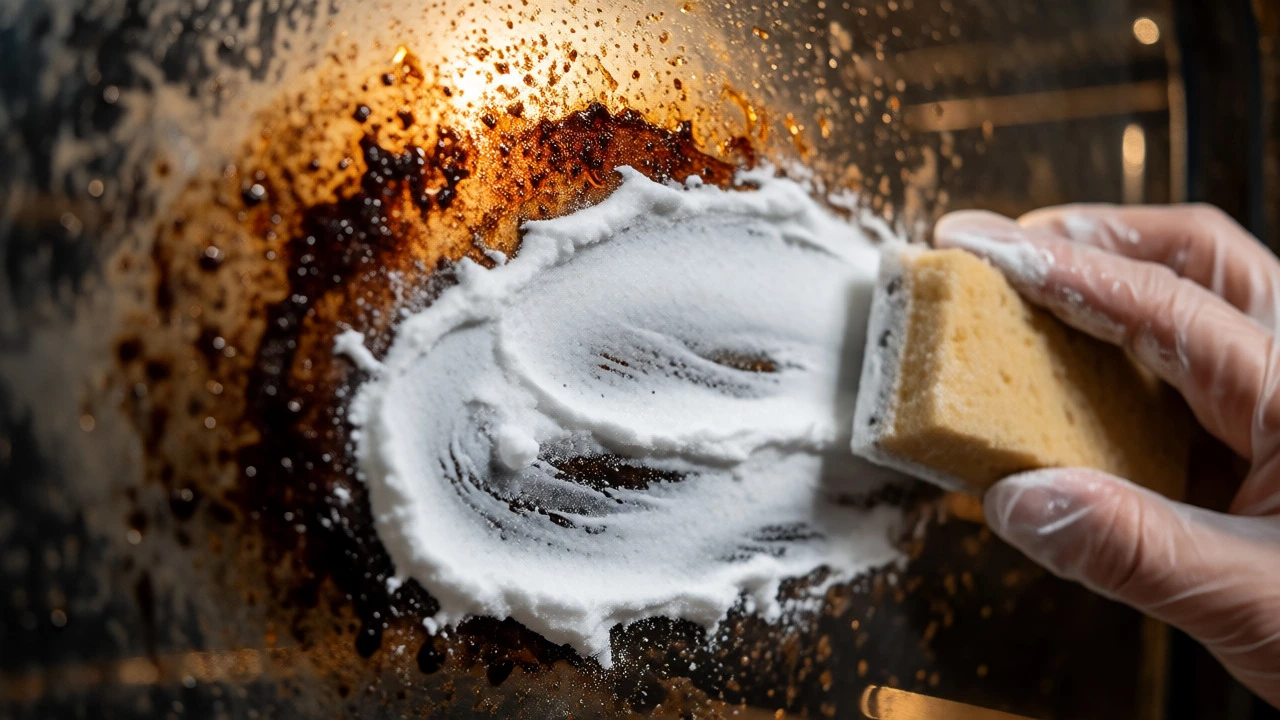
For heavy-duty oven cleaning, apply a thick layer of baking soda paste (mixed with just enough water to make a spreadable consistency) to the interior surfaces. Avoid the heating elements. Let it sit for at least 12 hours, preferably overnight. During this time, the baking soda dries out and traps the loosened grease particles. When you come back, you wipe it away with a damp cloth. Most of the grime comes off with it.
The Role of Vinegar: Rinse and Shine
Does this mean vinegar is useless? Absolutely not. It just needs to be used correctly. After you have done the heavy lifting with baking soda, there is often a white powdery residue left behind. This is unreacted baking soda. If you leave it, it looks messy and can smoke when you next turn on the oven.
This is where vinegar shines. Fill a spray bottle with white distilled vinegar. Spray it onto the damp surfaces where you just wiped away the baking soda paste. You will see a brief fizzing reaction. This is not because it is dissolving new grease; it is because the vinegar is reacting with the leftover baking soda residue. This reaction helps lift any remaining powder and leaves the glass shiny.
Vinegar is also excellent for the final polish. Once the bulk of the grease is gone, a vinegar-water mix (50/50 ratio) cuts through any lingering film and removes streaks from the oven door glass. It evaporates quickly and leaves no sticky residue, unlike many commercial sprays.
Step-by-Step: How to Clean an Oven Properly
Stop guessing and follow this proven routine. It takes about 15 minutes of active work, plus waiting time.
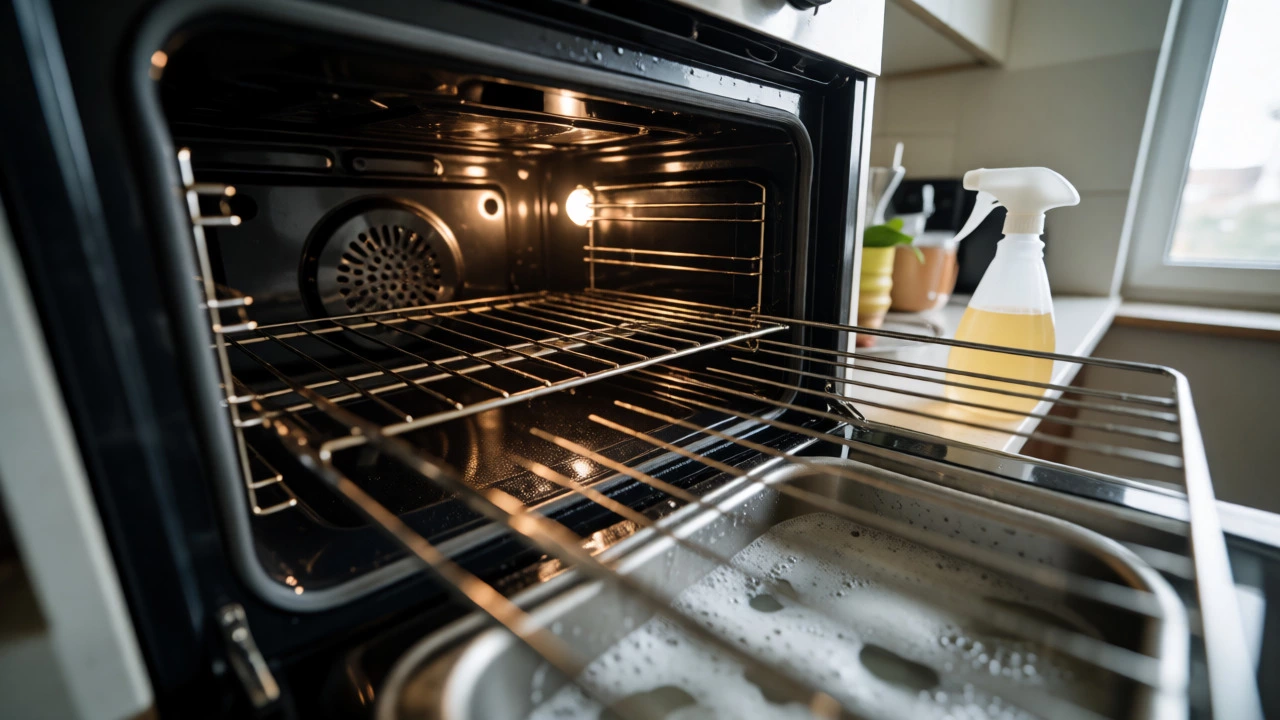
- Remove Racks: Take out all oven racks. Soak them in a bathtub or large sink filled with hot water and half a cup of baking soda. Let them soak overnight. Scrub them with a brush the next day. They will look brand new.
- Make the Paste: In a bowl, mix one cup of baking soda with three tablespoons of water. Stir until it forms a thick, frosting-like paste. It should stick to your spoon without dripping.
- Apply Generously: Wear gloves. Spread the paste over all interior surfaces of the oven, including the glass door. Focus heavily on areas with visible grease buildup. Do not put paste on the heating elements (top or bottom coils), as this can cause smoking or damage.
- Wait: Close the oven door. Leave the paste for at least 12 hours. For extremely dirty ovens, wait 24 hours. Patience is the key ingredient here.
- Wipe Down: Use a damp microfiber cloth or sponge to wipe away the dried paste. You will notice the black grease coming off with the white powder. Rinse your cloth frequently in warm water. Repeat until most of the paste is removed.
- The Vinegar Finish: Spray white vinegar onto the damp surfaces. Wipe again with a clean, dry cloth. This removes the last traces of baking soda and polishes the metal.
What About Lemon Juice?
You might hear suggestions to add lemon juice to the mix. Lemon juice contains citric acid. Like vinegar, it is an acid. It smells wonderful and has mild antibacterial properties. However, chemically, it behaves similarly to vinegar. It does not dissolve grease significantly better than acetic acid. Its main benefit is masking odors. If you hate the smell of vinegar, substitute it with lemon juice in the final rinse step. It won't change the cleaning efficacy regarding grease, but it will make the experience much more pleasant.
Comparison: Natural vs. Chemical Cleaners
How do these pantry staples stack up against store-bought products? Here is a realistic breakdown.
| Agent | Grease Cutting Power | Safety | Cost | Best For |
|---|---|---|---|---|
| Baking Soda Paste | Moderate (Requires Time) | High (Non-Toxic) | $1 Box | General maintenance and light-to-medium buildup |
| Vinegar Spray | Low (Mineral Deposits Only) | High (Non-Toxic) | $2 Bottle | Rinsing residue and polishing glass |
| Commercial Oven Cleaner | High (Fast Acting) | Low (Caustic Fumes) | $8-$15 Bottle | Severe, caked-on carbonized grease |
| Dish Soap + Hot Water | Moderate (Emulsifier) | High | Pantry Item | Fresh spills and rack soaking |
Notice that commercial cleaners win on speed. If you have a self-cleaning cycle that failed, or years of neglect, baking soda might take too long. But for regular upkeep, baking soda is safer, cheaper, and effective enough.
Common Mistakes to Avoid
People often ruin their ovens or waste time by making these errors:
- Using Steel Wool on Glass: Never use coarse steel wool on the oven door glass. It causes microscopic scratches that trap dirt, making the glass look permanently cloudy. Use a razor blade held at a 45-degree angle for stubborn spots, or a non-abrasive pad.
- Ignoring the Seals: Don't get baking soda paste on the rubber door seals. It can dry them out and cause cracking. Wipe the seal area with a damp cloth only.
- Turning On the Heat Too Soon: If you leave baking soda residue on the heating elements, the first time you bake after cleaning, your kitchen will fill with white smoke. Ensure you have wiped the elements thoroughly.
- Expecting Instant Results: Natural cleaning is slow. If you expect the grease to vanish in 10 minutes, you will be disappointed. Give it time to work.
When to Call a Professional
Sometimes, DIY isn't enough. If your oven has layers of grease so thick they are insulating the walls, or if the enamel is chipped, you might need professional help. A pro uses industrial-grade degreasers and steam cleaning equipment that can penetrate deep into porous surfaces without damaging the finish. In Bristol, many local services offer eco-friendly options now, so you don't necessarily have to compromise on health standards to get a deep clean.
Can I use apple cider vinegar instead of white vinegar?
Yes, you can. Apple cider vinegar has the same acetic acid content as white vinegar, so it cleans just as well. However, it can leave a slight amber tint on very light-colored surfaces and has a stronger scent. White vinegar is preferred for oven glass to ensure no color transfer.
Will baking soda scratch my stainless steel oven?
Baking soda is a mild abrasive. It is generally safe for stainless steel interiors if you rub gently and in the direction of the grain. However, avoid using it on polished chrome finishes, as it can dull the shine over time. Always test a small hidden area first.
How often should I clean my oven with baking soda?
If you cook regularly, aim for a quick wipe-down after every few uses to prevent buildup. A full baking soda treatment once every three to six months keeps the oven in top condition. Frequent minor cleaning prevents the need for major scrubbing later.
Does the self-cleaning cycle replace manual cleaning?
No. Self-cleaning cycles burn off loose debris but often leave behind ash and hardened grease patches. Additionally, the high heat can warp seals over time. Manual cleaning with baking soda removes physical residue that burning cannot fully eliminate.
Is it safe to eat food cooked in an oven cleaned with vinegar?
Yes, provided you have wiped the surfaces thoroughly. Vinegar is food-safe and non-toxic. Any residual smell dissipates quickly once the oven heats up. Just ensure no oily residue remains, as that affects taste.