Interior Window Cleaner Calculator
Professional detailers use 70% isopropyl alcohol and 30% distilled water for streak-free interior glass cleaning. Enter your IPA volume below to get the exact mixture.
Ever noticed how crystal clear the inside of a luxury car’s windshield looks-no smears, no fingerprints, no haze-and wondered how they get it that clean? It’s not magic. It’s technique, and the right tools. Most people think wiping car windows with a paper towel and glass cleaner is enough. But if you’ve ever tried it, you know: you end up with streaks, oily residue, or worse-hazy glass that catches the sun just right and blinds you on your commute. Car detailers don’t just clean windows. They engineer them to be invisible. Here’s exactly what they use, why it works, and how you can do it too.
Why Interior Glass Is Different
Exterior car windows deal with dirt, bugs, and rain. Interior windows? They deal with you. Your skin oils, your breath, your phone screen glare, and the plastic outgassing from dashboards and vinyl seats. That’s why regular household glass cleaners often fail inside a car. Many contain ammonia, which can fog up tinted windows over time, damage the thin film on modern windshields, or leave a greasy film that attracts dust like a magnet. Detailers avoid ammonia entirely. Instead, they use alcohol-based solutions that evaporate fast, carry away oils, and leave zero residue.
The Go-To Cleaner: Isopropyl Alcohol Blend
Most professional detailers mix their own cleaner: 70% isopropyl alcohol (IPA) and 30% distilled water. Some add a drop of dish soap-just one-to help cut through heavy grease from dashboard plastics. The alcohol breaks down oils and fingerprints. The water slows evaporation just enough to let you wipe evenly. Distilled water is key. Tap water has minerals that leave white spots once it dries. You’ll see those spots on your rearview mirror after a week. They’re not dirt. They’re hard water deposits.
Why not buy a pre-mixed product? You can. But most store-bought interior glass cleaners are diluted with fillers. A 16-ounce bottle of ‘premium’ cleaner might only have 10% IPA. That’s why it doesn’t work as well. DIY lets you control the formula. A 32-ounce bottle of 70% IPA costs under £5 at any pharmacy. Mix it with distilled water, and you’ve got enough for 50+ cleanings.
The Tool That Makes All the Difference: Microfiber Cloths
You can have the best cleaner in the world, but if you use a paper towel or a dirty rag, you’re wasting your time. Detailers use two microfiber cloths-always. One for application, one for buffing. Not just any microfiber. Look for 80/20 polyester-polyamide blend, with a density of at least 300 GSM. Cheaper cloths shed lint or scratch the glass. High-quality ones trap dirt like a magnet and don’t leave fibers behind.
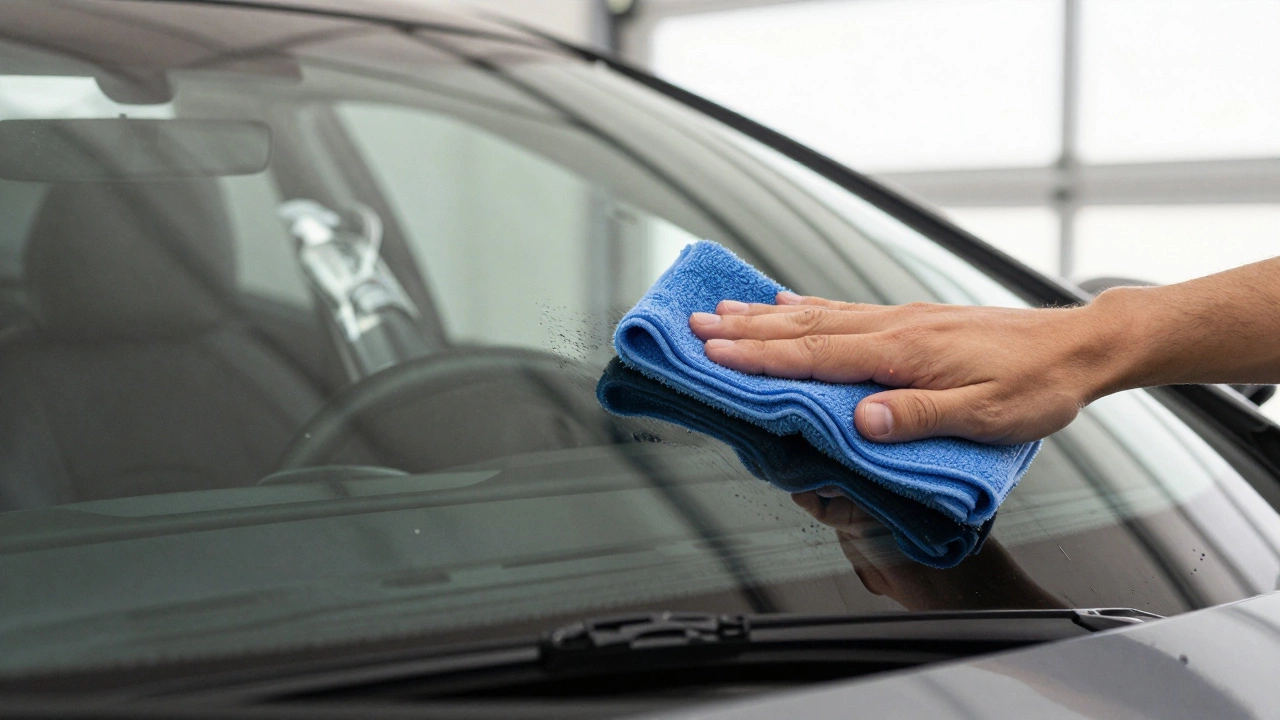
Here’s the trick: use one cloth dry to wipe away dust and loose particles first. Then spray the cleaner lightly onto the second cloth-not the glass. Spraying directly can drip onto dashboards, electronics, or leather, and ruin them. Wipe the glass in one direction-vertical or horizontal, doesn’t matter, but stay consistent. Then flip the second cloth to its dry side and buff. No need for pressure. Just glide. The alcohol evaporates as you go, pulling oils with it. The result? Glass that looks like it’s not even there.
What They Avoid
Detailers steer clear of a few common mistakes:
- Ammonia-based cleaners - They degrade window tint and can crack modern laminated windshields over time.
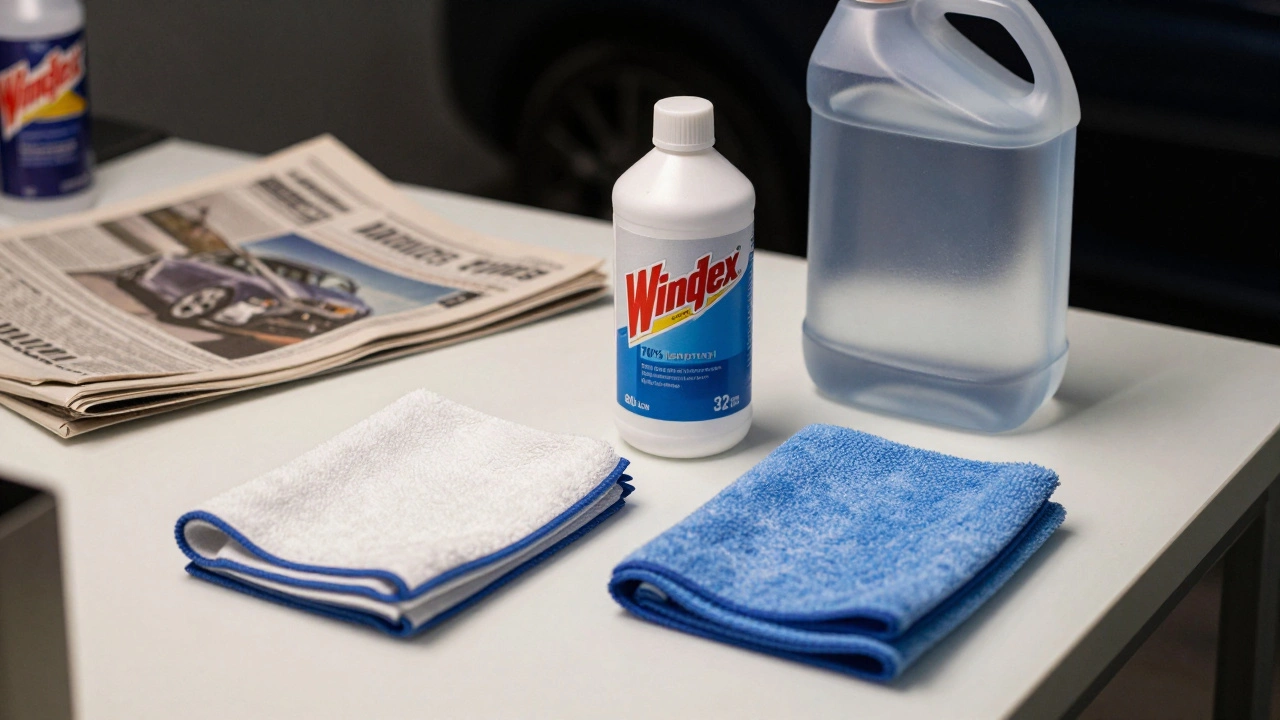
- Newspaper - It’s a myth that it leaves streak-free glass. Ink transfers, and modern windows have coatings that ink sticks to.
- Household Windex - Too much water, too little cleaning power. Leaves residue on tinted glass.
- Dirty cloths - Reusing a cloth without washing it? You’re just spreading dirt around. Wash microfiber after every 2-3 uses with unscented detergent. No fabric softener. It clogs the fibers.
Pro Tip: The 2-Cloth Method for Tough Residue
If your windows have built-up grease from years of phone use or cigarette smoke, the standard method won’t cut it. Here’s what detailers do:
- Dampen a microfiber cloth with 70% IPA and gently scrub the glass in small circles.
- Let it sit for 15 seconds-don’t wipe yet. The alcohol softens the grime.
- Use a second, dry microfiber cloth to wipe in straight lines.
- Repeat if needed. Most stubborn residue comes off in one pass.
This works because IPA doesn’t just clean-it dissolves. It’s a solvent, not just a cleaner. That’s why it’s used in labs and electronics factories. It’s safe for glass, but it’s powerful.
How Often Should You Clean Interior Windows?
Most cars need an interior glass clean every 2-3 weeks. But if you drive daily, have kids in the car, or smoke inside, clean them weekly. Dust builds up fast. And every time you wipe with a dirty cloth, you’re embedding more grime into the glass. Think of it like brushing your teeth. If you skip days, plaque builds. Same with window grime. It bonds to the surface. Once it does, you need stronger chemicals-or a professional-to remove it.
Common Mistakes and How to Fix Them
Even with the right products, people mess up. Here are the top three:
- Streaks - Usually caused by using too much cleaner or wiping with a dirty cloth. Solution: Use less product. Change cloths more often.
- Hazy film - Often from using tap water or low-quality cleaners. Solution: Switch to distilled water and 70% IPA.
- Leftover lint - From cheap microfiber or towels. Solution: Buy high-GSM cloths and wash them before first use.
One client in Bristol brought in his 2021 BMW. The inside of the windshield looked like frosted glass. He’d been using baby wipes. They contain oils and lotions. We cleaned it with IPA and two microfiber cloths. He said it looked like he’d just bought the car. That’s the power of the right method.
Final Checklist for Perfect Interior Windows
- Use 70% isopropyl alcohol + distilled water (3:1 ratio)
- Never spray cleaner directly on glass
- Use two clean microfiber cloths: one for wiping, one for buffing
- Wipe in straight lines, not circles
- Clean every 2-3 weeks-or weekly if you drive a lot
- Wash microfiber cloths after 2-3 uses with unscented detergent
- Avoid ammonia, newspaper, and household glass cleaners
Interior car windows aren’t meant to be cleaned like bathroom mirrors. They’re part of a precision system. Detailers treat them like optical lenses-because that’s what they are. Get this right, and your vision on the road improves. Your car feels new. And you stop squinting at the sun.
Can I use vinegar to clean car windows inside?
Vinegar works on exterior windows, but not inside. It’s too acidic and can damage the plastic coatings on modern dashboards and touchscreens. It also leaves a sour smell that lingers. Detailers avoid it entirely. Stick with 70% isopropyl alcohol.
Why does my window get hazy after cleaning?
Haze usually comes from using tap water or low-quality cleaners that leave behind oils or minerals. If you’re using distilled water and 70% IPA, haze shouldn’t happen. If it does, your microfiber cloth might be dirty or low quality. Try a new one.
Is it safe to clean windows with electronics nearby?
Yes, as long as you don’t spray the cleaner directly. Always spray it on the cloth, not the glass. IPA evaporates quickly and won’t damage electronics. But if liquid drips into vents or buttons, it could cause damage. Be careful and use minimal product.
Can I reuse the same cloth for inside and outside windows?
No. Outside windows carry dirt, tar, bugs, and road grime that can scratch interior glass. Always use separate cloths. Keep one set for inside, another for outside. Wash them separately too.
What’s the best microfiber cloth brand for car windows?
Look for 80/20 polyester-polyamide, 300 GSM or higher. Brands like Chemical Guys, Meguiar’s, and AutoGeek Pro are trusted by detailers. You can find good ones on Amazon or at auto supply stores. Avoid anything labeled ‘ultra-soft’-those are for paint, not glass.