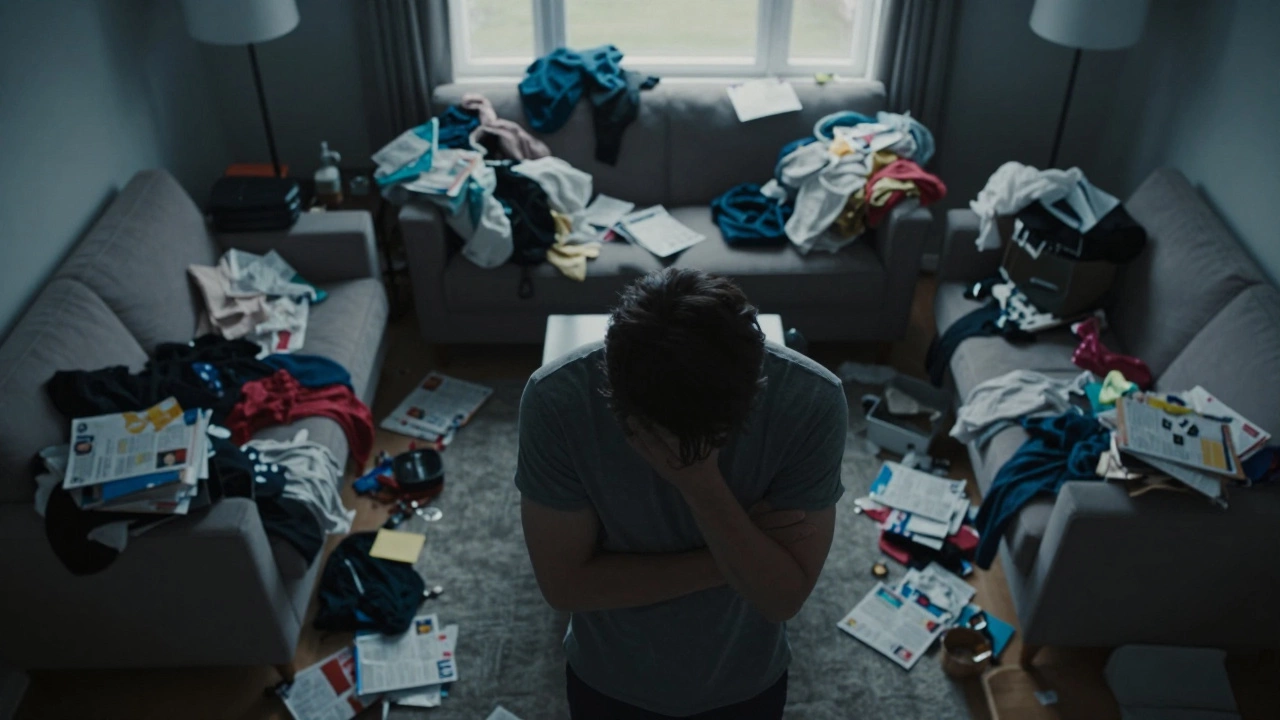
The "Five Things" Cleaning Roadmap
Feeling paralyzed? Don't try to clean the whole room. Focus only on one category at a time. Check them off as you go. If you get distracted, just come back to the current category.
Trash
Walk around with a bag. Only look for things that are objectively trash. Ignore everything else.
Laundry
Gather clothes, towels, and linens. Put them in the basket or hamper. Don't start the wash yet—just collect.
Dishes
Collect all cups, plates, and cutlery. Bring them to the sink or dishwasher. Don't scrub yet—just gather.
Things That Have a Place
Put away items that have a designated home. If you're not sure where it goes, skip it for now.
Things That Don't Have a Place
Gather the remaining items. Put them in one pile or box to deal with later. The goal is a clear floor/surface.
Key Takeaways for Regaining Control
- Messy house syndrome is often a symptom of deeper issues like ADHD, depression, or extreme burnout.
- It differs from clinical hoarding by the intent and the level of emotional attachment to items.
- Small, non-linear wins are more effective than trying to "deep clean" everything at once.
- Professional help, ranging from therapists to specialized cleaning services, can break the cycle.
When we talk about messy house syndrome is not a formal medical diagnosis, but a descriptive term for a chronic inability to maintain a tidy home despite the desire to do so. It's that frustrating gap between knowing a house should be clean and actually being able to move your arms to make it happen. While some people are just naturally "relaxed" about tidying, those struggling with this syndrome often feel a deep sense of shame and anxiety that keeps them stuck.
Is it just a mess or something deeper?
It's easy to confuse a messy house with Hoarding Disorder, but they aren't the same. Someone with a hoarding disorder typically experiences intense distress at the idea of discarding any item, regardless of its value. In contrast, someone with messy house syndrome might actually want to throw things away-they just can't find the mental energy or the starting point to do it. They might have piles of mail they intend to file or laundry that's been sitting in the dryer for three days, not because they love the laundry, but because they are overwhelmed.
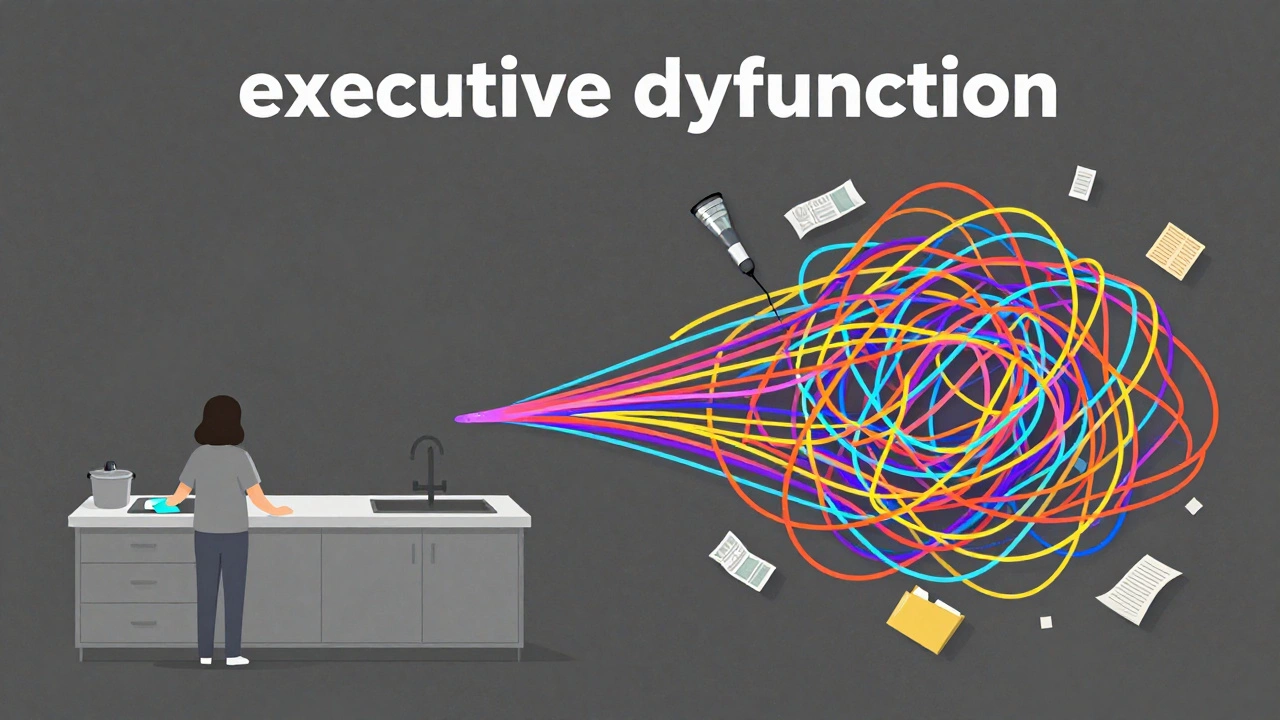
Often, this is linked to Executive Dysfunction, which is a disruption in the brain's ability to plan, organize, and execute tasks. For a "typical" brain, cleaning a kitchen means: pick up plate, put in dishwasher, wipe counter. For someone with executive dysfunction, that one task breaks down into fifty tiny, confusing steps. They might start wiping the counter, notice a dead battery in the flashlight, go to the drawer to find a new one, see a pile of old receipts, and suddenly find themselves organizing a folder of papers from 2019 while the kitchen remains a disaster.
The mental triggers behind the clutter
If you're wondering why your home looks like a tornado hit it, look at your mental health. Major Depressive Disorder often manifests as a complete loss of motivation. When the brain isn't producing enough dopamine or serotonin, the effort required to move a sock from the floor to the hamper feels like running a marathon. The mess then becomes a "visual noise" that increases stress, which in turn makes the person more depressed, creating a vicious loop.
Similarly, Attention Deficit Hyperactivity Disorder (ADHD) plays a huge role. People with ADHD often struggle with "object permanence." If an item is put inside a cupboard where it can't be seen, it effectively ceases to exist. To cope, they leave everything out on counters and tables so they don't forget it. Over time, these "visual reminders" accumulate into a mountain of clutter that becomes impossible to manage.
| Feature | Messy House Syndrome | Hoarding Disorder | General Untidiness |
|---|---|---|---|
| Emotional Attachment | Low to Medium | Extremely High | Low |
| Desire to Clean | High (but overwhelmed) | Low or Conflicted | Variable |
| Primary Driver | Executive Dysfunction | Emotional Attachment | Preference/Lifestyle |
| Impact on Life | High Anxiety/Shame | Severe Functional Impairment | Minor Inconvenience |
Breaking the cycle: Practical strategies
If you're in the thick of it, the worst thing you can do is tell yourself to "just clean the whole house this weekend." That goal is too big and will lead to failure and more shame. Instead, try the "Five Things" method. This technique suggests that almost every messy room contains only five categories of things: trash, laundry, dishes, things that have a place, and things that don't have a place. Focus on only one category at a time. Don't look at the laundry until all the trash is gone.
Another approach is "body doubling." This is where you have another person in the room with you while you clean. They don't even have to help; they can just sit on the couch or read a book. The presence of another human helps ground you and keeps you focused on the task at hand, preventing the "distraction loops" common in ADHD.
You should also consider a Professional Home Cleaning service, specifically those that offer a "reset" or "deep clean." Many people feel too embarrassed to let a professional in, but experienced cleaners have seen it all. They don't judge; they just see a puzzle to be solved. Having a professional come in for a one-time heavy lift can remove the "mountain" of mess, making the daily maintenance feel achievable rather than impossible.

When to seek professional help
Cleaning your way out of this is sometimes like trying to fix a broken leg by walking on it. If the clutter is a symptom of a mental health condition, the most effective "cleaning tool" might actually be therapy. Cognitive Behavioral Therapy (CBT) is particularly effective for managing the anxiety and perfectionism that often drive messy house syndrome. When you stop demanding that you do it "perfectly" or "all at once," the barrier to entry drops.
If you find that you cannot throw away items that have no value (like old newspapers or empty food containers) and your living space is becoming unsafe or unusable, you may be dealing with clinical hoarding. In this case, a specialized hoarding interventionist or a therapist specializing in OCD is necessary. Trying to force a person with hoarding disorder to throw things away without professional support can cause severe emotional trauma and often leads to the person hiding the items rather than discarding them.
Maintaining the progress
Once you've cleared the clutter, the fear of it returning can be overwhelming. The secret is to build "low-friction" systems. If your laundry pile always ends up on a chair, don't fight the chair-put a laundry basket exactly where that chair used to be. If mail piles up on the counter, put a small trash can and a filing tray right by the front door so you can sort it the second you walk in.
Remember that a clean house is a tool for living, not a trophy. It's okay if things get messy again; the goal is to have a system that allows you to recover without spiraling into shame. Set a timer for 15 minutes a day. When the timer goes off, you're done. This prevents the burnout that usually leads to the "all or nothing" cycle of cleaning for ten hours and then not touching a sponge for a month.
Is messy house syndrome a real medical condition?
No, it is not a clinical diagnosis found in the DSM-5. However, it is a widely recognized pattern of behavior often associated with other medical or psychological conditions such as ADHD, depression, anxiety, and PTSD. It describes the struggle of maintaining an environment despite wanting to do so.
How can I tell if I have a hoarding disorder or just a very messy house?
The key difference is the emotional response to discarding items. If you feel a visceral sense of distress, panic, or an intense need to "save" items that have no practical use or value, it may be hoarding. If you feel overwhelmed by the volume of work and lack the organization skills to manage it, but don't mind throwing things away, it's more likely messy house syndrome.
Will a professional cleaning service judge me for my mess?
Generally, no. Professional cleaners, especially those who specialize in deep cleans or move-in/move-out services, see a wide variety of home conditions. Their focus is on the technical process of cleaning-removing grime, sorting clutter, and sanitizing surfaces-rather than the personal habits of the client.
What is the best way to start cleaning when I feel paralyzed?
Start with "micro-goals." Instead of "cleaning the room," commit to "picking up five pieces of trash." Often, the hardest part is the transition from resting to acting. Once you move those five items, the momentum often carries you forward. If not, you still achieved your goal for the day.
Can ADHD really cause a messy home?
Yes, absolutely. ADHD affects the brain's executive functions, which are responsible for organizing, prioritizing, and initiating tasks. This can lead to "doom piles" (random collections of items) and a tendency to start multiple cleaning projects without finishing any of them.