80/20 Cleaning Efficiency Calculator
Calculate how much time you can save by applying the Pareto Principle to your house cleaning routine.
Your Efficiency Plan
Focus on visible surfaces, trash removal, and clutter clearing for maximum visual impact with minimal effort.
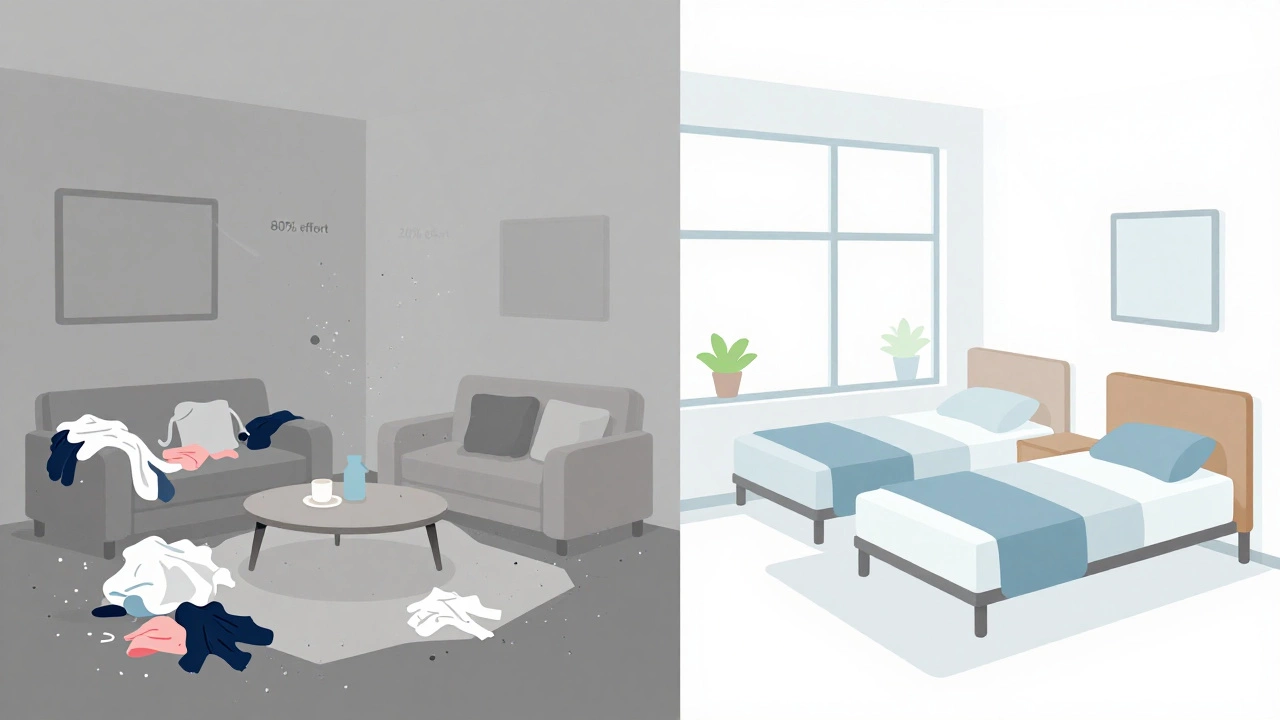
Why does your house feel messy again just two days after you spent an entire Saturday scrubbing it from top to bottom? You probably focused too much on the wrong things. The 80/20 rule is a productivity concept that suggests 80% of results come from 20% of efforts. When applied to house cleaning, it means identifying the few tasks that create the biggest visual impact and doing those consistently, while letting go of perfectionism in low-impact areas.
This approach isn't about being lazy; it's about being strategic. Most of us spend hours deep-cleaning baseboards or organizing drawers that no one sees, while ignoring the kitchen sink or bathroom mirror where grime accumulates fastest. By flipping this script, you can maintain a sparkling home with significantly less time and stress. This method is especially powerful during seasonal transitions like spring cleaning, when the goal is renewal rather than exhaustive renovation.
Understanding the Pareto Principle in Home Maintenance
The Pareto Principle, named after economist Vilfredo Pareto, originally observed that 80% of Italy's land was owned by 20% of the population. In cleaning, the logic holds true: 80% of the "clean" feeling comes from 20% of the actual chores. If you try to clean everything equally, you burn out quickly. If you focus only on the high-impact 20%, you get a home that looks and feels fresh without the exhaustion.
Think about your last big clean. Did you spend 45 minutes matching socks in the closet? Probably not. But did you spend 10 minutes wiping down the kitchen counters and they looked instantly better? That’s the 20%. The key is recognizing which surfaces and tasks are visible to guests and affect daily comfort, versus those that are hidden or rarely touched.
- High-Impact Tasks (The 20%): Visible surfaces, high-touch areas, trash removal, clutter clearing.
- Low-Impact Tasks (The 80%): Deep scrubbing grout, dusting ceiling fans, organizing internal drawers, washing window blinds.
By prioritizing the first list, you achieve maximum aesthetic return for minimum effort. This doesn't mean you never do the second list, but you schedule them less frequently or accept "good enough" as the standard.
Identifying Your High-Impact Zones
To apply this rule effectively, you need to identify what makes your specific home look messy. For most households, three zones dominate the visual landscape: the kitchen, the bathrooms, and the main living area. These rooms see the most traffic and accumulate the most noticeable dirt.
| Zone | High-Impact Task (Do Daily/Weekly) | Low-Impact Task (Do Monthly/Quarterly) | Visual Impact |
|---|---|---|---|
| Kitchen | Wipe countertops & sink | Clean inside fridge shelves | Immediate freshness |
| Bathroom | Scrub toilet bowl & mirror | Descale showerhead | Hygiene perception |
| Living Room | Clear clutter & vacuum floor | Dust behind furniture | Spaciousness |
| Bedroom | Make bed & remove laundry | Vacuum under mattress | Calm & order |
In the kitchen, a dirty sink screams "mess." Wiping it down takes thirty seconds but transforms the room. In the bathroom, a streaky mirror or a grimy toilet seat ruins the vibe. Scrubbing these spots delivers instant gratification. In the living room, clutter on surfaces creates cognitive load. Clearing tables and picking up clothes makes the space feel larger and cleaner, even if the floors aren't perfectly vacuumed yet.
The 15-Minute Power Clean Routine
You don't need a whole day to keep up with the 80/20 rule. A daily 15-minute power clean targets the high-impact zones before they become overwhelming. Set a timer. This prevents the task from creeping into your evening relaxation time.
- Declutter First: Spend 3 minutes picking up anything out of place. Put keys in the bowl, books on the shelf, clothes in the hamper. Clutter is the enemy of cleanliness.
- Wipe High-Touch Surfaces: Use a multi-surface cleaner on kitchen counters, dining tables, and remote controls. These areas harbor bacteria and look dusty quickly.
- Quick Bathroom Refresh: Spray the toilet bowl, wipe the sink, and polish the mirror. Don't scrub the tub unless it's visibly stained.
- Floor Sweep/Vacuum: Run the vacuum over high-traffic paths in the living room and hallway. You don't need to get under every chair leg today.
- Trash Check: Empty small bins if they're full. Take out the main bin if needed.
This routine keeps the "visible mess" at bay. Over a week, this adds up to just 75 minutes of active cleaning, yet your home stays presentable for guests and comfortable for your family. It shifts cleaning from a weekend marathon to a manageable daily habit.
Applying the Rule to Spring Cleaning
Spring cleaning often triggers anxiety because it implies a massive overhaul. Using the 80/20 rule, you can redefine spring cleaning as a "deep reset" of your high-impact areas rather than a top-to-bottom strip-down. Focus on the 20% of tasks that make your home feel renewed for the warmer months.
Instead of washing every window inside and out, focus on the front windows and mirrors that reflect light into the room. Instead of decluttering every drawer, tackle the junk drawer and the entryway console table. These are the places where seasonal clutter accumulates most visibly.
Consider these spring-specific high-impact tasks:
- Deep clean the oven interior if you cook more often in summer.
- Wash bedding and curtains to refresh the air quality.
- Organize the garage entrance or patio storage to welcome outdoor living.
- Descale coffee makers and kettles for better-tasting drinks.
By limiting your scope to these high-yield activities, you avoid the paralysis of choice that often stops people from starting their spring clean at all. You finish feeling accomplished, not depleted.

Tools That Speed Up the 20%
Efficiency relies partly on having the right tools. You don't need a cabinet full of specialized sprays. A few versatile products and gadgets can cut your cleaning time in half.
A good microfiber cloth set is essential. They trap dust and dirt without needing chemicals for dry dusting. For wet cleaning, a single all-purpose cleaner works on most non-porous surfaces. Avoid switching between five different bottles; it wastes time deciding which one to use.
Invest in a lightweight cordless stick vacuum. It’s faster to grab and maneuver than a heavy canister model, encouraging you to vacuum small spills immediately rather than letting them bake in. A spray bottle filled with vinegar and water is perfect for glass and mirrors, offering a streak-free shine without harsh fumes.
Finally, keep a "cleaning caddy" stocked with gloves, paper towels, and your primary cleaner. Moving from room to room without hunting for supplies breaks your flow and adds unnecessary minutes to your routine.
When to Break the Rule
The 80/20 rule is a guideline, not a law. There are times when you must address the other 80%. If you have pets that shed heavily, vacuuming frequency needs to increase. If you live in a humid climate, mold prevention requires more thorough bathroom scrubbing. Health issues like allergies might demand deeper dusting of vents and blinds.
Also, consider upcoming events. Hosting dinner? You’ll want to deep-clean the dining table and chairs. Having overnight guests? The bedroom needs a fresh sheet change and a tidy nightstand. Adapt the rule to your current needs, but always start with the high-impact basics.
Remember, the goal is a home that supports your life, not a museum that restricts it. Perfection is expensive in terms of time and energy. Good enough, maintained consistently, is far superior to perfect, achieved once a year.
What exactly is the 80/20 rule in cleaning?
The 80/20 rule, or Pareto Principle, states that 80% of the perceived cleanliness of your home comes from 20% of the cleaning tasks. It encourages focusing on high-impact, visible areas like countertops, mirrors, and floors, while reducing time spent on low-visibility tasks like dusting baseboards or organizing deep drawers.
How can I use the 80/20 rule for spring cleaning?
For spring cleaning, identify the 20% of tasks that make your home feel most refreshed. This usually includes washing bedding, cleaning windows that let in light, decluttering entryways, and deep-cleaning appliances you use daily. Skip exhaustive tasks like moving furniture to vacuum underneath unless necessary.
Is it okay to skip deep cleaning some areas?
Yes, if those areas are low-impact. For example, you don't need to scrub the inside of your closet every month. Focus on maintaining hygiene in high-touch zones like kitchens and bathrooms. Rotate deep-cleaning tasks so you do them occasionally without overwhelming yourself.
What are the highest impact cleaning tasks?
The highest impact tasks are those that remove visible clutter and grime. These include making beds, wiping kitchen counters, cleaning bathroom mirrors and toilets, vacuuming main walking paths, and taking out the trash. These actions instantly improve the look and feel of your home.
Does the 80/20 rule work for busy families?
Absolutely. Busy families benefit most from this approach because it reduces cleaning time while maintaining a livable environment. By focusing on quick daily resets of high-traffic areas, you prevent messes from becoming unmanageable, leaving more time for family activities.