DIY Streak-Free Window Cleaner Calculator
Enter your spray bottle capacity to get the perfect recipe.
Your Custom Recipe
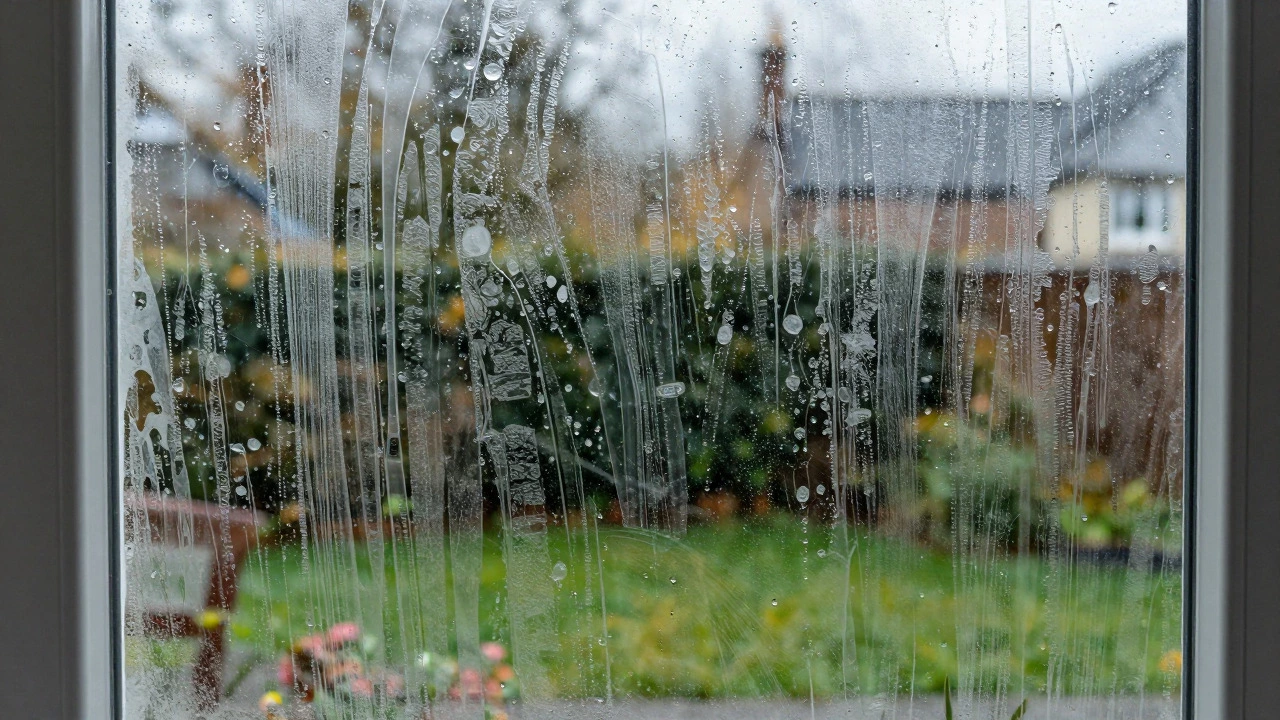
It sounds like the ultimate life hack. You have a bottle of white vinegar in your pantry, you have dirty windows, and you want to skip the expensive chemical cleaners. So, why not just pour it straight onto the glass? It’s acidic, it cuts grease, and it smells better than ammonia. But if you’ve ever tried this, you might already know the answer: it often leaves behind a mess that is harder to remove than the original dirt.
The short answer is no, you generally should not use straight vinegar on its own for window cleaning. While vinegar is an excellent solvent, using it undiluted creates a high concentration of acetic acid that evaporates too quickly, leaving visible residue and stubborn streaks. To get crystal-clear glass, you need to understand how the chemistry works and adjust your method accordingly.
Why Undiluted Vinegar Fails on Glass
Vinegar is essentially a solution of water and about 5% acetic acid. That acidity is what makes it great for dissolving mineral deposits, hard water stains, and light grime. However, when applied directly from the bottle, two things go wrong immediately.
First, evaporation speed matters. Pure or highly concentrated vinegar evaporates rapidly. As it dries, it doesn't just disappear; it leaves behind trace amounts of the acid and any impurities present in the liquid. On a vertical surface like a window, these traces manifest as cloudy streaks or hazy spots. Second, the lack of a surfactant means the liquid doesn't spread evenly. Without soap or a similar agent to lower surface tension, the vinegar beads up or runs in uneven rivulets, missing patches of dirt while over-saturating others.
Does vinegar damage window seals?
Using straight vinegar occasionally is unlikely to cause immediate failure, but frequent exposure to high-acid solutions can degrade rubber gaskets and silicone seals over time, leading to leaks or draftiness.
The Science Behind the Streaks
To fix the problem, we need to look at what actually removes dirt. Dirt on windows is usually a mix of dust, pollen, and oily residues from cooking or outdoor pollution. Water alone struggles with oil. Vinegar helps break down the oil, but it needs help spreading and rinsing.
This is where dilution becomes critical. By mixing vinegar with water, you slow down the evaporation rate slightly and reduce the intensity of the acid. More importantly, adding a tiny amount of dish soap introduces a surfactant. Surfactants lift dirt off the surface and suspend it in the water so it can be wiped away cleanly. This combination mimics the effectiveness of commercial cleaners without the harsh fumes.
Another factor is the type of vinegar you are using. Not all vinegars are created equal. White distilled vinegar is the standard for cleaning because it is clear and has a consistent acidity level (usually around 5%). Apple cider vinegar or balsamic vinegar contain sugars and pigments that will stain your windows brown or sticky. If you’re reaching for a bottle, check the label to ensure it’s plain white distilled vinegar.
How to Mix the Perfect DIY Window Cleaner
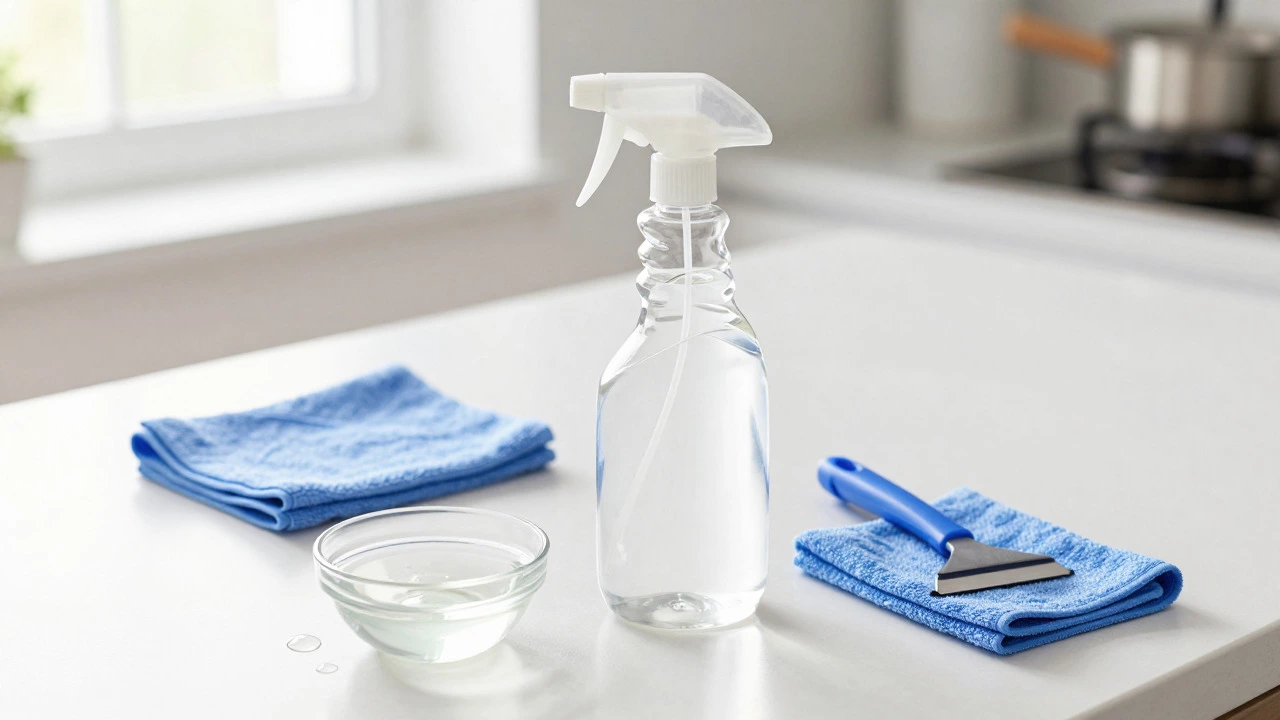
You don’t need a complex recipe. In fact, simplicity is key to avoiding new problems. Here is the most reliable ratio for a streak-free shine:
- 1 part white distilled vinegar
- 4 parts warm water
- A few drops of mild dish soap (optional, but recommended for greasy windows)
Mix this in a spray bottle. Shake it gently before each use. The warm water helps dissolve the vinegar more effectively and improves the cleaning power against grime. If your tap water is particularly hard (high in minerals), consider using distilled water for the mixture. Hard water contains calcium and magnesium, which can leave their own spots when they dry, counteracting the benefits of the vinegar.
Application Techniques That Matter
Even the best solution will fail if you apply it incorrectly. The tools you use are just as important as the liquid itself.
Avoid paper towels if possible. They tend to shred and leave lint behind, especially when wet. Instead, use a microfiber cloth or a squeegee. Microfiber cloths are designed to trap dust and moisture rather than pushing it around. For larger windows, a squeegee is superior. It physically removes the liquid and dissolved dirt in one smooth motion, minimizing the chance of streaks forming as the solution dries.
Here is a step-by-step approach for the best results:
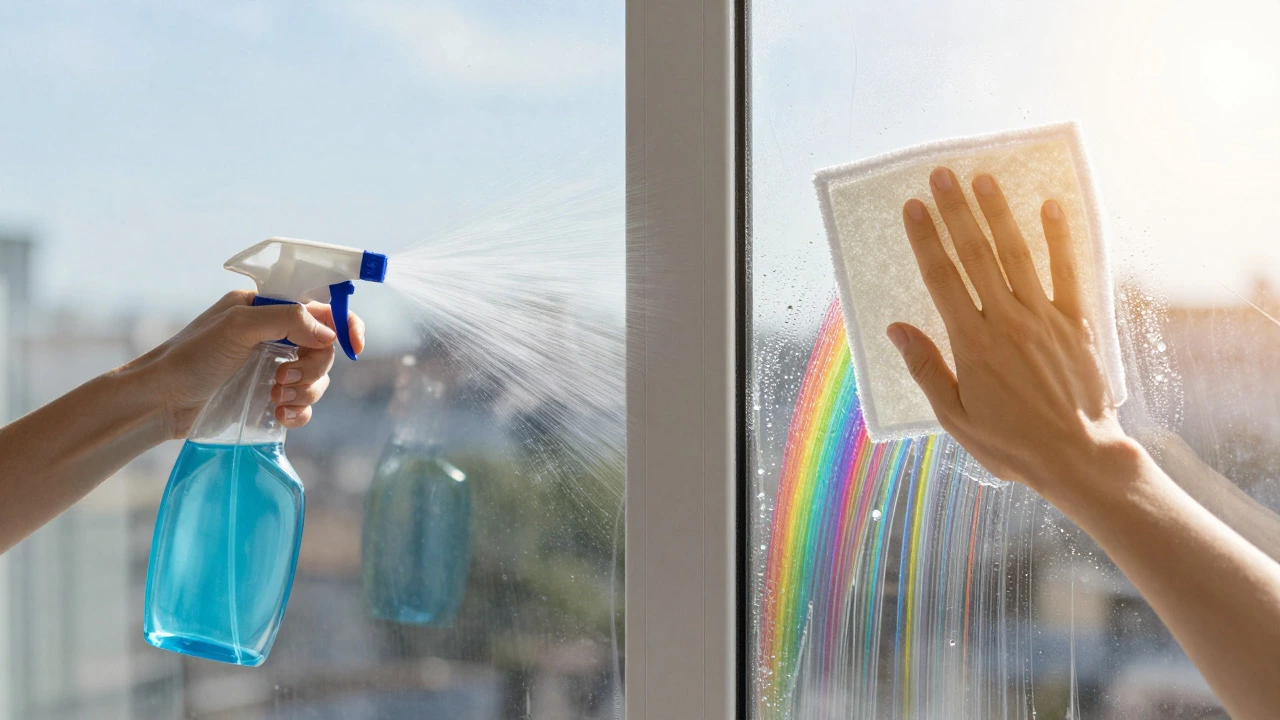
- Spray the diluted vinegar solution generously onto the glass.
- Let it sit for 30 seconds to break down the grime.
- If using a squeegee, start at the top corner and pull horizontally across the window. Wipe the blade with a dry cloth after each pass.
- If using a microfiber cloth, wipe in an S-pattern rather than circles. Circular motions can redistribute dirt.
- Buff any remaining edges with a dry section of the cloth.
When to Avoid Vinegar Entirely
Vinegar is versatile, but it isn’t universal. There are specific scenarios where even diluted vinegar can cause more harm than good.
Stone surfaces are the biggest enemy of vinegar. If your window frames are made of marble, granite, or limestone, avoid getting vinegar on them. The acid etches stone, leaving dull, permanent marks. Wood frames also require caution; prolonged exposure to acid can strip finishes or cause warping over time. Always protect these materials with tape or by carefully applying the cleaner only to the glass.
Additionally, if you live in an area with extremely hard water, vinegar alone might not be enough to remove heavy mineral buildup. In these cases, you may need a dedicated descaling agent or a stronger citric acid solution before finishing with your vinegar mix.
| Method | Effectiveness | Streak Risk | Cost |
|---|---|---|---|
| Straight Vinegar | Low | High | Very Low |
| Diluted Vinegar + Water | High | Low | Low |
| Commercial Spray | High | Low | Medium |
| Newspaper Method | Medium | Medium | Low |
Common Mistakes to Avoid
Many people ruin their window cleaning efforts by making simple errors. One common mistake is cleaning windows in direct sunlight. When the sun hits the wet glass, the solution evaporates almost instantly, leaving behind streaks before you can wipe them away. Always clean windows on a cloudy day or in the shade.
Another error is using too much soap. A little goes a long way. Excess soap creates suds that are difficult to rinse off completely, resulting in a film that looks like dirt. Stick to a drop or two per quart of solution.
Finally, don’t forget the screens. Vinegar is great for cleaning window screens too. Remove them, lay them flat, and spray with your diluted solution. Use a soft brush to agitate the mesh, then rinse with a hose. Let them air dry completely before reinstalling.
Eco-Friendly Alternatives
If you are concerned about environmental impact, vinegar is a strong choice. It is biodegradable, non-toxic, and requires minimal packaging compared to plastic bottles of commercial cleaners. Other eco-friendly options include rubbing alcohol (isopropyl alcohol) mixed with water, which evaporates quickly and leaves no residue. However, alcohol can be drying to some sealants, so test it first.
For those who prefer natural scents, adding a few drops of essential oils like lemon or lavender to your vinegar mix can mask the pungent smell of vinegar. Just ensure the oils are pure and do not add sugar-based additives.
Can I use vinegar on tinted windows?
Yes, diluted vinegar is safe for most window tints. However, avoid ammonia-based cleaners as they can bubble and peel the tint film. Always test a small, inconspicuous area first.
How often should I clean my windows?
Interior windows should be cleaned every 1-3 months depending on dust levels. Exterior windows benefit from cleaning twice a year, typically in spring and fall, to maintain clarity and prevent buildup.
Why does my window cleaner leave streaks?
Streaks are usually caused by dirty cloths, excessive product, or cleaning in direct sunlight. Ensure your microfiber cloth is clean, use a diluted solution, and work in the shade.
Is white vinegar better than apple cider vinegar for cleaning?
Yes, white distilled vinegar is preferred because it is clear and lacks sugars or pigments found in apple cider vinegar, which can stain glass and surfaces.
Can vinegar remove hard water stains from windows?
Diluted vinegar can help with light mineral deposits. For heavy hard water stains, you may need to soak a cloth in undiluted vinegar and hold it against the stain for several minutes before scrubbing gently.
Final Thoughts on Window Care
Cleaning windows doesn’t require a degree in chemistry, but it does require attention to detail. Skipping the dilution step might save you ten seconds, but it will cost you twenty minutes trying to buff out the streaks. By mixing your vinegar properly, choosing the right tools, and working in the right conditions, you can achieve professional-grade results at home. Remember, consistency is key. Regular maintenance prevents heavy buildup, making each cleaning session quicker and easier.