Window Cleaning Method Comparison Tool
Enter your property details to see how switching from traditional ladders to water-fed poles impacts time, safety risk, and annual costs.
Property Details
Analysis Results
Fill in the details and click "Compare Methods" to see the breakdown.
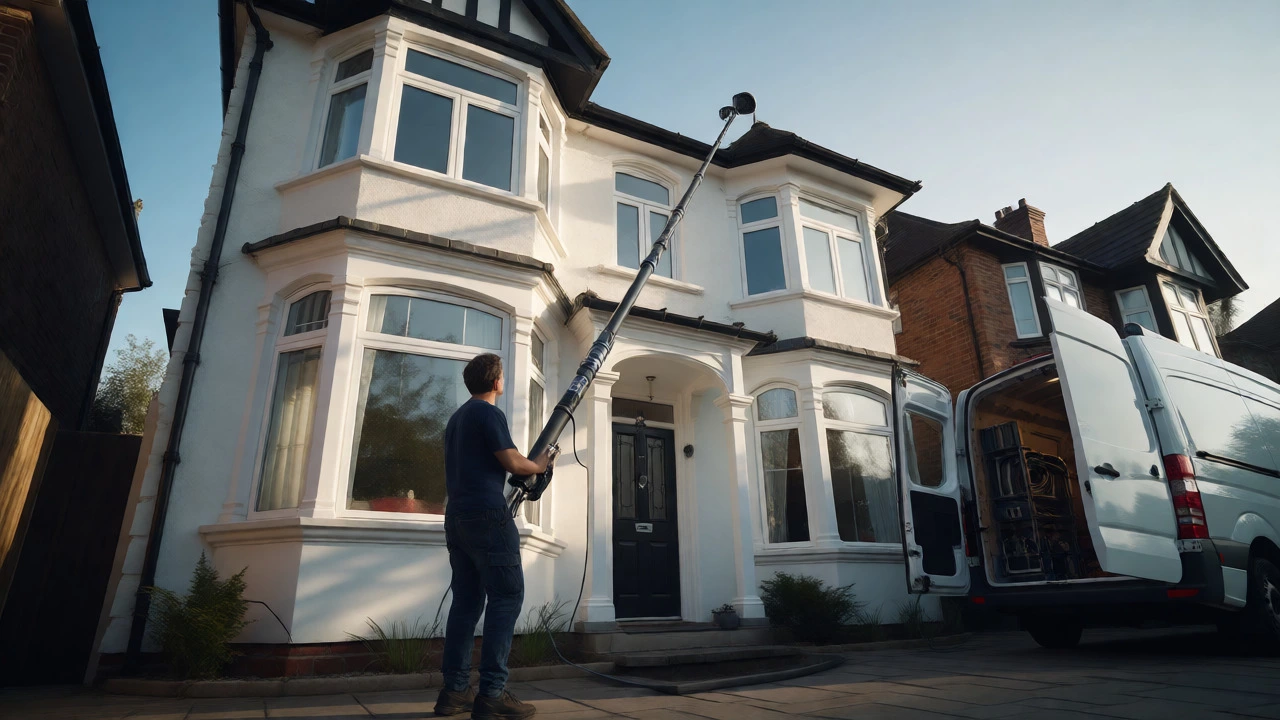
You’re standing in your kitchen, coffee in hand, watching a guy outside scrubbing your second-floor windows. But he’s not climbing a wobbly aluminum ladder. He’s holding a long, thin pole that reaches up like a fishing rod, and there’s no bucket of soapy water in sight. If you’ve noticed this shift over the last decade, you’re not imagining things. The traditional image of the window cleaner-ladder propped against the gutter, chamois leather in one hand-is fading fast. So, what changed? Why did an entire industry swap out ladders for telescopic poles?
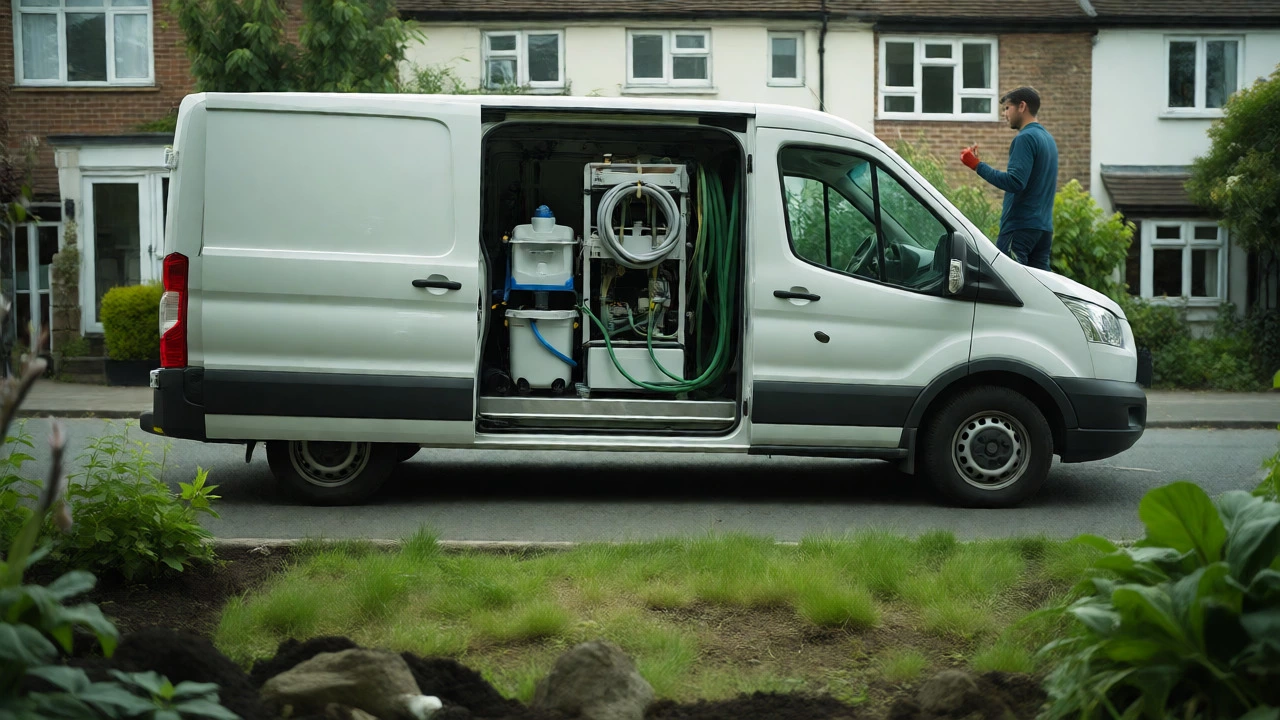
The short answer is water-fed pole systems. These are lightweight carbon-fiber or fiberglass poles connected to a purified water tank on the van. They allow cleaners to reach high windows from the ground. But the "why" goes deeper than just convenience. It’s about safety regulations, efficiency, and a technology called reverse osmosis that actually cleans better than soap ever could.
The Safety Crisis That Killed the Ladder
Let’s be honest: ladders are dangerous. For years, window cleaners accepted broken legs and twisted ankles as part of the job. But workplace safety laws tightened significantly in the UK and Europe during the early 2000s. In the UK specifically, the Health and Safety Executive (HSE) cracked down hard on working at height. Statistics showed that falls from ladders were one of the leading causes of serious injury in construction and maintenance sectors.
For a self-employed window cleaner, a broken leg isn’t just painful; it’s financial ruin. No work means no pay. Insurance premiums skyrocketed for anyone using ladders regularly. The math simply didn’t add up anymore. Using a telescopic pole eliminates the risk of falling entirely because the operator stays firmly on the ground. You can’t fall off the pavement if you don’t climb. This single fact drove the majority of the industry change faster than any technological breakthrough could have.
Pure Water vs. Soap: A Chemistry Lesson
You might wonder why they stopped using buckets of hot soapy water. After all, soap cuts grease, right? Well, tap water contains minerals like calcium and magnesium. When you wash a window with tap water and let it dry, those minerals stay behind. They leave white spots or streaks. To avoid this, old-school cleaners had to squeegee perfectly every time, or wipe the glass dry immediately. One missed spot meant a callback.
Pure water, also known as deionized or distilled water, changes the game. Created via a process called reverse osmosis, this water has been stripped of almost all dissolved solids. Because it lacks minerals, it acts like a sponge for dirt. On a molecular level, pure water is "hungry." As it flows over the glass, it attracts and lifts away dust, pollen, and grime through osmosis. When the water evaporates, it leaves nothing behind. No spots. No streaks. No need to squeegee. Just rinse and walk away.
| Feature | Traditional Bucket & Squeegee | Water-Fed Pole System |
|---|---|---|
| Water Source | Tap water + detergent | On-board Reverse Osmosis (RO) |
| Drying Method | Squeegee / Chamois | Air Dry (No wiping required) |
| Safety Risk | High (Working at Height) | Low (Ground-based) |
| Reach Limit | Limited by ladder length | Up to 5-6 stories (approx. 15m) |
| Setup Time | Slow (Carrying buckets/ladders) | Fast (Plug in hose/pole) |
Efficiency: Time Is Money
If you hire a window cleaner, you want them to be quick but thorough. The old method was slow. Carrying heavy buckets, setting up ladders, moving the ladder for every window, and carefully drying edges took time. A typical house might take two hours.
With a water-fed pole, the setup is minimal. The cleaner parks the van, connects a hose to a filter unit inside, and extends the pole. They can clean multiple windows without moving their feet. There’s no carrying heavy buckets up stairs. There’s no repositioning ladders. Once the brush touches the glass, the dirt lifts, and the water runs off. A job that used to take two hours now takes thirty minutes. This speed allows cleaners to service more homes per day, which keeps prices competitive despite the higher upfront cost of equipment.

What About Frames and Tracks?
This is the most common complaint people have when switching to pole cleaning. "The glass looks great, but my frames are still dirty." And they’re right. The pure water system is designed for glass. It doesn’t effectively clean painted wood, uPVC frames, or the gunk trapped in sliding door tracks. Soap is actually better at cutting through oily residue on frames than pure water is.
Most professional cleaners now use a hybrid approach. They’ll use the pole for the glass panes to ensure a streak-free finish. Then, they’ll switch to a small brush and a bottle of specialized frame cleaner to detail the edges and tracks. If you notice your frames aren’t being cleaned, ask your provider if they include frame detailing in their standard price. Many do, but some charge extra for it because it requires manual labor.
When Do You Still Need a Ladder?
Does this mean ladders are extinct? Not quite. There are scenarios where poles just don’t cut it.
- Interior Windows: You can’t spray water inside your living room. Interior glass still requires a traditional squeegee and cloth. Cleaners will usually enter your home to do the insides after doing the outsides.
- Very High Buildings: While poles can reach up to five or six stories, anything higher often requires scaffolding or rope access technicians. A 10-story apartment block usually needs industrial climbers, not a guy with a pole.
- Severe Grime: If a window hasn’t been cleaned in ten years, pure water alone might not remove thick, baked-on paint splatters or construction dust. Pre-treatment with a detergent solution might be needed before rinsing with pure water.
The Environmental Angle
Living in Bristol, I’m acutely aware of how much water gets wasted. Traditional methods involve filling buckets repeatedly. A single house might use 10-15 liters of water. A water-fed system recirculates or uses only what’s needed for the rinse. Furthermore, because pure water works without chemicals, fewer detergents end up in the soil around your garden. For eco-conscious homeowners, this chemical-free aspect is a major selling point. It’s safer for pets, plants, and the local water table.
How to Spot a Professional
Not everyone with a pole knows what they’re doing. Here’s how to tell if you’re getting a pro or an amateur:
- Check the Water Quality: Ask if they test their water. Pros use a TDS (Total Dissolved Solids) meter. The reading should be below 10 ppm (parts per million). If it’s above 20, the water isn’t pure enough, and you’ll get spots.
- Look for Frame Care: Watch if they bother with the frames. A lazy operator will just spray the glass and run. A good one will spend extra time on the edges.
- Ask About Rain: Pure water cleaning relies on evaporation. If it rains heavily immediately after cleaning, the untreated rain (which has minerals) will spot the glass again. Pros know this and might delay jobs during storms.
Frequently Asked Questions
Is pure water cleaning really better than soap?
For exterior glass, yes. Pure water removes dirt through osmosis and dries spotlessly because it lacks minerals. Soap leaves mineral deposits and requires perfect squeegeeing to avoid streaks. However, soap is still superior for cleaning window frames and tracks.
Can window cleaners reach my third-floor windows without a ladder?
Yes. Modern telescopic poles extend up to 15 meters (roughly 5 stories). Most residential properties are well within this range. If your building is taller than 5 stories, they may need different equipment like rope access.
Why do my windows look dull after pole cleaning?
This usually happens if the water purity is low (high TDS levels) or if the windows were extremely dirty and required pre-cleaning with detergent. Ensure your cleaner tests their water quality. Also, note that first-time conversions from soap to pure water may reveal hidden scratches or etching previously masked by soap film.
Do window cleaners still clean the inside of the windows?
Typically, no. Water-fed poles are for exterior glass only. Interior cleaning involves entering your home and using a traditional squeegee and microfiber cloth. Some services offer interior cleaning as an add-on or separate visit.
Is it safe to use pure water on double-glazed units?
Yes, it is very safe. In fact, it’s recommended. Since there’s no abrasive scrubbing or harsh chemicals involved, there’s less risk of damaging the seals or scratching the glass compared to aggressive manual cleaning methods.
Next Steps for Homeowners
If you’re still paying for a service that hauls ladders onto your lawn, consider asking for a quote from a modern water-fed pole specialist. Look for reviews mentioning "streak-free" results and "no callbacks." The shift away from ladders isn’t just a trend; it’s a permanent upgrade in safety and quality. Your windows-and your peace of mind-will thank you.