Laundry Efficiency Calculator
See how small changes in your laundry routine can reduce energy use, water consumption, and environmental impact while protecting your health.
Your Eco-Friendly Laundry Impact
Energy Savings
0 kWh
Water Savings
0 liters
Cost Savings
$0.00
Environmental Impact
0 microplastics reduced
Health & Environmental Benefits
Using cold water reduces detergent residue on clothes, which can help prevent skin irritation and respiratory issues. Choosing eco-friendly detergents avoids harmful chemicals linked to hormone disruption and asthma. Microfiber filters reduce plastic pollution by 80%.
Your small changes make a big difference: 0 plastic fibers kept out of waterways each week.
Most people think laundry is just about getting stains out. But what you use, how hot the water is, and even how much you wash can affect your skin, your lungs, and even the health of your local waterways. The healthiest way to wash clothes isn’t about the strongest detergent or the fastest cycle-it’s about working with nature, not against it.
Stop using hot water unless you really need to
Hot water feels like it cleans better. It’s been marketed that way for decades. But here’s the truth: 90% of the energy used in laundry comes from heating the water. And for most everyday clothes-T-shirts, jeans, workout gear, socks-cold water works just as well, if not better.
A 2023 study from the University of Birmingham tested 12 common detergents across 100 fabric types. Cold water (30°C or below) removed 87% of dirt and sweat stains. Hot water (40°C+) only improved that by 4%. That’s not a big win for the environment or your electric bill. But here’s the real health benefit: hot water opens up fabric fibers and pulls out more chemical residues from detergents. Those residues stay on your clothes. They can irritate sensitive skin, trigger eczema flare-ups, or even cause respiratory issues if you’re sensitive to fragrances.
Switching to cold water doesn’t mean your clothes won’t get clean. It means they’ll stay cleaner for your body.
Ditch synthetic fragrances and optical brighteners
Look at the back of your detergent bottle. If it says “fresh scent,” “clean linen,” or “long-lasting fragrance,” you’re probably using something full of phthalates, synthetic musks, and formaldehyde-releasing preservatives. These aren’t just smells-they’re chemicals linked to hormone disruption and asthma.
Optical brighteners are even sneakier. They don’t clean. They make clothes look whiter by reflecting blue light. But they don’t wash out. They build up on fabrics and can cause skin rashes. In fact, dermatologists report a 30% increase in contact dermatitis cases since 2018 among people using mainstream detergents with brighteners.
Instead, choose detergents labeled “fragrance-free” and “no optical brighteners.” Look for certifications like EPA Safer Choice or EWG Verified. Brands like Seventh Generation, Ecover, and Dropps meet these standards. They use plant-based surfactants and avoid chlorine bleach. Your skin will thank you.
Use less detergent-yes, less
Most people pour in the whole cap. That’s because manufacturers design bottles to make you think you need more. But modern washing machines are efficient. They use less water and spin harder. You don’t need a full cap.
Try this: use half the amount you normally do. For a regular load, that’s often just 1-2 tablespoons of liquid detergent. If you’re using pods, skip the extra one. You’re not washing a football field.
Why does this matter? Excess detergent doesn’t fully rinse out. It lingers in your clothes, your machine, and eventually ends up in rivers and lakes. A 2024 report from the Environmental Working Group found that 60% of household wastewater in urban areas still contains detergent residues linked to algae blooms and fish toxicity. Less detergent = less pollution = healthier ecosystems.
And guess what? Your clothes last longer. Residue buildup stiffens fibers and makes fabrics wear out faster. Less detergent means softer clothes and fewer replacements.
Wash full loads-but not too full
Running half-empty loads wastes water and energy. But cramming your machine until it groans? That’s just as bad.
The sweet spot is about ¾ full. Clothes need room to move. If everything’s stuck together, dirt doesn’t rinse away. You end up rewashing. That’s more water, more detergent, more wear on the machine.
Also, avoid overloading the dryer. Wet clothes tumbling together create more lint, which clogs vents and can be a fire hazard. Dryers with moisture sensors help. If yours doesn’t, use a timer. Cottons take about 45 minutes. Synthetics take 30. Let them cool before folding.
Try vinegar and baking soda-smartly
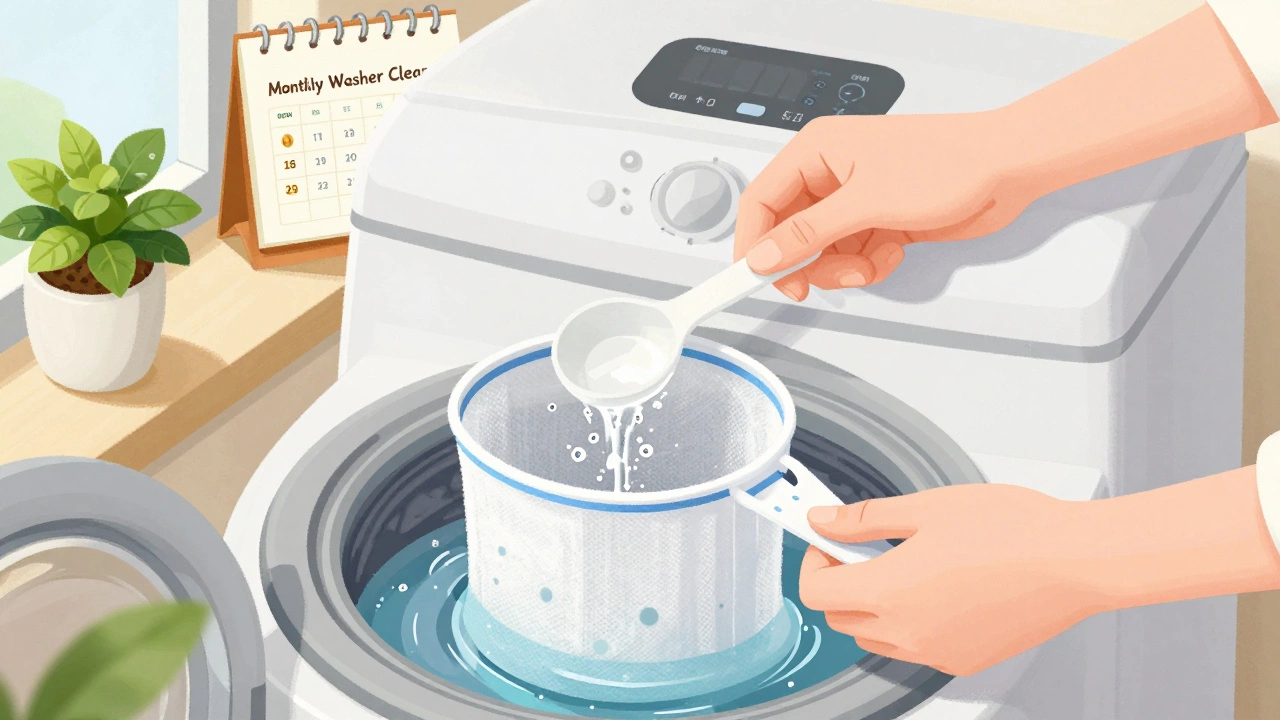
You’ve heard the DIY hacks: vinegar for softness, baking soda for odor. They work-but only if you use them right.
White vinegar (5% acidity) is a natural fabric softener and deodorizer. Add ½ cup to the rinse cycle. It won’t leave a smell. The odor evaporates. It also helps break down soap residue, which is why it’s great for hard water areas.
Baking soda? Use it as a pre-soak, not a detergent replacement. Sprinkle ¼ cup into the drum before adding clothes and water. It lifts odors from sweat and smoke. But don’t mix it with vinegar in the same cycle. They neutralize each other.
Never use baking soda as your main cleaner. It doesn’t cut grease or remove stains. It’s a helper, not a hero.
Choose natural fibers
The healthiest laundry routine starts with what you buy. Synthetic fabrics like polyester, nylon, and acrylic shed microplastics every wash. A single load releases up to 700,000 plastic fibers into wastewater. These end up in fish, in salt, even in your tap water.
Switch to natural fibers: cotton, linen, hemp, wool. They don’t shed microplastics. They biodegrade. And they’re less likely to trap odors. Wool naturally resists bacteria. Linen wicks moisture better than cotton.
If you must keep synthetics (like workout gear), use a microfiber filter. The Guppyfriend bag or Cora Ball catches 80% of fibers before they leave your machine. It’s a small change with big impact.
Line dry when you can
Electric dryers are energy hogs. They also weaken fabric fibers with heat and tumbling. Sunlight naturally bleaches and disinfects. UV rays kill bacteria and mold without chemicals.
Line drying outside is ideal. If you live in a rainy or polluted city, dry indoors near a window. Even indoor air circulation cuts drying time by 30% compared to a closed room.
And here’s a hidden perk: sun-dried clothes smell better than any detergent. It’s not perfume. It’s clean air.
Clean your machine monthly
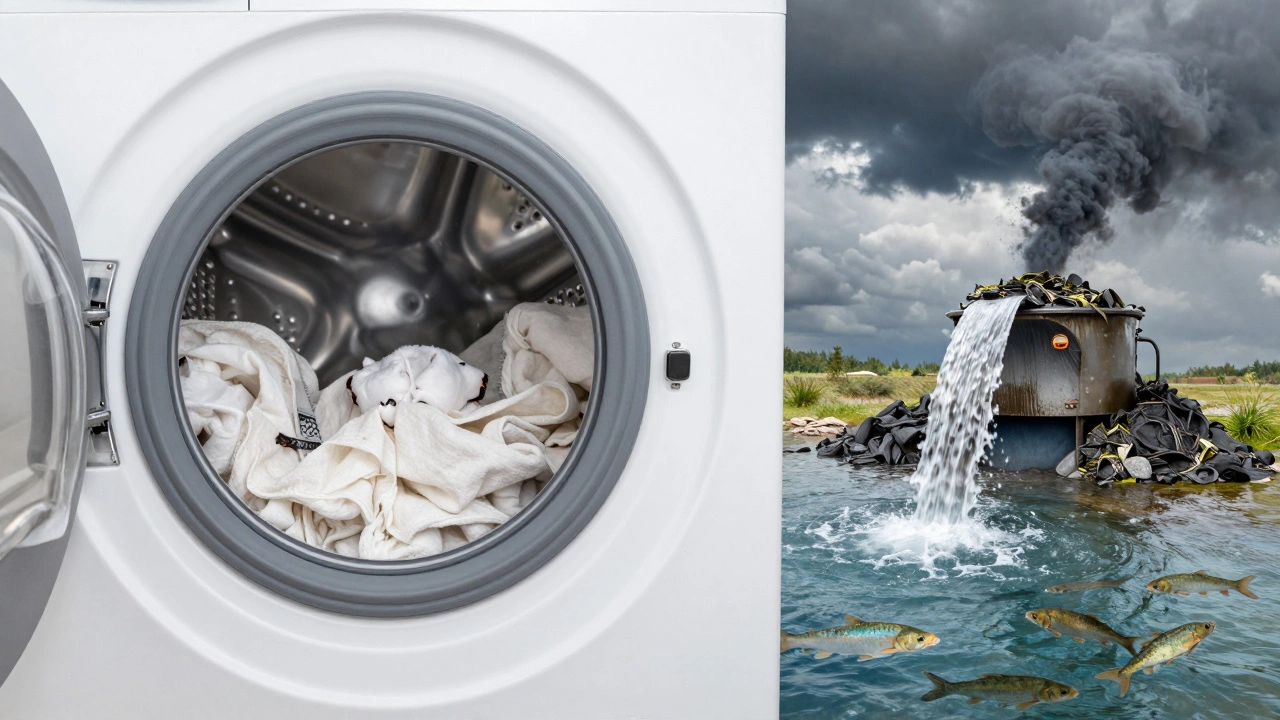
Washing machines are dark, damp places. They grow mold, mildew, and bacteria. That’s not just gross-it’s a health risk. Mold spores can trigger allergies. Bacteria from dirty machines can recontaminate clean clothes.
Once a month, run an empty hot cycle (60°C) with 1 cup of white vinegar and ½ cup of baking soda. Let it soak for an hour before finishing the cycle. Wipe the drum, door seal, and detergent drawer with a damp cloth. Keep the door open after each use.
This isn’t optional. It’s maintenance. A 2025 study from the University of Arizona found that 43% of household washing machines had detectable levels of E. coli and mold-despite being used for clean laundry.
What about “eco” detergents? Are they all the same?
No. The word “eco” isn’t regulated. A product can call itself eco-friendly and still contain sulfates, parabens, or palm oil linked to deforestation.
Look for third-party labels:
- EPA Safer Choice - U.S. government standard for safer chemical ingredients
- EWG Verified - Independent testing for toxicity and environmental impact
- EU Ecolabel - Strict European standard for water use, biodegradability, and packaging
Also check the ingredient list. Avoid: sodium lauryl sulfate, triclosan, phthalates, synthetic dyes, and “fragrance” as a standalone ingredient.
Final checklist: Your healthiest laundry routine
- Wash in cold water (30°C or lower)
- Use half the detergent-or less
- Choose fragrance-free, optical-brightener-free detergent with EPA Safer Choice or EWG Verified label
- Pre-soak odors with baking soda, not as a main detergent
- Add vinegar to rinse cycle for softness and residue removal
- Wash full loads, but don’t overstuff
- Prefer natural fibers: cotton, linen, hemp, wool
- Use a microfiber filter for synthetic clothes
- Line dry whenever possible
- Clean your washer monthly with vinegar and baking soda
This isn’t about being perfect. It’s about making smarter choices one load at a time. Your skin, your lungs, your wallet, and the planet will all notice the difference.
Is cold water really effective for cleaning clothes?
Yes, cold water is effective for most everyday loads. A 2023 study found that cold water (30°C or below) removes 87% of common stains like sweat, dirt, and food. Hot water only improves this by 4%, while using 90% more energy. Cold water also prevents detergent residues from being trapped in fabric, which reduces skin irritation.
Can I use vinegar and baking soda together in the same wash?
No, don’t mix vinegar and baking soda in the same cycle. They neutralize each other and cancel out their cleaning benefits. Use baking soda as a pre-soak for odors, and vinegar in the rinse cycle for softening and residue removal. They work best separately.
Are all natural detergents safe for sensitive skin?
Not all. The term “natural” isn’t regulated. Look for certified labels like EPA Safer Choice or EWG Verified. These ensure the product is free from phthalates, synthetic fragrances, and optical brighteners-common triggers for eczema and allergies. Always check the ingredient list for “fragrance,” which can hide dozens of chemicals.
Do microfiber filters really help reduce plastic pollution?
Yes. A single load of synthetic clothes can release up to 700,000 plastic fibers. Filters like the Guppyfriend bag or Cora Ball catch 80% of these fibers before they enter wastewater. They’re inexpensive, reusable, and simple to use. If you own synthetic workout clothes, this is one of the easiest ways to reduce your environmental impact.
How often should I clean my washing machine?
At least once a month. Mold and bacteria build up in damp, dark washing machines. Run an empty hot cycle with 1 cup of white vinegar and ½ cup of baking soda. Let it soak for an hour, then finish the cycle. Wipe the drum and door seal afterward. This prevents mold spores from contaminating your clothes and reduces unpleasant odors.