People often use the terms pressure washing and power washing like they mean the same thing. But if you’ve ever tried cleaning your driveway, patio, or fence with one and ended up with damaged wood or chipped paint, you know there’s more to it than just high water pressure. The difference isn’t just marketing-it’s about how the water is delivered, what it’s good for, and what can go wrong if you pick the wrong one.
Pressure washing uses cold water only
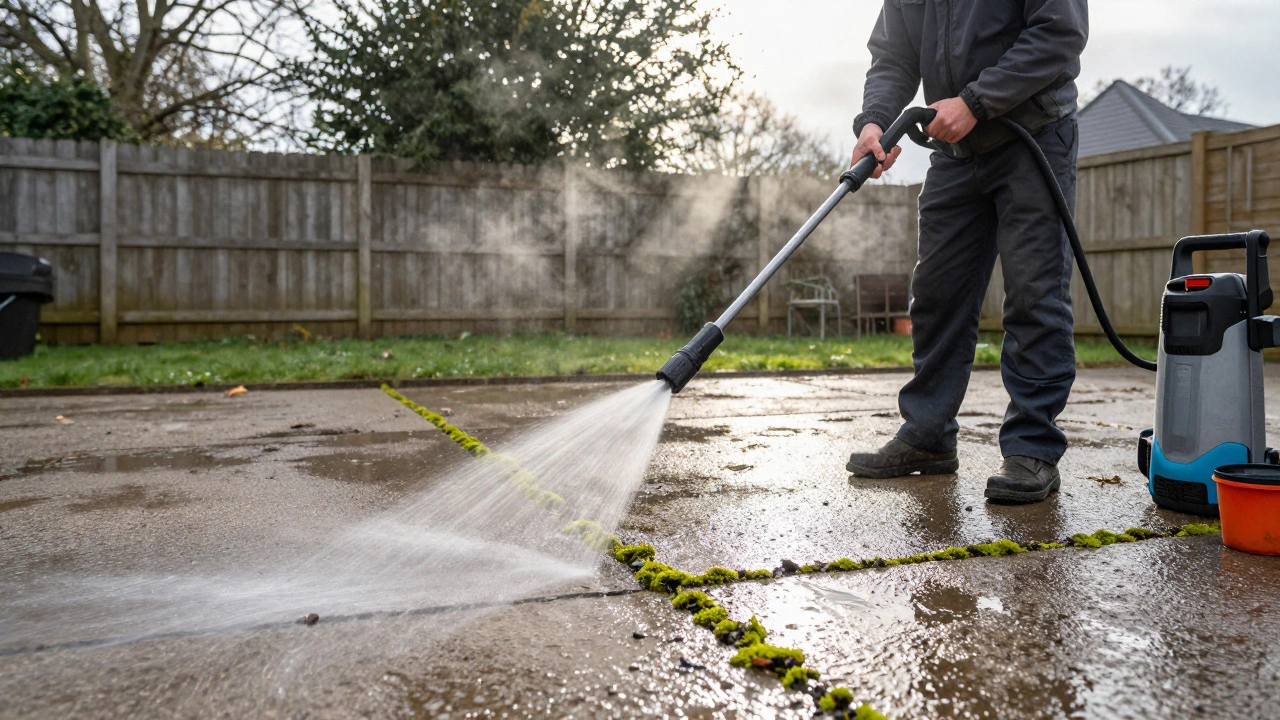
Pressure washing is exactly what the name suggests: water pushed out at high pressure. It uses cold water from your tap, forced through a narrow nozzle to create a powerful stream. This method is great for removing dirt, grime, and mildew from hard, durable surfaces like concrete driveways, brick walls, stone patios, and metal fencing. In Bristol, where damp weather leads to algae buildup on driveways, pressure washing is the go-to fix for most homeowners.
The pressure can range from 1,300 to 3,000 PSI (pounds per square inch), depending on the machine. Most DIY models sit around 2,000 PSI-enough to blast away dirt without tearing up surfaces if used correctly. But here’s the catch: cold water doesn’t break down grease or oil. If your driveway has oil stains from a leaking car, pressure washing alone won’t cut it. You’ll need a detergent, and even then, the results might be patchy.
Power washing adds heat to the mix
Power washing is pressure washing-but with heated water. The water is heated to between 150°F and 200°F before it’s forced out of the nozzle. That heat does something cold water can’t: it melts grease, kills mold spores, and loosens stubborn dirt like bird droppings, sap, or old paint.
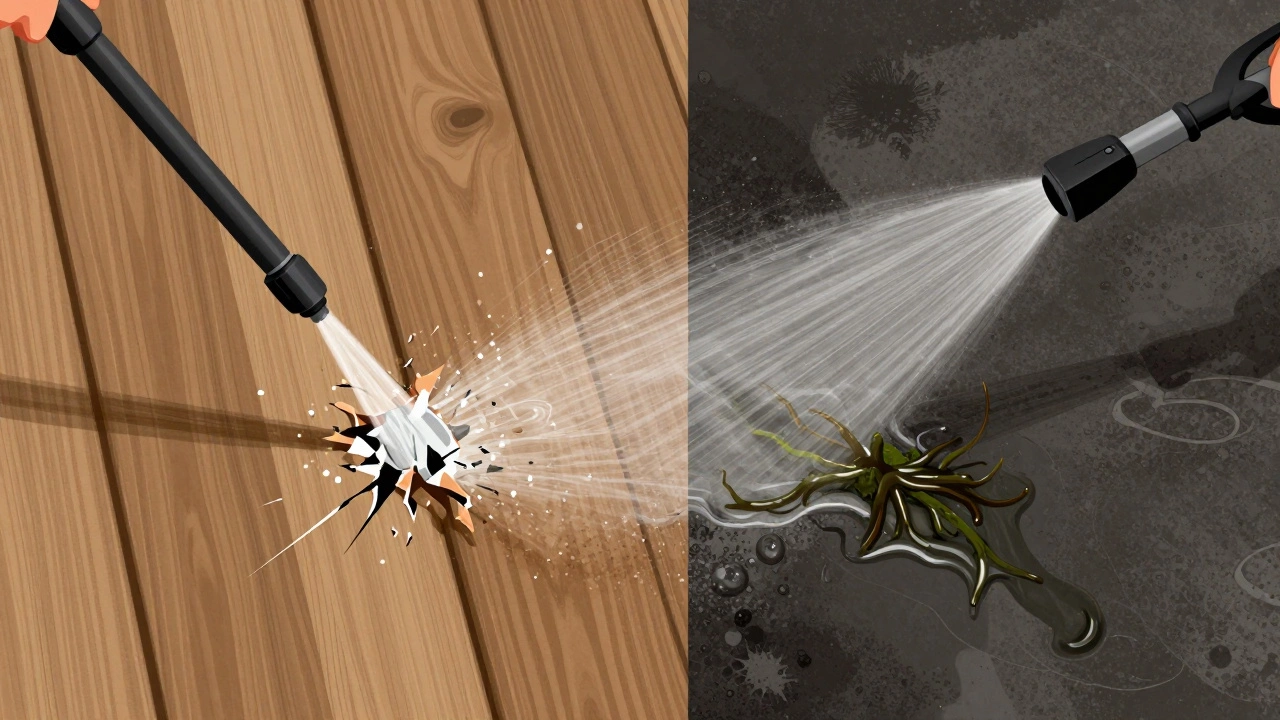
Think of it like this: cold water pushes. Hot water dissolves. That’s why professional cleaners use power washers for wooden decks, vinyl siding, and even concrete with oil stains. In the UK, where moss and algae cling to outdoor surfaces year-round, the heat from a power washer kills the roots, not just the surface growth. You’ll see fewer regrowth issues after a hot wash compared to a cold one.
Power washers typically run between 2,000 and 4,000 PSI. The combination of heat and pressure means you can clean faster and more thoroughly, often without needing extra chemicals. That’s why many property managers in Bristol now use power washers for seasonal cleanups-especially before winter when damp conditions make surfaces slippery and unsightly.
Which one should you use?
Here’s a simple rule: if it’s hard, flat, and doesn’t care about heat, go with pressure washing. If it’s sticky, greasy, or covered in organic growth, power wash it.
- Use pressure washing for: concrete driveways, brick paths, metal railings, garage floors, and stone walls. These surfaces handle high pressure well and don’t need heat.
- Use power washing for: wooden decks, vinyl siding, asphalt driveways with oil stains, fences with moss buildup, and areas with heavy mold or algae. The heat breaks down biological growth at the root.
There’s also a third option: soft washing. It uses low pressure (under 500 PSI) and lots of biodegradable cleaner. It’s perfect for roofs, painted surfaces, or anything that could be damaged by high pressure. Soft washing doesn’t remove dirt with force-it dissolves it. It’s slower but safer for delicate materials.
What happens if you mix them up?
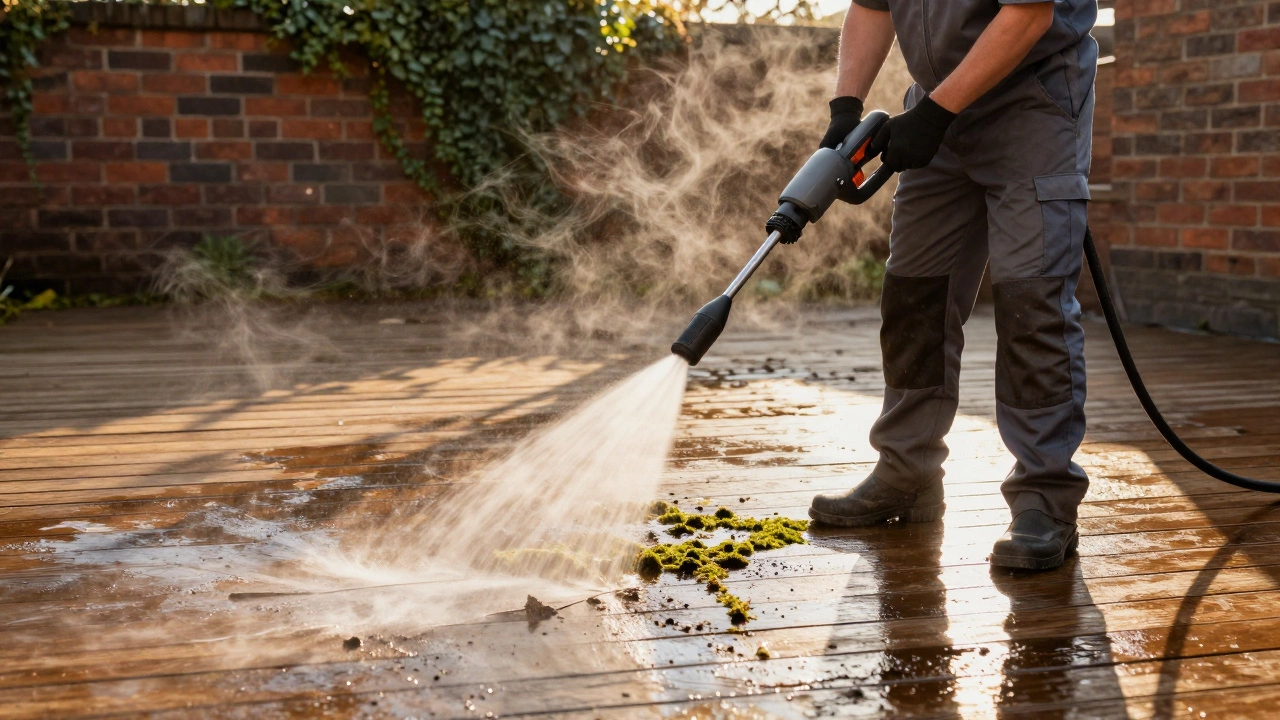
Using a pressure washer on a wooden deck? You’ll strip the finish, splinter the wood, and create deep gouges. I’ve seen it happen-once on a £1,200 cedar deck in Clifton. The homeowner used a 2,500 PSI machine thinking it would clean faster. It did. But it also ruined the surface. Repairs cost twice as much as a proper power wash would have.
On the flip side, using a power washer on a brick wall that’s already crumbling? The heat can expand trapped moisture inside the bricks, causing them to crack or pop. That’s why professionals always check the material first. Not every surface that looks tough actually is.
And don’t forget: power washers use more fuel and electricity. A typical gas-powered unit burns about 0.5 gallons of fuel per hour. If you’re only cleaning a small patio, it’s overkill. But if you’ve got a whole house to clean, the time saved and results gained make it worth the extra cost.
Real-world examples from Bristol
Last spring, a homeowner in Totterdown called in a cleaner after her driveway turned green with algae. She’d tried pressure washing twice. Each time, the algae came back within weeks. The pro used a power washer with 180°F water and a specialized cleaner. Two hours later, the driveway was clean-and stayed clean for over a year. The heat killed the spores. The cold wash had just moved them around.
Another case: a pub in Bedminster had oil stains from delivery vans on its loading bay. Pressure washing left a greasy film. Power washing with hot water and a degreaser? Gone in one pass. No residue. No repeat visits.
Cost and equipment differences
Pressure washers are cheaper to buy and rent. You can pick up a decent DIY model for £150-£300. Power washers? Start at £500 and go up from there. Rental prices reflect that too: £40/day for pressure, £70-£100/day for power.
But here’s the thing: if you’re doing this once a year, renting a power washer is still cheaper than hiring a pro. And if you’re doing it twice? You might as well buy one. Many UK homeowners now keep a power washer in the shed-not because they’re obsessed with cleaning, but because the results last longer.
What about eco-friendliness?
Power washing uses less detergent because heat does most of the work. That means fewer chemicals end up in storm drains. Pressure washing often needs strong cleaners to compensate for the lack of heat. In Bristol, where water runoff flows into the Avon River, that matters. Local councils encourage power washing for this reason-especially on commercial properties.
Still, always use biodegradable cleaners. Even hot water won’t save you if you dump harsh chemicals down the drain. Look for products labeled “septic-safe” or “eco-certified.”
Final verdict: It’s not about power-it’s about purpose
Pressure washing is your everyday tool for general cleaning. Power washing is your deep-cleaning weapon. One isn’t better than the other-they’re just different tools for different jobs.
If you’re cleaning concrete, asphalt, or stone? Pressure wash. If you’re tackling wood, vinyl, or greasy surfaces? Power wash. And if you’re unsure? Test a small area first. Always start with lower pressure and work your way up. Damage is permanent. A mistake on your driveway might cost you hundreds to fix.
Remember: the goal isn’t to blast everything into oblivion. It’s to clean it without breaking it. That’s the real difference between the two-and why knowing which one to use makes all the difference.