Pressure Washing Quote Estimator
Calculate your break-even rate and generate a fair quote based on true operational costs and site conditions.
1. True Operational Costs
2. On-Site Assessment
The Art of Quoting Pressure Washing
There is nothing more frustrating than arriving at a job site, seeing three times the workload expected, and having to eat the cost of the hour-long mistake. When you run a pressure washing businessservice that cleans exterior surfaces using high-pressure water jets, your profit margin lives or dies by that initial number on the paper. A bad quote loses you the sale or bankrupts the project. A good quote wins the work and keeps your cash flow healthy.
You might think it comes down to gut instinct, but successful operators treat it like mathematics. We need to look at the variables that change every day: the surface condition, the access difficulties, and the chemical requirements. In Bristol, for instance, the rainy season means we often have to wait longer between treatments or adjust our scheduling based on forecasts, which impacts your labour availability. Getting this right means understanding the true cost of your time versus the client's budget.
The On-Site Assessment Checklist
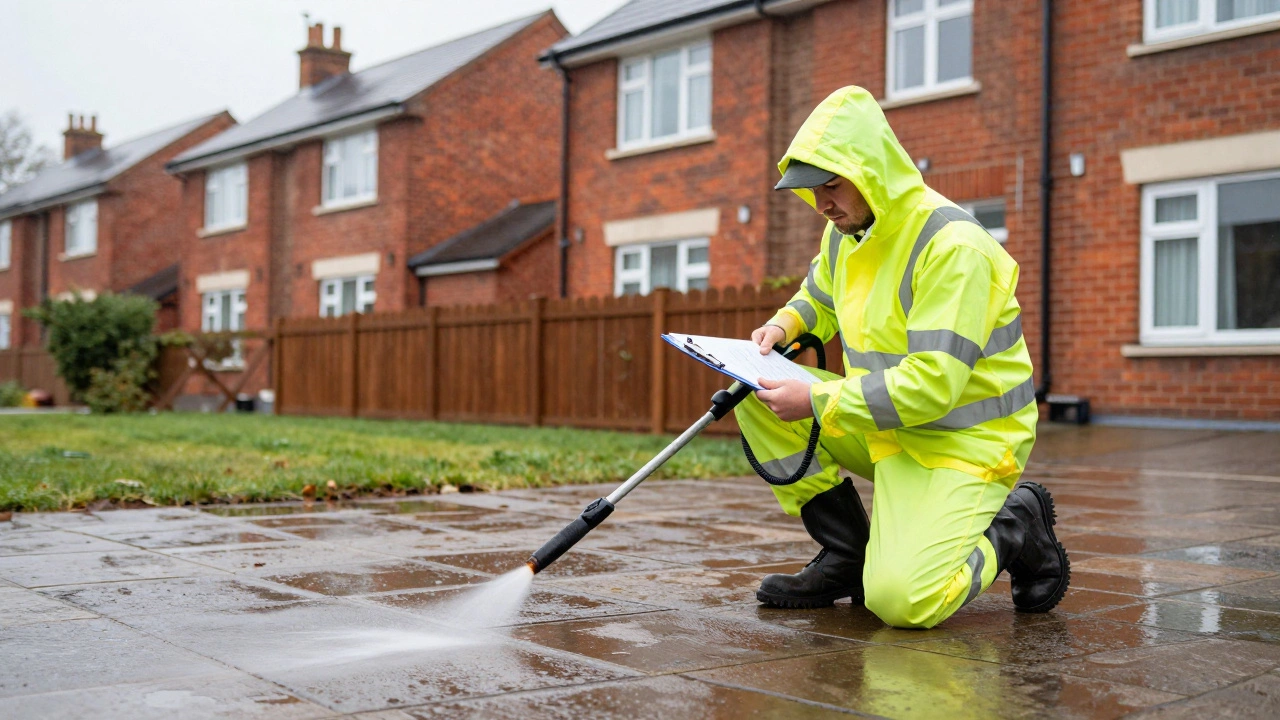
Never give a final binding quote without setting foot on the property. Photos can lie, hiding cracks, hidden obstacles, or electrical points that turn a twenty-minute driveway clean into a four-hour ordeal. Start by walking the perimeter. Look at the surface area. Is this standard block paving or delicate slate? Slate needs a soft wash approach to prevent etching, which takes longer and requires specific chemicals compared to brick driveways that can handle high PSI.
Check the power and water supply next. Do you need to lay fifty metres of hose back to the main tap, or is there an outdoor point right there? Running extension cables to reach a 230V outlet adds setup time and safety risks that increase your hourly rate effectively. Note any obstacles like garden furniture, planters, or car ports. These require moving and careful masking to protect them from overspray. If the client expects you to move their heavy concrete bench, that is labour time you cannot ignore.

Calculating True Operational Costs
Many beginners make the mistake of pricing based purely on competitor rates. This is dangerous because their equipment age and overheads differ from yours. You must calculate your break-even point first. Consider your labour costs. This isn't just your wage; it includes National Insurance contributions and holiday pay allocations. If you pay yourself £20 per hour, the cost to the business is closer to £30 when you account for employer liabilities.
Add equipment depreciation. Your pressure washer does not last forever. A commercial-grade unit might cost £2,000. If it gets two years of heavy use before needing major parts replacement, factor roughly £10 per job into maintenance and wear. Fuel is another variable. Diesel prices fluctuate, so add a buffer percentage, perhaps 10%, to cover tank fill-ups and generator runtime if mains power isn't available.
Don't forget the consumables. Chemical cleaning agents are expensive. Biodegradable degreasers cost significantly more than generic detergents but are required for environmental compliance in many UK areas. Store this data. If you know a typical house gutter clean uses 500ml of solution, charge accordingly rather than hoping the bottle lasts ten jobs. Keep a log of what you actually used during training jobs to get accurate averages.
| Model Type | Best Used For | Risk Factor |
|---|---|---|
| Flat Fee | Standard residential jobs | High risk if site changes unexpectedly |
| Hourly Rate | Industrial or unknown conditions | Low risk for contractor, client prefers fixed |
| Per Square Metre | Pavement and decking | Moderate risk, easy calculation |
Choosing a Pricing Structure
Once you have your base costs, decide how to present the final figure. A flat fee is usually best for residential clients. They want certainty. "£150 for the driveway" feels better than "£30 per hour." However, to protect yourself, always add a clause for unforeseen obstructions. If a layer of stubborn black algal slime appears that wasn't visible during the walk-through, you reserve the right to revisit the price or split the job into phases.
For larger commercial projects, hourly billing is safer. Warehouses or parking lots often have drainage issues that only appear once you start working. By charging per hour, you pass the risk of delay onto the client while maintaining your income stability. Some operators prefer a per-square-metre rate. This works well for large expanses of asphalt but fails miserably on complex shapes like flower beds mixed with paths. Measure carefully and account for waste zones.
In the UK market, especially moving towards 2026, customers are increasingly eco-conscious. Mentioning that your chemicals are certified environmentally friendly allows you to charge a premium. Green cleaning commands higher rates because it protects the client's plants and pets. If your quote explicitly states the brand of biodegradable detergent used, you justify a 15% uplift compared to a competitor using harsh acids.

Presenting the Professional Quote
Your document must look legitimate. Use branded letterhead that lists your trade public liability insurance limit. Clients worry about damage. Seeing "£5 Million PL Insurance" builds trust immediately. Clearly state the terms. Include a payment schedule. Asking for a deposit-typically 20% to 50%-protects you against no-shows and secures the booking slot in your diary. Make sure your cancellation policy is visible too.
List exactly what is included. Does the quote cover pre-treating oil stains? What about clearing the leaves first? Vague wording leads to arguments later. Itemise the services. List "Driveway Preparation," "Chemical Application," "Rinsing," and "Waste Water Disposal" separately. This transparency helps clients understand why the price is what it is. It prevents the feeling that you are being greedy; instead, they see they are paying for a comprehensive service package.
Avoiding Common Traps
One of the most common traps is underestimating travel time. If you have three jobs in different parts of Bristol, driving from Clifton to Horfield takes forty minutes in rush hour. That time is unpaid work. Factor a travel surcharge into outlying areas. Another pitfall is ignoring water runoff regulations. You cannot dump chemically treated water straight into the street drain. You must ensure filtration or capture systems are used. If you need a specialist recovery vehicle for large jobs, book that cost upfront.
Finally, never bid just to win work. Low-balling attracts difficult clients who expect miracles and demand more for less. It creates a race to the bottom. Instead, communicate value. Explain the longevity of the protection you offer. A well-washed roof lasts longer and looks better. Position yourself as the expert protecting their asset, not just a person with a hose. If they question the price, reiterate the insurance, the equipment quality, and the eco-friendly guarantees.
Should I give quotes by phone?
It is highly risky to provide a fixed price over the phone. Without seeing the site, you cannot assess access points, surface fragility, or hidden damage. Always insist on a site visit or at least very detailed photos with measurements before committing to a number.
How much deposit should I take?
A standard industry practice is 20% to 50%. This covers your administrative time and reserves the date. Larger commercial contracts may require full payment upon completion, but smaller jobs benefit heavily from an upfront commitment from the customer.
Do I need special permits for working near public drains?
In the UK, local council consent is often required if you are discharging large volumes of wastewater onto public sewers. For domestic driveway work, this is usually exempt, but always check with your local authority regarding discharge limits to avoid fines.
How do I handle unexpected delays on site?
Include a contingency line item in your estimate. If extra work arises, stop the job, photograph the issue, and agree on a variation order before proceeding. This ensures both parties agree on the additional cost before you spend extra hours.
Is hourly billing acceptable for residential clients?
Residential clients generally dislike hourly billing as they fear the bill will balloon. Reserve hourly quotes for industrial sites, emergency cleanups, or situations where the scope is entirely unknown due to safety hazards.