Eco-Cleaning Solution Calculator
Find Your Perfect Eco-Cleaning Solution
Select your cleaning task and surface to get personalized recommendations based on the article's proven eco-friendly methods.
Your Recommended Solution
Cost Comparison
Your solution: £ for 1L
Commercial equivalent: £
savings per 1L
Important Safety Note
Why This Matters
By using this solution, you'll:
- Reduce plastic waste by plastic bottles annually
- Save kWh of energy per year
- Avoid synthetic chemicals linked to hormone disruption and asthma
Trying to be 100% eco-friendly with cleaning isn’t about buying every green product on the shelf. It’s about cutting out waste, avoiding hidden toxins, and making choices that actually add up over time. Most people think they’re doing enough when they switch to a bottle labeled "natural"-but that’s often just marketing. Real change starts with what you stop doing, not just what you start buying.
Stop Using Single-Use Cleaning Wipes
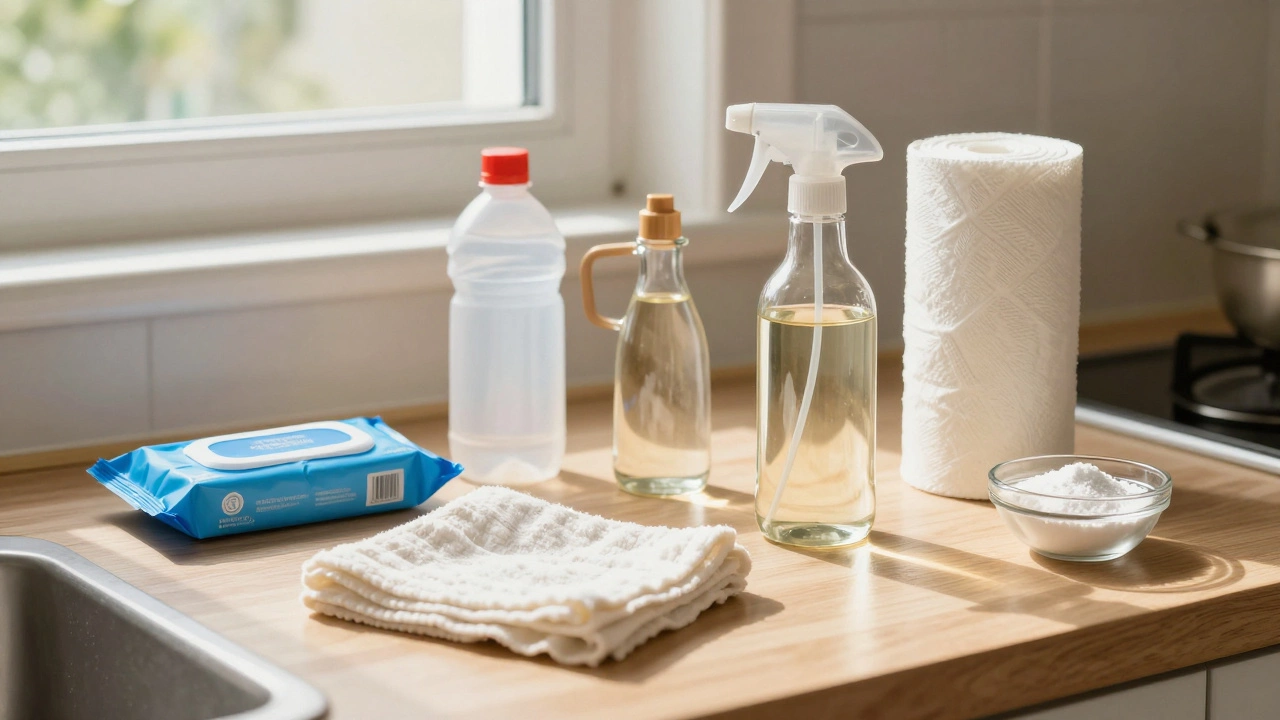
Those disposable wipes? They’re plastic. Even the ones that say "biodegradable" often need industrial composting to break down-and most landfills don’t offer that. In the UK, over 2 billion wipes are flushed or thrown away every year. Many clog sewers and end up in rivers. A simple switch: grab a reusable cotton cloth, dampen it with water and vinegar, and reuse it until it wears out. Wash it with your towels. That one change cuts plastic waste, saves money, and removes more grime than most store-bought wipes.
Ditch the Plastic Bottles
How many cleaning bottles do you have in your cupboard? Chances are, you’ve bought five different sprays for different surfaces, each in its own plastic container. You don’t need them. White vinegar, baking soda, and castile soap work on 90% of household messes. Mix one part vinegar to one part water in a glass spray bottle. Add a few drops of essential oil if you like the smell. Use baking soda as a scrub for sinks and tubs. Castile soap diluted in water cleans floors and counters. These three things cost less than £10 total and last months. No plastic. No chemicals. No confusion.
Don’t Buy "Eco-Friendly" Brands That Still Use Plastic
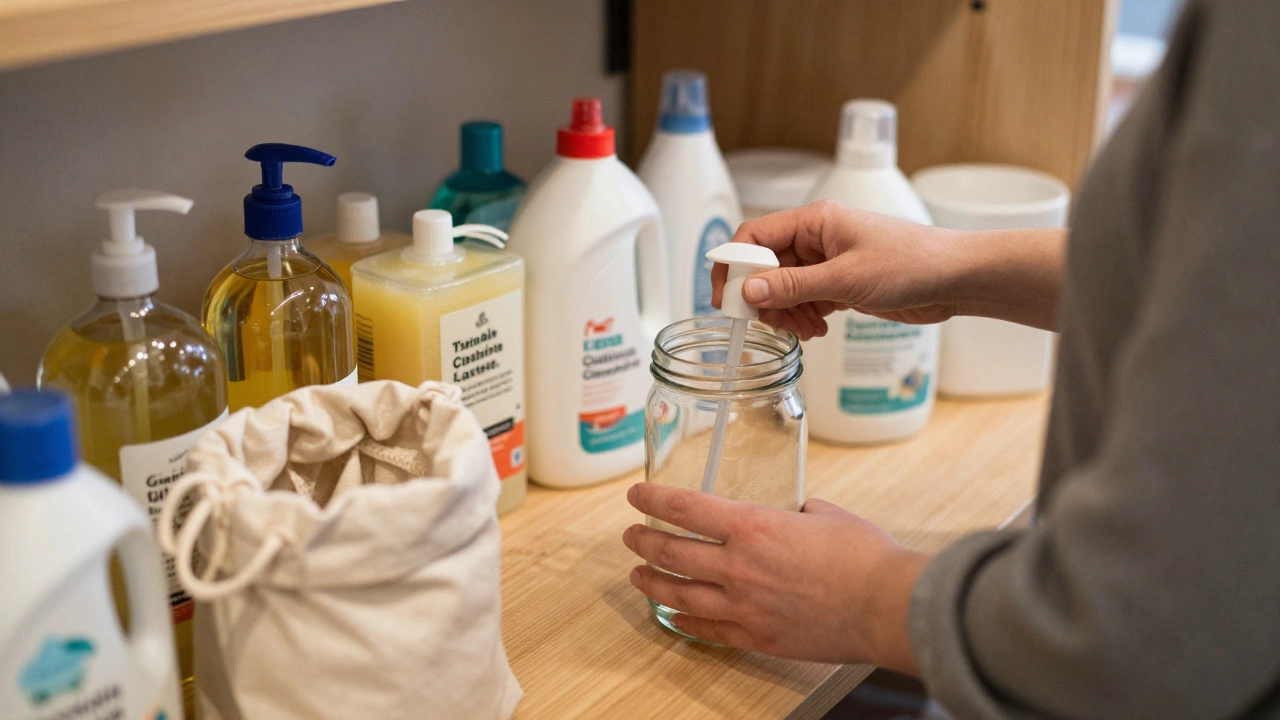
Some brands market themselves as sustainable while still packaging their products in virgin plastic. Look beyond the label. Ask: Is the container refillable? Can I buy it in bulk? Does the company use recycled materials? Brands like Ecover and Method have made progress, but they still rely on plastic bottles. A better option: use refill stations. In Bristol, shops like The Zero Waste Shop and The Refillable Pantry let you bring your own containers. You fill up vinegar, soap, or laundry detergent without buying new plastic every time. It’s not just greener-it’s cheaper per use.
Make Your Own All-Purpose Cleaner
Here’s the recipe that works in every kitchen and bathroom I’ve cleaned:
- 1 cup white vinegar
- 1 cup water
- 10 drops of tea tree oil (natural disinfectant)
- 5 drops of lemon essential oil (for scent)
Shake it. Spray it. Wipe it. Vinegar kills mold and bacteria. Tea tree oil adds extra germ-fighting power. Lemon cuts grease and leaves a fresh smell. You can make a full liter for under £1.50. Compare that to a £4 bottle of store-bought cleaner that’s mostly water and synthetic fragrances. And unlike commercial cleaners, this won’t leave a residue that attracts dust.
Avoid Synthetic Fragrances
That "clean linen" or "ocean breeze" scent? It’s not natural. Most commercial cleaners use phthalates and synthetic fragrances linked to hormone disruption and asthma. The UK’s Environmental Agency has flagged these chemicals as persistent pollutants. Even if a product says "unscented," it may still hide masking agents. Stick to natural scents: citrus peels steeped in vinegar, dried lavender in a sachet near the laundry, or a few drops of pure essential oil. Your lungs-and the environment-will thank you.
Use Cold Water
Heating water uses energy. A lot of it. Washing clothes in hot water uses up to 90% more electricity than cold. Most modern detergents are designed to work in cold water. Same goes for cleaning floors or wiping surfaces. You don’t need hot water to kill germs-soap and scrubbing do that. Cold water saves energy, extends the life of fabrics, and prevents shrinkage. It’s one of the easiest swaps you can make.
Stop Using Paper Towels
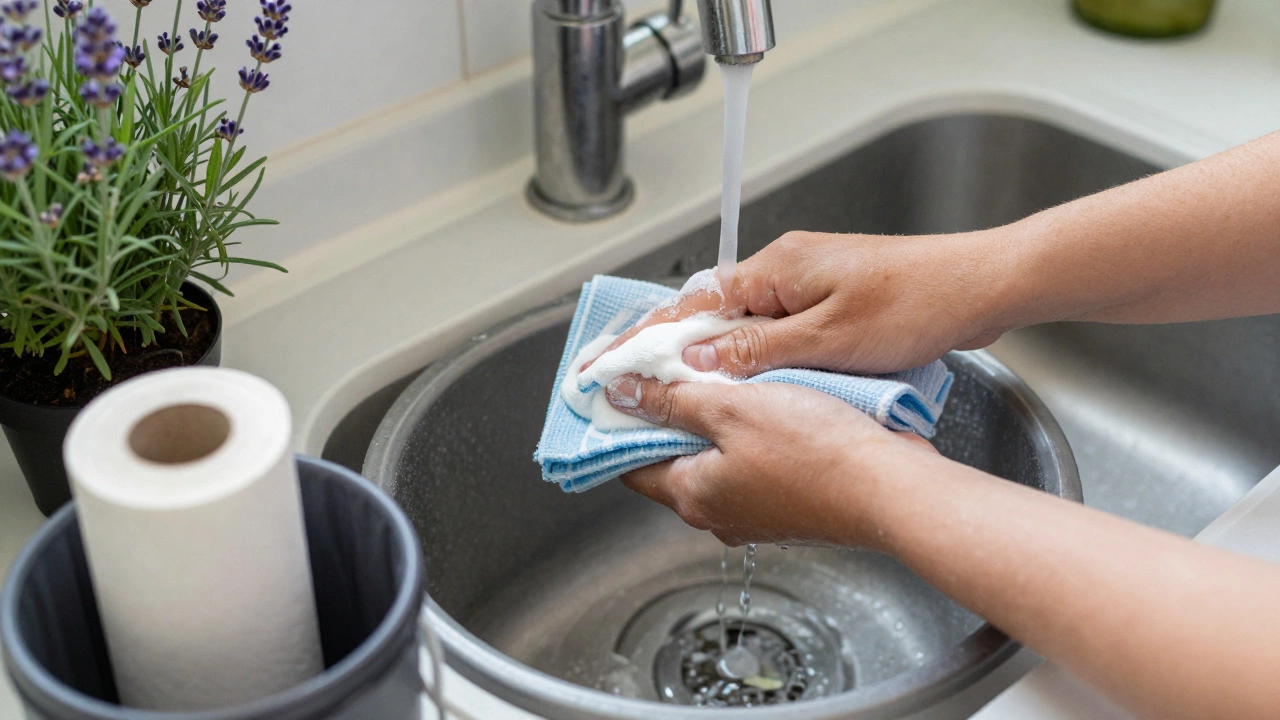
Every time you reach for a paper towel, you’re using trees, water, and energy that went into making and transporting it. The UK uses over 1.5 million tonnes of paper towels each year. That’s the same weight as 150,000 elephants. Switch to cloth rags. Keep a bin for dirty ones. Wash them with your clothes. You’ll cut waste, save money, and reduce your carbon footprint. If you absolutely need paper, choose 100% recycled, unbleached options-but even then, use them once and compost them.
Check Your Laundry Detergent
Laundry is one of the biggest hidden polluters. Many detergents contain phosphates, surfactants, and microplastics that end up in rivers. Look for detergents with no phosphates, no optical brighteners, and no plastic packaging. Brands like Ecover and Splosh offer solid laundry tablets in compostable packaging. Or make your own: mix 1 cup washing soda, 1 cup baking soda, and 1 bar of grated castile soap. Use 1-2 tablespoons per load. It’s cheap, effective, and plastic-free.
Don’t Overclean
Being eco-friendly doesn’t mean scrubbing every surface every day. Dirt isn’t always dangerous. In fact, some exposure to microbes helps build immunity. Focus on high-touch areas: doorknobs, light switches, sink handles. Leave the rest. Over-cleaning wastes water, energy, and products. It also creates more waste. Clean smart, not constantly.
Recycle Right
Even if you use eco-friendly products, you still need to recycle the containers properly. Rinse bottles before recycling. Remove pump tops-they’re often made of mixed plastics and aren’t recyclable. Check your local council’s rules. In Bristol, you can recycle plastic bottles at curb-side, but not pump dispensers. Take those to a recycling center. Or better yet: avoid them entirely by using glass or metal containers.
What You Can’t Do
Here’s the truth: you can’t be 100% eco-friendly. Not really. Even a bamboo toothbrush has a carbon footprint from transport and manufacturing. The goal isn’t perfection-it’s progress. Every time you choose a refill, skip plastic, or make your own cleaner, you reduce demand for harmful systems. You vote with your wallet. You don’t need to do everything at once. Start with one swap. Then another. After six months, you’ll look back and realize you’ve cut your cleaning waste by half.
Final Thought: It’s About Systems, Not Products
Being eco-friendly isn’t about buying the right cleaner. It’s about changing how you think. Do you buy in bulk? Do you reuse? Do you ask, "Do I really need this?" before you buy? Those habits matter more than any brand name. The most eco-friendly cleaner is the one you already own. The next one? Make it last.
Can I really clean effectively without chemicals?
Yes. Vinegar kills bacteria like E. coli and salmonella. Baking soda scrubs away grease and grime without scratching surfaces. Castile soap lifts dirt and leaves no residue. These ingredients have been used for centuries. Modern studies, including those from the University of Bristol’s Environmental Science department, confirm they’re just as effective as chemical cleaners for everyday household cleaning. You don’t need bleach or ammonia to keep your home clean.
Is vinegar safe for all surfaces?
No. Vinegar is acidic and can damage stone surfaces like marble, granite, or limestone. It can also dull the finish on hardwood floors if used too often. Use it on tiles, stainless steel, glass, and plastic. For stone or wood, stick to water and a drop of castile soap. Always test a small area first.
What about laundry pods? Are they eco-friendly?
Most laundry pods are wrapped in plastic that doesn’t fully dissolve and can end up in waterways. Even "biodegradable" pods often contain synthetic chemicals. Solid detergent tablets in compostable packaging are a better choice. Making your own laundry powder from washing soda, baking soda, and grated soap is the most sustainable option-it costs less, creates no plastic waste, and works in cold water.
Do essential oils make cleaning products safer?
They can, but not always. Essential oils like tea tree, eucalyptus, and lemon have natural antimicrobial properties. But they’re concentrated. Using too much can irritate skin or pets. Always dilute them in water or vinegar. And avoid oils like peppermint or citrus around cats-they’re toxic to them. Use sparingly and choose pure, unadulterated oils from trusted suppliers.
How do I know if a product is truly eco-friendly?
Look for third-party certifications: EU Ecolabel, Safer Choice (EPA), or Soil Association. Avoid vague terms like "natural" or "green." Read the ingredient list. If you can’t pronounce it, it’s probably synthetic. Check if the packaging is recyclable or refillable. And ask: Does this product solve a real problem, or is it just another thing to buy?