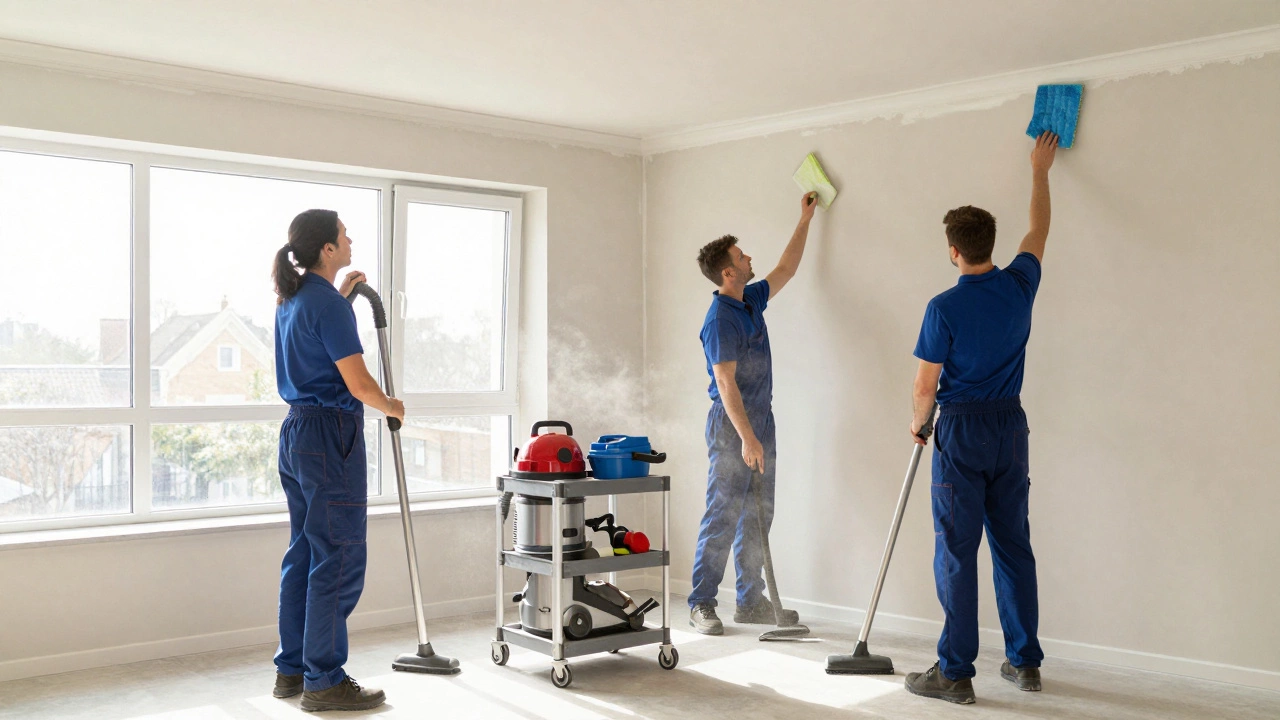
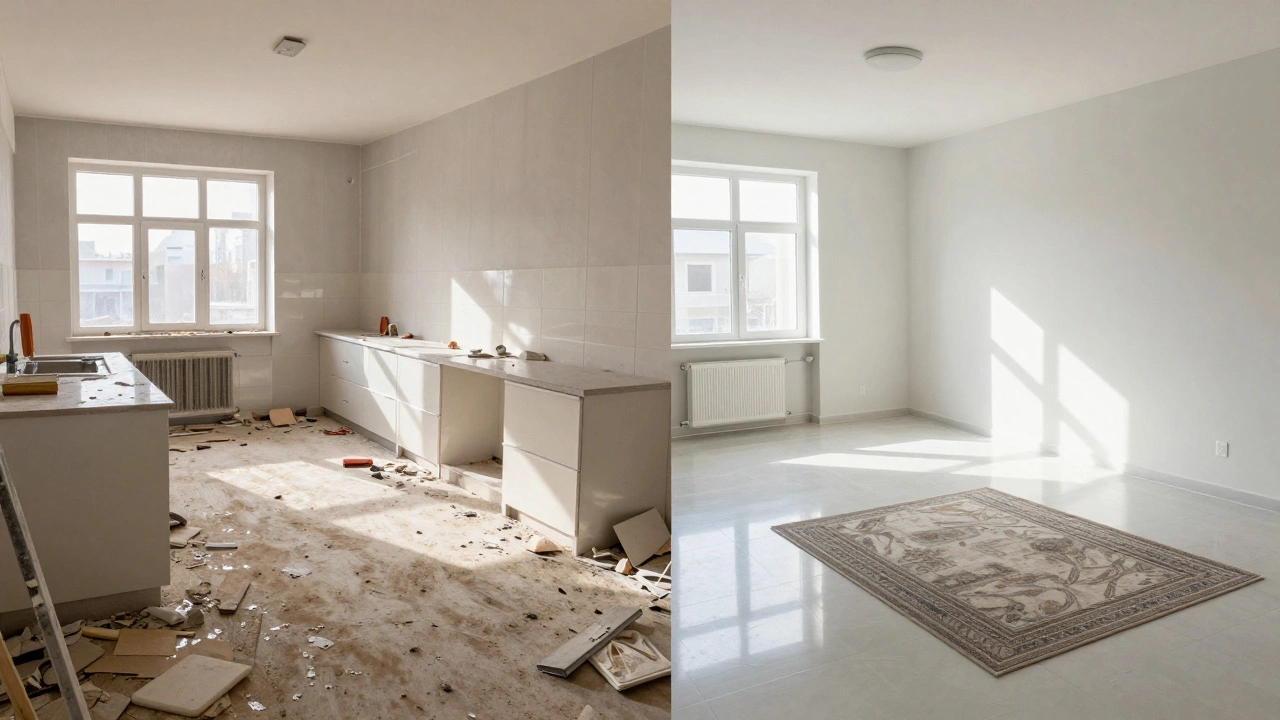
After builders cleaning isn’t just a final sweep with a broom. It’s a full-scale, detail-driven reset of your home after construction or renovation work. If you’ve ever walked into a brand-new extension or a freshly refurbed kitchen only to find dust piled like snowdrifts, grout smeared across tiles, and plaster flakes stuck to every surface-you know this isn’t normal. This is what after builders cleaning fixes.
What Exactly Happens During After Builders Cleaning?
Builders leave behind more than just dust. They leave plaster dust, drywall particles, adhesive residue, paint splatters, tile grout haze, cement smears, and even nails or screws you didn’t know were there. A regular vacuum won’t cut it. After builders cleaning tackles every surface, from ceiling corners to floorboards, using professional-grade tools and cleaning agents that won’t damage finishes.
Here’s what’s typically included:
- Wiping down all windows, frames, and sills-inside and out
- Cleaning all doors, handles, and architraves
- Removing adhesive, paint, and glue from skirting boards and fixtures
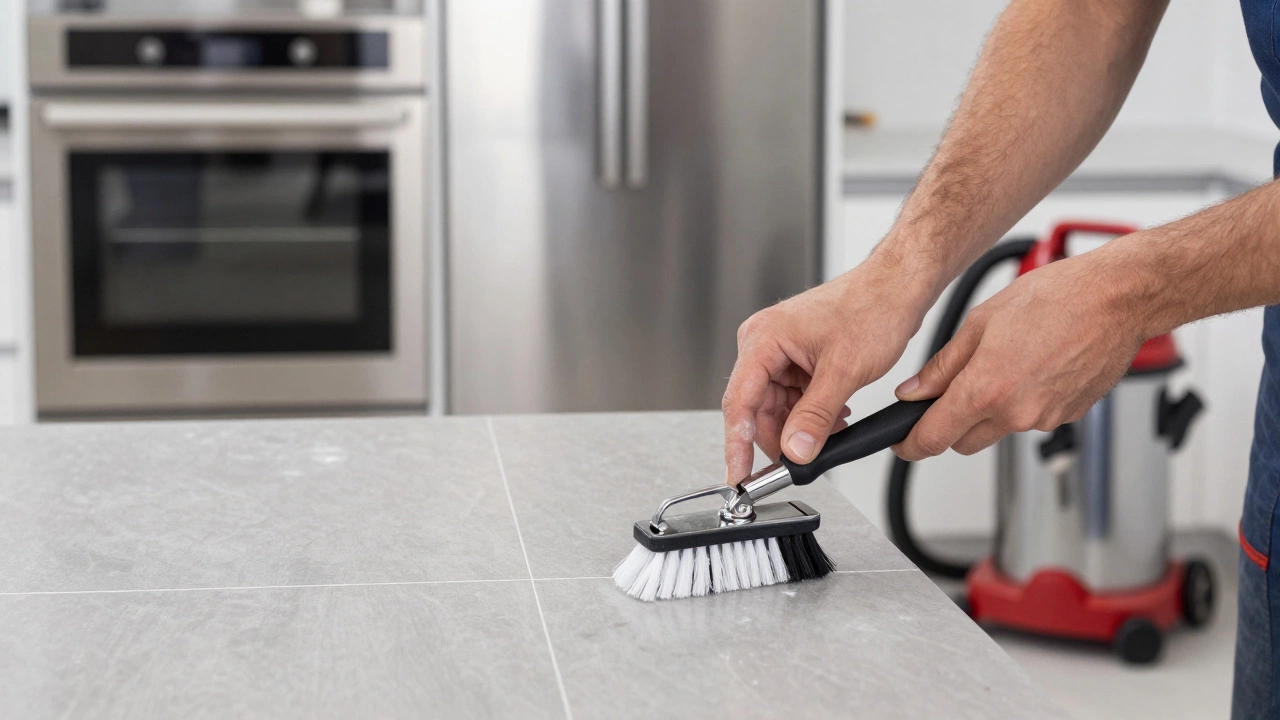
- Deep cleaning all tiles, bathrooms, and kitchens, including grout lines
- Polishing stainless steel taps, handles, and appliances
- Vacuuming and steam-cleaning carpets and rugs
- Removing dust from light fittings, vents, and ceiling fans
- Wiping down walls and ceilings where dust has settled
- Emptying all dustbins and removing construction waste
It’s not optional. It’s essential. Skipping this step means you’re moving into a space that’s still under construction-in your mind, if not your builder’s.
Why You Can’t Just Clean It Yourself
Many homeowners think, "I’ll just do it myself-it’s not that hard." But after builders cleaning isn’t about elbow grease. It’s about technique, equipment, and knowing what not to touch.
For example: using a regular all-purpose cleaner on polished stone tiles can leave permanent streaks. Spraying vinegar on marble? That etches the surface. Trying to scrub dried cement off a tiled floor with a scrub brush? You’ll scratch the glaze.
Professional cleaners use:
- Industrial HEPA vacuums that trap fine dust instead of redistributing it
- Specialist grout cleaners that break down cement residue without damaging tiles
- Non-abrasive microfiber cloths that lift paint and adhesive without scratching
- Steam cleaners for deep sanitisation of kitchens and bathrooms
- Protective gear and masking tape to shield delicate surfaces
And they know the order. Dust first. Then wipe. Then clean. Then polish. Mess up the sequence, and you’re just spreading the mess around.
What’s Left Out? What You Should Ask For
Not every "after builders clean" is the same. Some companies offer a basic package-just vacuuming and wiping surfaces. Others go further. You need to ask: "What’s included?"
Here’s what’s often left out-and why you should demand it:
- Inside appliances: Ovens, fridges, and dishwashers often get coated in dust and debris during construction. Ask if they’re wiped inside and out.
- Light switches and sockets: Dust gets trapped behind covers. This is a safety hazard if not cleaned properly.
- Underfloor areas: If you have underfloor heating or raised flooring, dust can accumulate underneath. A professional will access these areas.
- External areas: Patios, driveways, and garage floors often get covered in construction runoff. Some cleaners offer exterior pressure washing as an add-on.
- Removal of waste: Does the service take away leftover packaging, empty paint tins, or broken tiles? If not, you’re left with a skip you didn’t plan for.
Ask for a checklist before they start. A reputable company will give you one. If they don’t, walk away.
How Long Does It Take?
It depends on size, mess level, and what’s included. A 3-bedroom house with moderate build work? About 6-8 hours. A full renovation of a 5-bedroom period property? Two full days.
Most services work in teams of two or three. They’ll show up with their own equipment, wear protective gear, and work efficiently. No one wants to be in a dusty house longer than necessary.
Most providers offer morning or afternoon slots. If you’re moving in soon, schedule it for the day before you arrive. That way, you walk into a clean, fresh space-not a half-cleaned one.
How Much Does It Cost in the UK?
Prices vary by region, home size, and scope. In Bristol, here’s what you can expect:
| Property Size | Typical Cost Range | What’s Included |
|---|---|---|
| 1-2 bedrooms | £150-£250 | Basic wipe-down, vacuuming, window cleaning, bathroom and kitchen deep clean |
| 3-4 bedrooms | £250-£450 | Full deep clean, grout cleaning, appliance wipe-down, dust removal from all surfaces |
| 5+ bedrooms or large renovation | £450-£800+ | Includes exterior cleaning, underfloor access, waste removal, and specialist treatments |
Watch out for hidden fees. Some companies charge extra for:
- High ceilings (over 3m)
- Hardwood or stone flooring
- Removing stubborn paint or adhesive
- Extra time beyond the quoted hours
Always get a written quote. No surprises.
What Happens If You Skip It?
You might think, "I’ll clean it slowly over time." But here’s the truth: dust from construction isn’t like normal household dust. It’s sharp, abrasive, and full of chemicals from adhesives, sealants, and drywall compounds.
Left uncleaned, it can:
- Damage your vacuum over time as it clogs filters with fine plaster dust
- Trigger allergies or respiratory issues, especially in children or elderly residents
- Scratch polished surfaces as you walk on them with grit underfoot
- Make your carpets and rugs look permanently dull
- Leave sticky residues that attract more dirt
And if you’re selling the property? A poorly cleaned home looks neglected-even if it’s brand new. Buyers notice.
How to Choose the Right Service
Not all cleaning companies are created equal. Here’s how to pick:
- Check reviews-look for mentions of "after builders cleaning" specifically. Generic cleaning reviews won’t help.
- Ask for before-and-after photos from similar jobs. Real examples beat promises.
- Confirm insurance-they should have public liability cover in case they damage your property.
- Ask about products-do they use eco-friendly cleaners? If you have kids or pets, this matters.
- Get a written quote with a list of tasks included. No vague "full clean" terms.
Local firms in Bristol often do better work than national chains. They know local building materials, weather conditions, and common issues in older homes.
Final Tip: Schedule It Right
Don’t wait until move-in day. Schedule the clean for 24-48 hours before you bring in furniture or bedding. That gives time for dust to settle after cleaning (yes, it happens) and for you to air out the space.
Open windows. Run fans. Let the fresh air in. Then, step into your home-not a construction site-and truly enjoy it.