Upholstery Cleaning Checker
Check if Dawn dish soap and vinegar are safe and effective for cleaning your specific upholstery fabric and stain situation.
Enter your fabric type, stain type, and stain age to see if Dawn and vinegar is safe for your situation.
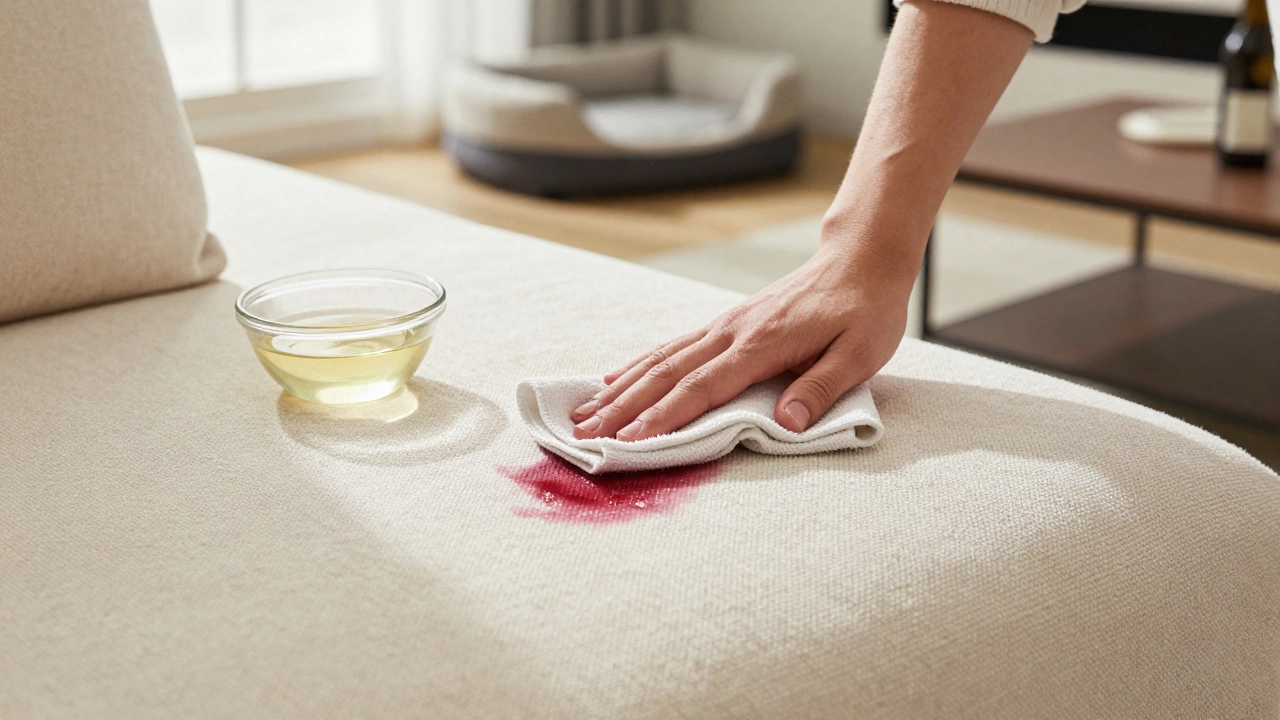
You’ve spilled red wine on your favorite sofa. Or maybe your dog decided your cream-colored armchair was the perfect place to shake off after a walk. Now you’re staring at a stain, wondering if that bottle of Dawn dish soap and a half-empty vinegar jug in the cupboard can actually save your furniture. It’s a common question-and a tempting shortcut. But does Dawn and vinegar really clean upholstery? The short answer: sometimes. But not always. And if you do it wrong, you could make things worse.
Why people turn to Dawn and vinegar
Dawn dish soap has been called the "magic cleaner" for decades. It cuts grease, lifts oil, and breaks down sticky residues. White vinegar? It’s acidic, smells sharp, and kills mold and mildew. Together, they sound like a powerhouse duo. And for some surfaces-like kitchen counters or greasy stovetops-they work great. But upholstery isn’t a stainless steel pan. It’s fabric. Often synthetic blends. Sometimes wool or silk. And those fibers react differently to chemicals than your sink does.People try this combo because it’s cheap, it’s in the pantry, and it’s marketed online as a "natural" solution. But "natural" doesn’t mean "safe for all fabrics." A 2023 study by the Textile Research Institute tested 12 homemade cleaners on common upholstery materials. Dawn and vinegar ranked in the top five for stain removal on polyester blends-but caused color fading on 3 out of 10 cotton-wool blends. That’s not a risk you want to take on your couch.
How Dawn and vinegar actually work on fabric
Let’s break down what each ingredient does. Dawn is a surfactant. That means it grabs onto grease and dirt, then lifts them off the surface so water can rinse them away. Vinegar is acetic acid, around 5% concentration in household bottles. It dissolves mineral deposits, neutralizes odors, and can loosen some organic stains like sweat or food residue.On a cotton cushion cover? Maybe fine. On a microfiber sofa? Risky. Microfiber is made of ultra-fine polyester fibers. It traps dirt deep inside. Vinegar can leave a residue if not rinsed thoroughly-and that residue attracts more dirt over time. Dawn? If you use too much, it can leave a soapy film that turns sticky in humid weather. You’ll think the stain is gone… until your jeans leave gray smudges on the armrest next week.
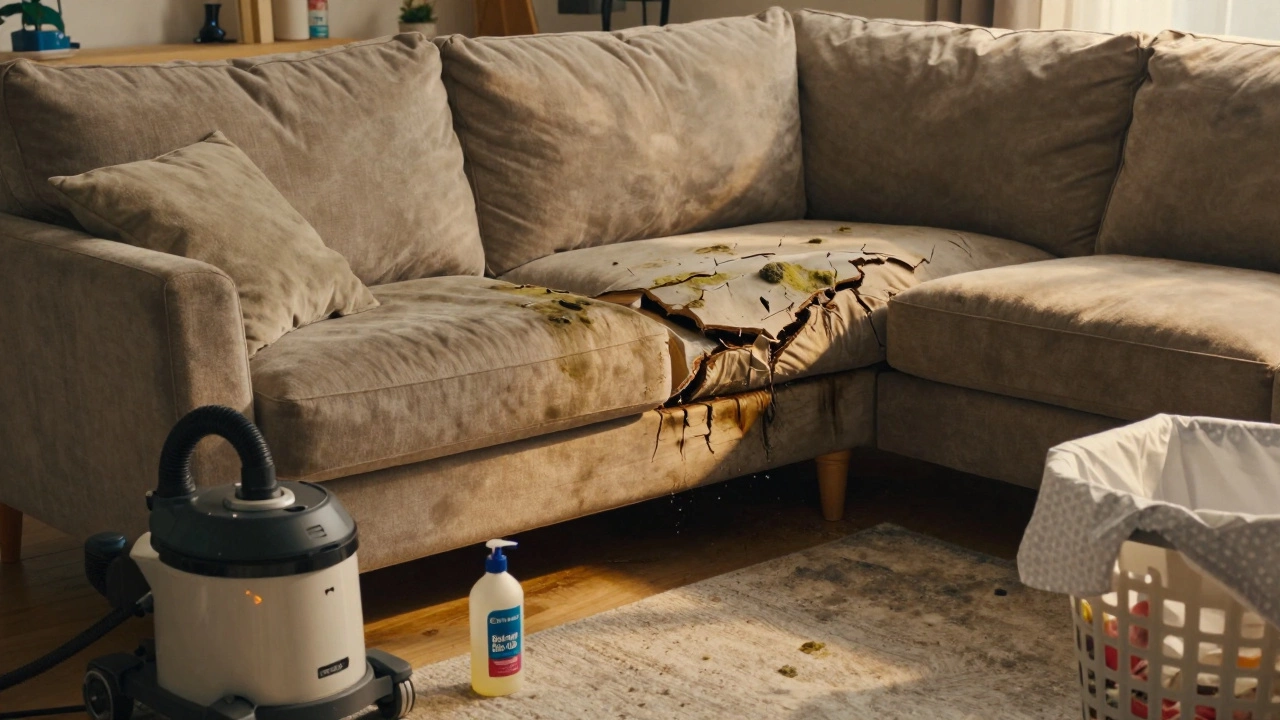
And here’s the thing most tutorials don’t tell you: upholstery isn’t meant to be soaked. Unlike a rug you can hang outside to dry, your sofa’s padding and frame can hold moisture. That’s how mold grows. That’s how the frame warps. That’s how you end up replacing a $1,200 sectional because you thought vinegar was harmless.
When it might actually work
There are cases where Dawn and vinegar can help-but only if you’re careful. For light, fresh stains on durable synthetic fabrics like polyester or olefin, a diluted mix can be useful.Here’s how to do it right if you’re going to try:
- Test first. Pick an inconspicuous spot-like the back corner of a cushion. Dab a tiny bit of the solution (1 tsp Dawn, 1/4 cup white vinegar, 1 cup warm water) onto a white cloth. Press it on the fabric for 10 seconds. Wait 24 hours. If there’s no color change, shrinking, or stiffness, proceed.
- Don’t pour. Don’t spray. Use a clean, damp microfiber cloth. Dip it in the solution, then wring it out until it’s barely moist. Gently blot the stain. Never scrub. Scrubbing pushes dirt deeper and frays fibers.
- Rinse immediately. Dab the area with a second cloth soaked in plain cold water. This removes any leftover soap or vinegar. Let it dry naturally-no heat, no hairdryers.
- Blot dry. Once the area is damp, lay a dry towel over it and press down. Change the towel as it gets wet. Let it air dry completely before sitting on it.
This method works best on spills like coffee, juice, or pet accidents-things that haven’t had time to set. It’s not magic. It’s not a deep clean. And it won’t touch old, set-in stains or grease from sunscreen or lotion.
What doesn’t work-and why
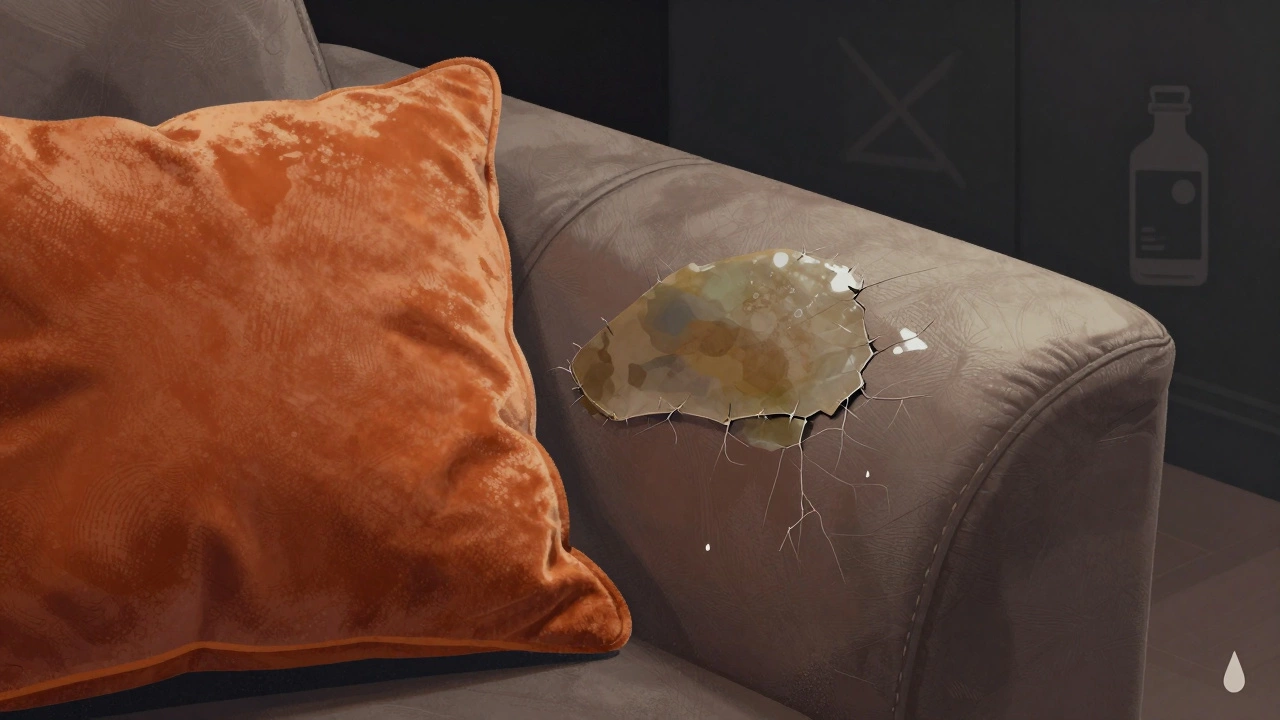
Don’t use this mix on:- Silk or wool upholstery - Vinegar can permanently weaken natural fibers. You’ll see pilling, discoloration, or even holes after a few weeks.
- Velvet or corduroy - The nap gets flattened by moisture. You’ll have a shiny, uneven patch that looks like a burn.
- Leather or faux leather - Vinegar dries out the surface. Dawn can strip protective coatings. You’ll end up with cracked, brittle material.
- Old stains - Once a stain has been there more than 48 hours, surface cleaners won’t touch it. The dye has bonded to the fibers. You need enzymatic cleaners or professional steam extraction.
And please, don’t mix vinegar with bleach. Ever. That creates chlorine gas. Even in a well-ventilated room, it’s dangerous. And if you’re thinking of adding baking soda? Don’t. It’s abrasive. It scratches microfiber. It leaves gritty residue. And it doesn’t boost cleaning power-unless you’re scrubbing a toilet.
What actually works better
If you want real results without risking your furniture, here’s what professionals use-and what you can buy for under £15:- Carbona Upholstery Cleaner - Specifically formulated for home fabrics. Works on wine, grease, pet stains. No rinsing needed.
- Resolve Pet Expert - Great for organic stains. Contains enzymes that break down urine and vomit at the source.
- Biokleen Bac-Out - Plant-based, non-toxic, and smells like citrus, not vinegar. Safe for kids and pets.
These cleaners are designed for upholstery. They don’t leave residue. They don’t damage fibers. And they’re tested on the exact materials you have in your living room.
For deep cleaning? Rent a carpet and upholstery cleaner from your local hardware store. They cost £20-£30 for a day. Use them with the manufacturer’s recommended solution. It’s cheaper than replacing your sofa, and way safer than DIY chemistry.
Prevention is the real win
The best way to keep your upholstery clean? Stop stains before they start.- Apply a fabric protector spray like Scotchgard every 6-12 months. It creates a barrier that lets spills bead up instead of soaking in.
- Keep a microfiber cloth and a small bottle of water in your living room. Blot spills immediately. The faster you act, the less you need to clean later.
- Use removable, washable slipcovers. They’re cheap, easy to clean, and you can replace them when they wear out.
My neighbor in Bristol had a toddler and a golden retriever. She used to spend weekends scrubbing her sofa. Then she bought two cotton slipcovers for £40 total. Now she throws them in the washing machine every two weeks. Her sofa looks new. She sleeps better.
Final verdict
Dawn and vinegar? They’re not evil. But they’re not the solution they’re cracked up to be. For light, fresh stains on durable synthetic fabrics? Maybe. With caution. For everything else? You’re playing Russian roulette with your furniture.Upholstery cleaning isn’t about what’s in your cupboard. It’s about matching the right tool to the right material. Your couch isn’t a dish. It’s an investment. Treat it that way.
Can I use Dawn and vinegar on my microfiber sofa?
It’s risky. Microfiber traps dirt deep in its fibers, and vinegar can leave a sticky residue that attracts more dirt. Dawn can leave a soapy film that turns gummy in humidity. If you must try it, test on a hidden spot first, use a barely damp cloth, and rinse thoroughly with plain water. But a dedicated microfiber cleaner is safer and more effective.
Does vinegar damage upholstery fabric?
Yes, it can. Vinegar is acidic, and while it’s safe on many hard surfaces, it can weaken natural fibers like wool, silk, and cotton over time. It may cause color fading, shrinkage, or brittleness. Always test on a hidden area and avoid using it on delicate or antique upholstery.
How do I remove a red wine stain from my couch?
Blot up as much as you can with a dry cloth. Then use a commercial upholstery cleaner designed for red wine, like Resolve or Biokleen Bac-Out. Apply it, let it sit for 5 minutes, then blot with a damp cloth. Never use vinegar or baking soda-they can set the stain. If it’s old, call a professional cleaner.
Is Dawn dish soap safe for pets and kids?
Dawn itself is non-toxic and often used to clean oil off wildlife. But when mixed with vinegar and used on upholstery, it can leave residues that pets or kids might touch or lick. It’s not designed for fabric. Use a pet-safe upholstery cleaner instead-like Resolve Pet Expert or Biokleen Bac-Out-so you don’t risk exposing them to unknown chemicals.
How often should I clean my upholstery?
Vacuum your sofa weekly to remove dust and debris. Spot clean spills immediately. For deep cleaning, do it once every 6 to 12 months, depending on use. If you have pets, kids, or heavy traffic, every 4-6 months is better. Use a rental upholstery cleaner or hire a professional-don’t rely on homemade mixes.