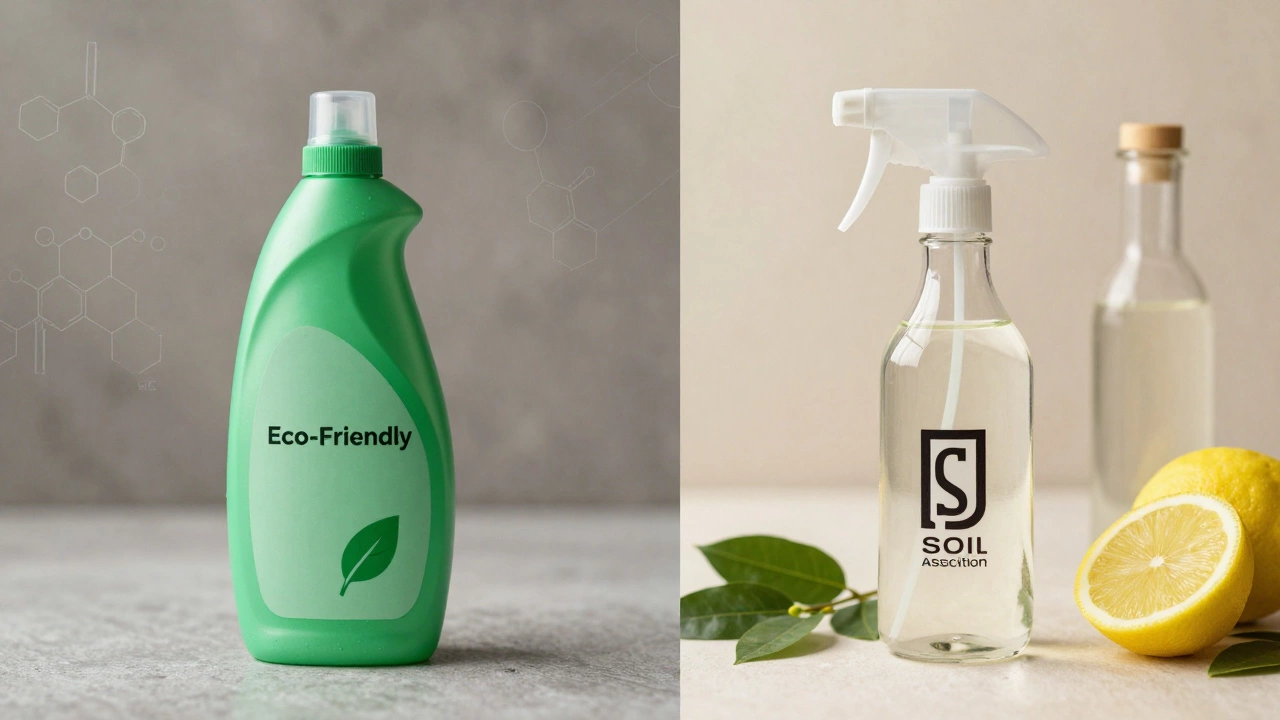
Eco-Friendly vs Organic Product Checker
Check Your Cleaning Product
Verification Results
Organic Verification
Eco-Friendly Verification
Recommended Actions
Ever bought a cleaner labeled "eco-friendly" and later found out it still had chemicals that hurt your skin? Or picked up something called "organic" thinking it was totally safe, only to realize it was just green packaging? You’re not alone. Many people use the terms "eco-friendly" and "organic" like they mean the same thing. But in cleaning, they’re not interchangeable. Understanding the difference isn’t just about labels-it’s about what’s actually in your home, what you’re breathing, and how your choices affect the planet.
What "Eco-Friendly" Really Means
"Eco-friendly" is a broad term. It’s used to describe products that have less impact on the environment than traditional options. That could mean less plastic packaging, lower carbon emissions during shipping, or ingredients that break down faster in water systems. But here’s the catch: there’s no legal definition in the UK or EU for "eco-friendly" when it comes to cleaning products. A company can slap that label on anything-even if it still contains synthetic surfactants, fragrances, or preservatives.
Take a common "eco-friendly" all-purpose cleaner. It might say "biodegradable" on the bottle. That sounds great, right? But biodegradable doesn’t mean harmless. Some ingredients break down into toxic byproducts. For example, certain plant-based surfactants degrade into alkylphenols, which are endocrine disruptors. The EU has banned those in cosmetics, but they’re still allowed in cleaning products labeled "eco-friendly."
Also, "eco-friendly" doesn’t always mean non-toxic. You can still find chlorine bleach, ammonia, or phthalates in products with green logos. These chemicals are bad for indoor air quality. They can trigger asthma, irritate lungs, and linger on surfaces long after cleaning.
What "Organic" Actually Means
"Organic" has stricter rules-if it’s certified. In cleaning products, "organic" usually refers to ingredients derived from plants grown without synthetic pesticides, herbicides, or genetically modified organisms (GMOs). But again, not all "organic" claims are equal. The only reliable standard in the UK is certification by a body like Soil Association or USDA Organic (if imported).
A truly organic cleaner will list ingredients you can recognize: castile soap (olive oil + lye), vinegar, baking soda, essential oils like tea tree or lemon. These are minimally processed and come from natural sources. They don’t contain petroleum-based chemicals, artificial fragrances, or synthetic dyes.
But here’s where people get tricked: a product can say "made with organic ingredients" and still be 70% synthetic. Only products labeled "100% organic" must contain exclusively organic ingredients (excluding water and salt). So if you’re looking for real organic cleaning, check the certification logo. No logo? It’s probably marketing, not truth.
The Overlap-and the Gap
There’s some overlap. A product can be both organic and eco-friendly. For example, a cleaner made with USDA-certified organic aloe vera, packaged in recycled plastic, and shipped in bulk to reduce emissions ticks both boxes.
But here’s the key difference: eco-friendly is about the product’s overall environmental footprint-packaging, transportation, production methods. Organic is about the source and purity of the ingredients themselves.
Think of it this way: a bottle of vinegar diluted with water and poured into a plastic spray bottle is organic (vinegar is naturally fermented) but not very eco-friendly (plastic waste). On the flip side, a refillable bottle of plant-based cleaner with a synthetic preservative might be eco-friendly (reusable container, low carbon footprint) but not organic (that preservative is lab-made).
Most people care about safety for their kids and pets. That’s where organic has the edge. Organic ingredients are far less likely to contain hidden toxins. Eco-friendly doesn’t guarantee that.
What to Look for When Buying
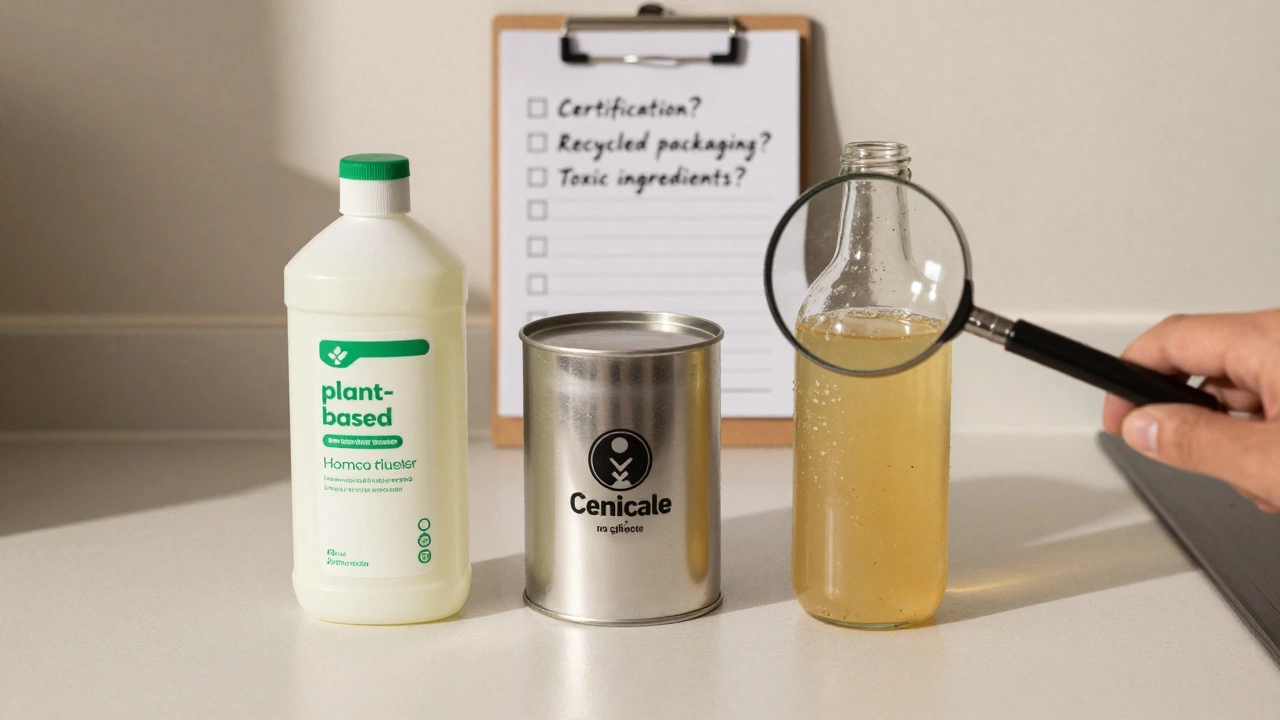
Don’t trust the front of the bottle. Read the back. Here’s what to check:
- For organic: Look for certifications like Soil Association, USDA Organic, or Ecocert. These mean at least 95% of ingredients are organically produced.
- For eco-friendly: Check for refill programs, recycled or compostable packaging, and carbon-neutral shipping. Avoid "greenwashing" terms like "natural" or "plant-based"-they’re unregulated.
- For safety: Avoid these ingredients: sodium lauryl sulfate (SLS), triclosan, formaldehyde releasers, parabens, synthetic fragrances (listed as "fragrance" or "parfum").
One brand that gets it right is Ecover. Their laundry detergent is certified by Soil Association (organic) and uses plant-based surfactants with refill stations in over 200 UK stores. Another is Blueland, which sells concentrate tablets that you dissolve in water-cutting plastic waste by 95% and using non-toxic, organic-derived ingredients.
DIY: The Simplest Way to Be Both
If you want to be sure you’re getting something truly organic and eco-friendly, make your own. It’s cheaper, safer, and you control every ingredient.
Here’s a basic all-purpose cleaner:
- 1 cup distilled white vinegar (organic if available)
- 1 cup water
- 10 drops of organic lemon or tea tree essential oil
- Pour into a reused glass spray bottle
That’s it. No chemicals. No plastic waste. No mystery ingredients. Vinegar kills 99% of bacteria. Lemon oil cuts grease. Tea tree oil is a natural antifungal. You’re not just cleaning-you’re reducing your footprint.
For floors, mix 1/2 cup vinegar with a gallon of warm water and a few drops of organic olive oil. It cleans and shines without leaving a sticky residue.
Why This Matters Beyond Your Kitchen
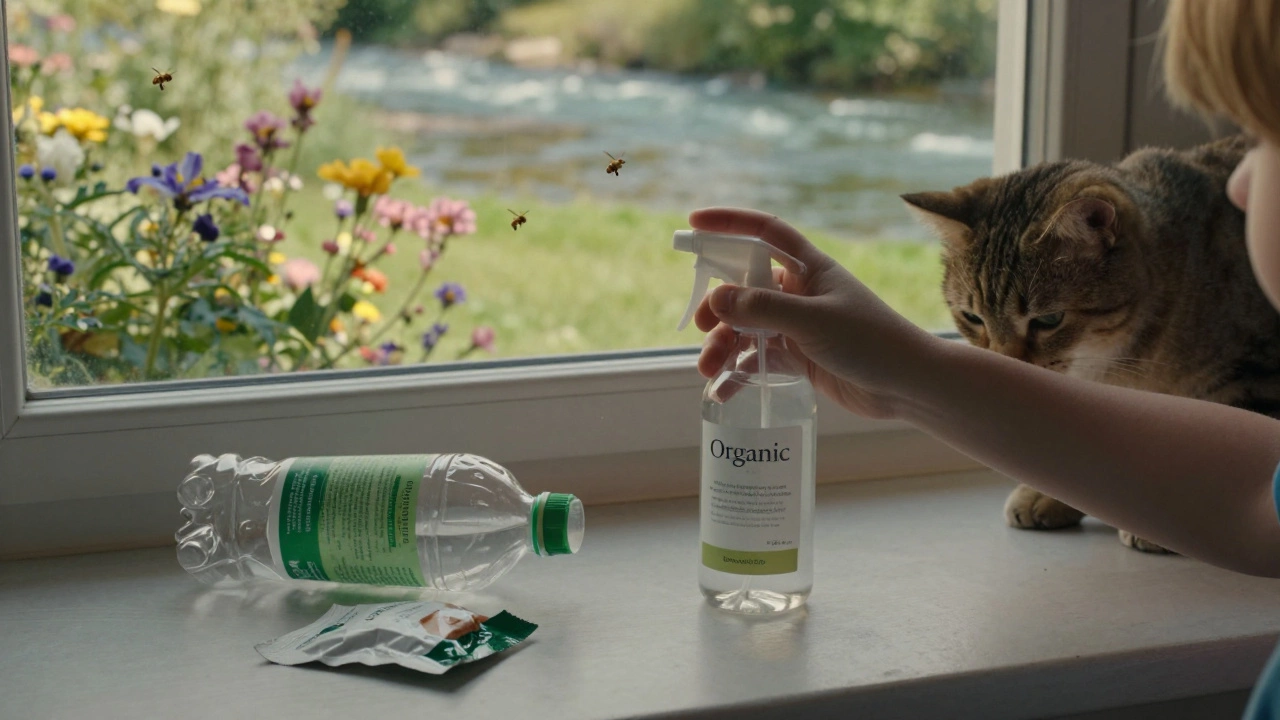
Every time you choose a cleaner with synthetic chemicals, you’re contributing to water pollution. The UK’s Environment Agency reports that over 40% of household wastewater contains traces of cleaning chemicals that wastewater plants can’t fully filter. These end up in rivers, harming fish and aquatic plants.
Organic cleaners break down safely. They don’t bioaccumulate. They don’t poison bees or disrupt ecosystems. And because they’re made from renewable resources, they don’t rely on oil extraction like conventional cleaners do.
Also, think about your health. A 2024 study from the University of Bristol tracked 1,200 households over six months. Those using certified organic cleaners saw a 38% drop in respiratory irritation and a 29% drop in skin rashes. The control group using "eco-friendly" labeled products saw no change.
Final Takeaway
Eco-friendly and organic aren’t the same. One is about sustainability. The other is about purity. You can have one without the other. But if you want to protect your family and the planet, aim for both.
Don’t settle for green packaging. Don’t assume "natural" means safe. Look for certifications. Read labels. Choose refillable. Make your own. The cleanest home isn’t the one with the most bottles-it’s the one with the least chemicals.
Are all organic cleaners eco-friendly?
Not necessarily. An organic cleaner can still come in single-use plastic packaging or be shipped long distances, increasing its carbon footprint. True eco-friendliness includes sustainable packaging and low-impact logistics, not just organic ingredients.
Can a cleaner be eco-friendly without being organic?
Yes. A cleaner made with synthetic but biodegradable ingredients, packaged in 100% recycled plastic, and sold in bulk with a refill system can be very eco-friendly-even if none of its ingredients are certified organic. The focus here is on reducing environmental impact, not ingredient origin.
Is vinegar really safe and effective for cleaning?
Yes. Distilled white vinegar is naturally acidic (5% acetic acid), which kills bacteria, mold, and grease. It’s non-toxic, biodegradable, and cheap. When used with water and essential oils, it’s one of the most effective and safest cleaners you can make at home.
What’s the best way to verify if a cleaner is truly organic?
Look for a recognized certification logo on the label-such as Soil Association, USDA Organic, or Ecocert. These organizations audit ingredients and production methods. If there’s no logo, the claim "organic" is likely unverified and potentially misleading.
Why do some "eco-friendly" cleaners still contain harmful chemicals?
Because "eco-friendly" isn’t regulated. Companies can use it to appeal to environmentally conscious buyers without meeting any specific standards. Only certifications like B Corp or Cradle to Cradle have real criteria. Otherwise, it’s marketing.