Office Cleaning Time Estimator
Configuration
Estimated Duration
Start with the top-down rule to save 30 minutes by avoiding re-vacuuming dust that falls from shelves.
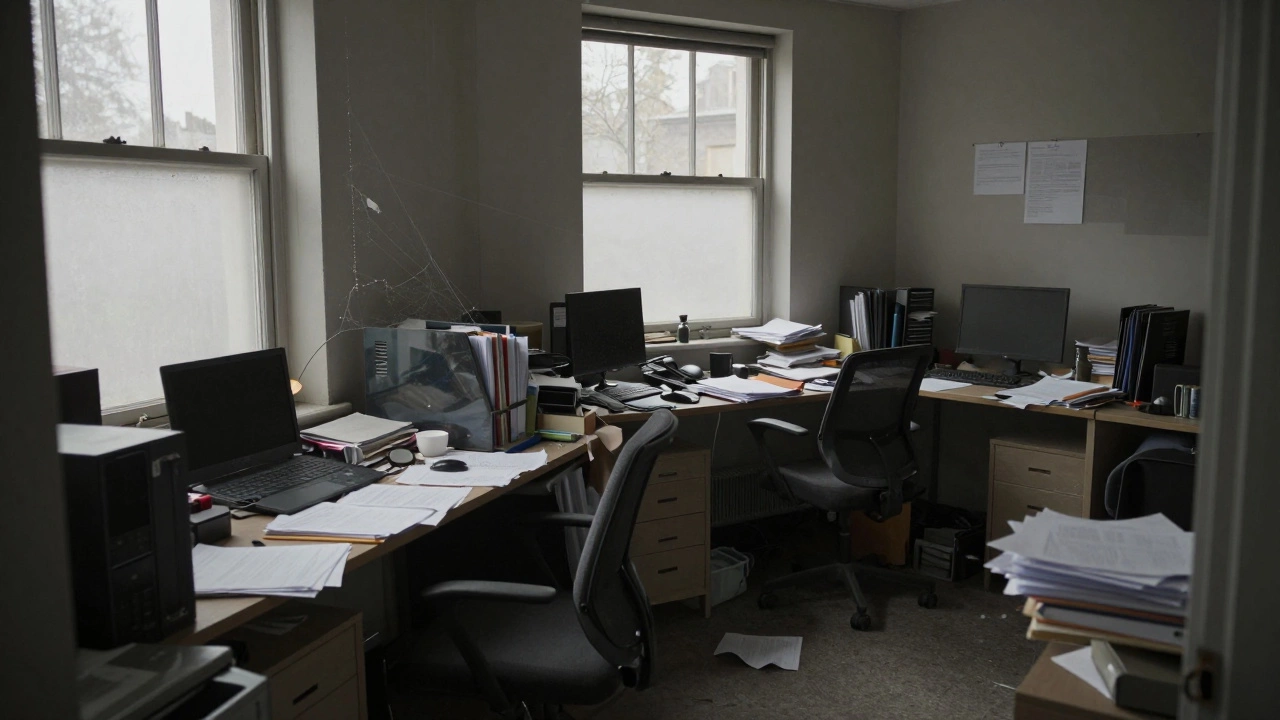
Walking into a cluttered, dusty 1,000-square-foot office feels like wading through mud. You know it needs attention, but you’re stuck on the logistics: how many hours will this actually eat up of your day? The short answer is that a standard maintenance clean takes about 2 to 3 hours, while a deep clean can stretch to 4 or more. But that’s just the surface level. The real timeline depends on what state the space is in, who is doing the work, and exactly what tasks are on the list.
If you’re managing a small business or working from a home office, understanding these timeframes helps you schedule around peak productivity hours. It also prevents the frustration of starting a clean at 6 PM only to realize you’ll be scrubbing baseboards until midnight. Let’s break down the variables that dictate the clock.
The Baseline: Standard Maintenance vs. Deep Cleaning
To get an accurate estimate, we first need to define what "cleaning" means in this context. There are two main tiers of service for a 1,000-square-foot commercial space, and they have vastly different time costs.
Maintenance Cleaning is the routine upkeep performed daily or weekly to keep the office presentable and hygienic. This involves emptying trash bins, vacuuming carpets, dusting high-touch surfaces like door handles and light switches, and sanitizing restrooms. For a 1,000-square-foot area with standard furniture density, a professional cleaner typically completes this in 90 minutes to 2 hours. If you are doing it yourself without prior experience, expect it to take closer to 2.5 hours as you navigate around desks and equipment.
Deep Cleaning is an intensive process that targets built-up grime, hard-to-reach areas, and neglected spots. This goes beyond the surface. It includes moving furniture to vacuum underneath, washing windows, scrubbing kitchen appliances, descaling toilets, and wiping down blinds. A deep clean of a 1,000-square-foot office usually requires 3 to 5 hours. If the office hasn’t been professionally cleaned in months, add another hour for pre-treatment of stains or heavy dust removal.
| Cleaning Type | Professional Cleaner | DIY (Novice) | Key Tasks Included |
|---|---|---|---|
| Maintenance | 1.5 - 2 hours | 2 - 3 hours | Vacuuming, dusting, trash, restroom sanitize |
| Deep Clean | 3 - 5 hours | 5 - 7 hours | Moving furniture, window washing, appliance scrubbing |
| Post-Construction | 6 - 8+ hours | Not recommended | Dust removal, debris clearing, final polish |
Factors That Slow Down the Clock
A square foot is a square foot, right? Not really. The layout and contents of your 1,000-square-foot space drastically alter the labor required. Here is what adds unexpected minutes to your timer.
Furniture Density and Layout
An open-plan office with four standing desks and a meeting table is easy to navigate. You can push a vacuum across large stretches of carpet quickly. However, if that same 1,000-square-foot space is packed with six cubicles, a server rack, a filing cabinet maze, and a breakroom with a fridge and microwave, the workflow becomes fragmented. Every piece of furniture requires lifting, moving, or maneuvering around. Dense layouts can increase cleaning time by 30% because you spend more time positioning yourself than actually cleaning.
Flooring Type
The floor is the largest surface area in any room. Carpet requires vacuuming, which is relatively fast, but if there are spills or pet hair, you might need spot cleaning. Hardwood or tile floors require sweeping and mopping. Mopping takes longer because you have to wait for sections to dry before walking on them to avoid slips. Additionally, tiled bathrooms within the office add significant time due to the grout lines needing attention. Vinyl composition tile (VCT), common in older offices, often requires stripping and waxing, which is a multi-day project, not a single-session task.
Kitchenette and Restroom Complexity
A "dry" office with no sink or toilet cleans much faster than one with full amenities. A kitchenette introduces grease, food residue, and appliance interiors (microwave, fridge). Scrubbing the inside of a refrigerator alone can take 20 minutes. Similarly, a restroom requires chemical dwell time. You spray disinfectant, wait for it to kill bacteria, then wipe. This waiting period slows down the physical action but is essential for hygiene. An office with two restrooms and a full kitchen can double the time spent on non-floor tasks compared to a basic conference room setup.
Who Is Doing the Cleaning?
Your skill level and team size are the biggest variables you control. Professional cleaners move faster not because they rush, but because they have systems. They use color-coded cloths to avoid cross-contamination, efficient motion patterns (top-to-bottom, left-to-right), and industrial-grade equipment that lifts dirt better than consumer vacuums.
If you are doing this DIY, consider these realities:
- Single Person: You are limited by how many tools you can carry. Running back to the closet for a different spray bottle or cloth adds dead time. Expect to take the upper end of the time estimates.
- Two People: This is the sweet spot for efficiency. One person can handle the wet zones (restrooms, kitchen) while the other tackles dry zones (vacuuming, dusting). Communication allows you to coordinate trash removal so neither person is blocked.
- Experience Level: Novices tend to miss spots or re-clean areas they just finished. Professionals follow a checklist. If you are new to this, create a simple route map before you start to minimize backtracking.
Optimizing Your Cleaning Workflow
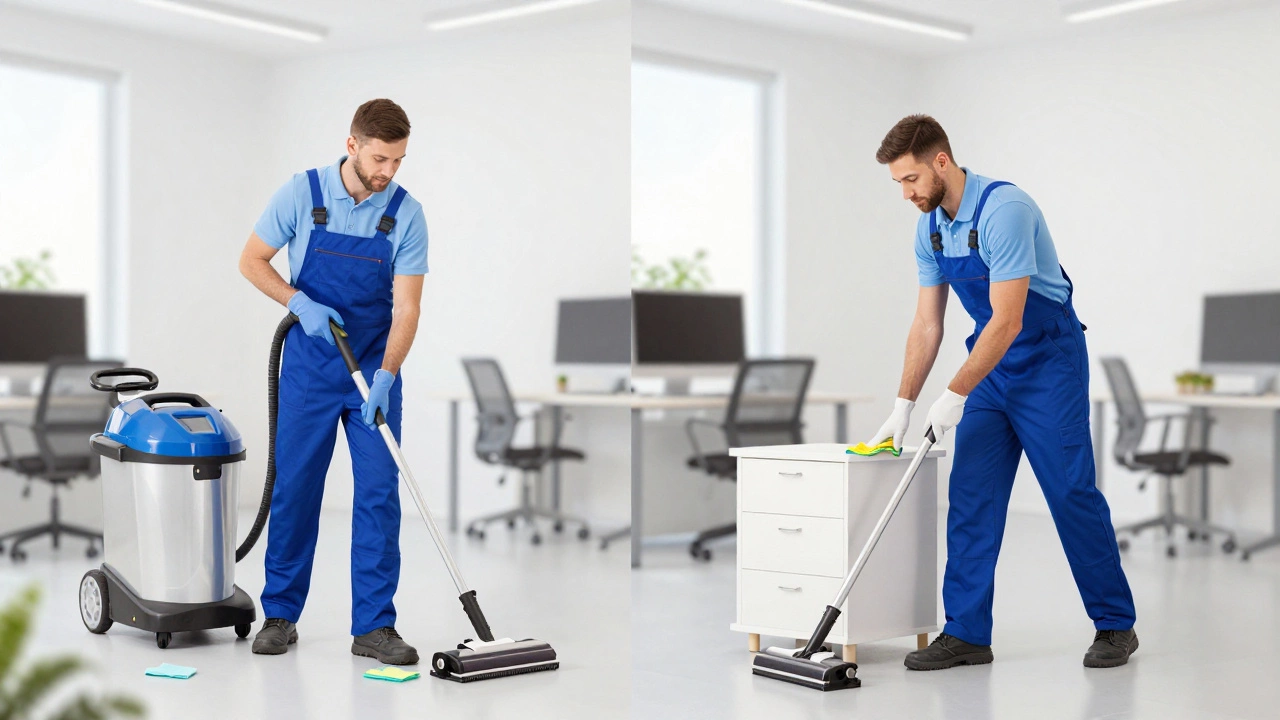
You don’t need to hire a crew to clean efficiently. By adopting a few professional habits, you can shave 30 minutes off a standard clean. The goal is to reduce friction-the moments where you stop working because you are looking for something or deciding what to do next.
The Top-Down Rule
Always start at the highest point and work your way down. Dust falls. If you vacuum the floor first, then dust the shelves, the dust will land on your freshly clean floor, forcing you to vacuum again. Start with ceiling vents, light fixtures, and top shelves. Move to desk surfaces and electronics. Finish with the floors. This logical flow ensures that gravity works for you, not against you.
Zoning the Space
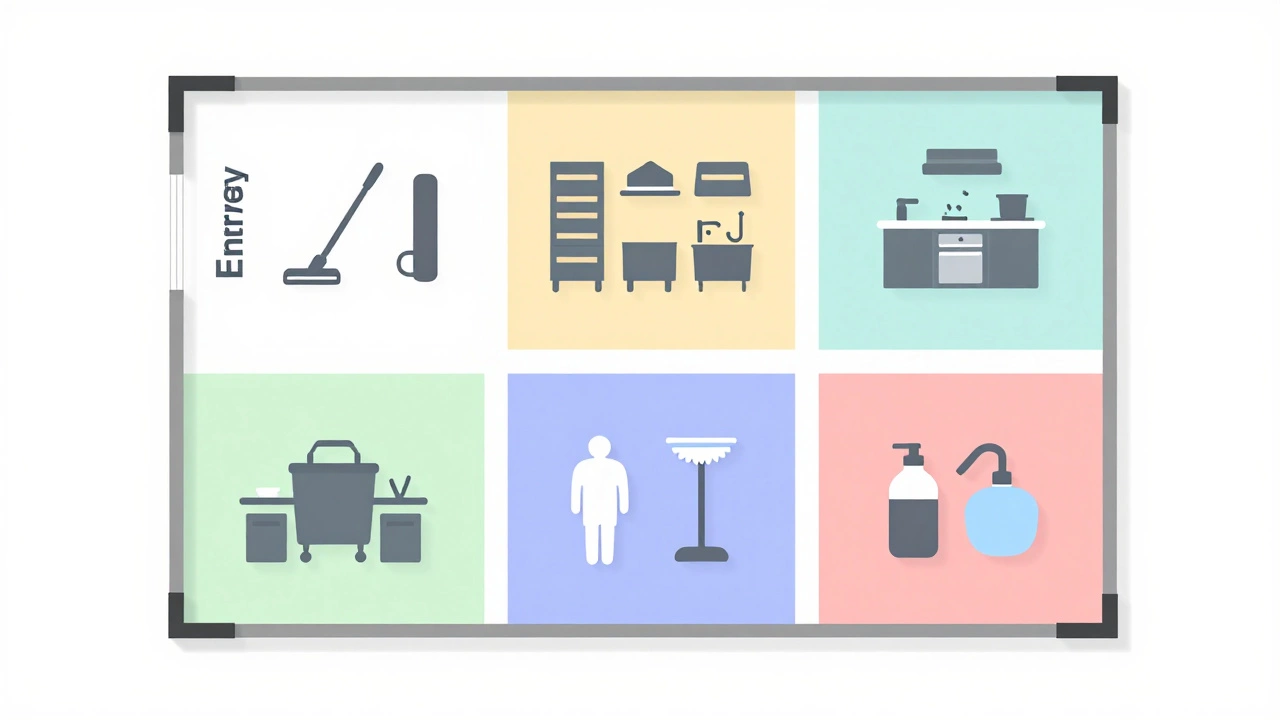
Don’t try to clean everything at once. Break the 1,000-square-foot office into zones:
- Zone 1: Entryway and Reception. High traffic, high dirt. Sweep/mop immediately.
- Zone 2: Workstations. Dust monitors, keyboards, and desks. Vacuum under chairs.
- Zone 3: Kitchen/Breakroom. Sanitize counters, wipe appliances, empty trash.
- Zone 4: Restrooms. Disinfect toilets, sinks, mirrors. Restock supplies.
- Zone 5: Floors. Final vacuum or mop of the entire space.
Completing one zone before moving to the next gives you a sense of progress and keeps your supplies organized. Keep a caddy with all necessary tools (sprays, cloths, brushes) so you aren’t making trips to the supply closet.
Pre-Cleaning Prep
The fastest way to speed up cleaning is to reduce clutter. Ask employees to clear their desks of papers and personal items before you start. A clear desk allows you to wipe the entire surface in one swipe. If you have to move 50 coffee mugs and stacks of paper, you are doing administrative work, not cleaning. Set a rule: "Clear your desk by 5 PM" or "Declutter before the cleaner arrives." This simple step can save 15-20 minutes of handling objects.
Equipment Matters More Than You Think
Using the wrong tools turns a 2-hour job into a 4-hour struggle. For a 1,000-square-foot office, you don’t need industrial walk-behind machines, but you do need effective handheld gear.
- HEPA Filter Vacuum: Essential for trapping fine dust and allergens. A cheap vacuum blows dust back into the air, requiring you to dust again later. Look for one with a long cord or strong battery life to avoid unplugging and replugging.
- Microfiber Cloths: Use different colors for different tasks. Red for toilets, blue for glass, green for general surfaces. This prevents cross-contamination and eliminates the need to wash cloths mid-job.
- Extendable Duster: Reaching high corners and ceiling fans with a ladder is dangerous and slow. An extendable duster lets you knock down cobwebs and dust from a standing position.
- All-Purpose Cleaner vs. Specialized Sprays: Don’t clutter your caddy with ten different bottles. A good all-purpose disinfectant works on desks, counters, and door handles. Save specialized glass cleaner for windows and mirror, and a degreaser for the kitchen stove. Fewer bottles mean less decision fatigue.
When to Hire Pros vs. DIY
Is it worth paying someone else? Calculate the cost of your time. If your hourly rate as a business owner or employee is $50, spending 3 hours cleaning costs you $150 in lost productivity. A professional cleaner might charge $100-$150 for a maintenance clean of this size. In that case, hiring out makes financial sense.
However, if you enjoy cleaning or want to ensure specific standards are met, DIY offers control. Consider a hybrid approach: hire professionals for quarterly deep cleans to reset the baseline, and handle weekly maintenance yourself. This keeps costs down while ensuring the office never reaches a state of neglect.
Common Pitfalls to Avoid
Even experienced cleaners make mistakes that waste time. Watch out for these traps:
Ignoring Ventilation: Cleaning chemicals release fumes. In a sealed 1,000-square-foot office, these can build up quickly, causing headaches or nausea. Open windows or turn on HVAC fans before you start. Good airflow also helps floors dry faster.
Over-Wetting Carpets: When spot-cleaning spills, use minimal water. Saturated carpet takes days to dry and can lead to mold growth. Blot, don’t soak. Use a wet/dry vacuum if available.
Skipping Trash Bags: Nothing ruins a clean like a leaking bin. Change liners before filling them. Tie bags tightly and remove them from the office immediately. Leaving full bins sitting around attracts pests and odors.
Neglecting High-Touch Points: We focus on visible dirt, but germs live on door handles, light switches, elevator buttons, and phone handsets. These small spots take seconds to wipe but provide the biggest health benefit. Make them part of your routine.
How much does it cost to clean a 1000 sq ft office?
Professional cleaning services typically charge between $0.10 and $0.25 per square foot for a one-time deep clean, totaling $100 to $250. Recurring maintenance contracts are cheaper, often ranging from $75 to $150 per visit depending on frequency (weekly vs. bi-weekly). Prices vary by location, with major cities commanding higher rates.
Can I clean a 1000 sq ft office in one hour?
Only if it is already very clean and you are performing a light touch-up (trash, quick vacuum, wipe counters). A thorough maintenance clean taking all tasks seriously will rarely fit into a 60-minute window for a space this size. Rushing leads to missed spots and lower quality results.
What is the best time of day to clean an office?
After hours (evenings) or early mornings before staff arrive are ideal. This avoids disrupting employees, reduces foot traffic interference, and allows strong cleaning chemicals to air out before people return. Weekend cleaning is also popular for deep cleans that require moving furniture.
Do I need special equipment for office cleaning?
You don't need expensive industrial gear for a 1,000 sq ft space. A good HEPA vacuum, microfiber cloths, a mop bucket, and EPA-registered disinfectants are sufficient. The key is using the right tool for the surface type to avoid damage and ensure effectiveness.
How often should a 1000 sq ft office be deep cleaned?
Most offices benefit from a deep clean every 3 to 6 months. High-traffic spaces or those with open kitchens may need it quarterly. Regular maintenance cleaning should happen weekly or bi-weekly to prevent buildup that necessitates frequent deep cleans.