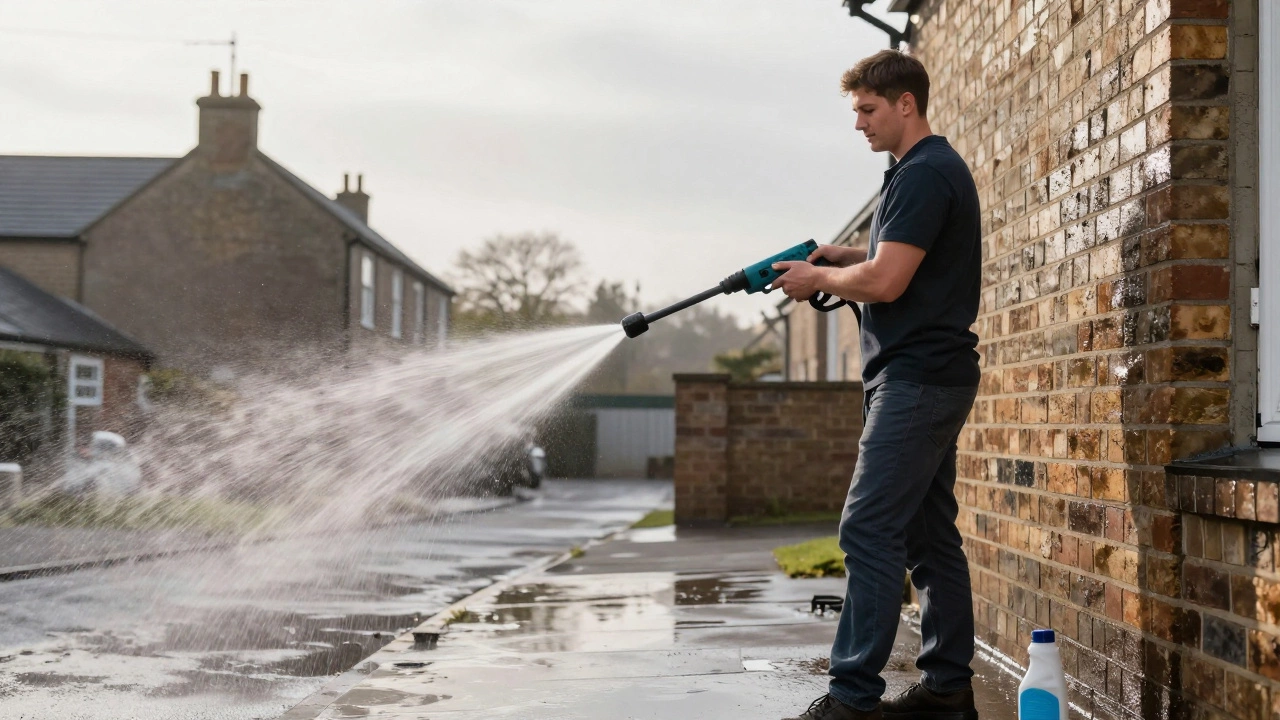
Pressure Washer Selector
Find Your Perfect Pressure Washer
Answer a few questions to determine the right pressure washer for your home cleaning needs.
If you’ve ever tried scrubbing dirt off your driveway, siding, or patio with a brush and bucket, you know how brutal it is. That’s why so many homeowners in the UK are turning to pressure washers. But not all pressure washers are made the same. Choosing the wrong one means wasted time, wasted money, or worse - damaged surfaces. So what kind of pressure washer do you actually need to clean your house?
Know Your Surfaces First
Before you even look at specs, ask yourself: what are you cleaning? Your house isn’t one big surface. You’ve got brick, vinyl siding, concrete, wood decking, and maybe even stone or render. Each one reacts differently to water pressure.Brick and concrete can handle high pressure - up to 3,000 PSI. But vinyl siding? That’s fragile. Too much pressure and you’ll rip off panels or force water behind them, leading to rot. Wood decks need gentle cleaning - around 1,200 to 1,500 PSI - or you’ll splinter the surface. Render and stucco are especially sensitive; even 1,800 PSI can cause cracks if used with a narrow nozzle.
Most house cleaning jobs fall between 1,300 and 2,500 PSI. That’s the sweet spot. Anything above 3,000 PSI is overkill for a typical home and risky unless you’re experienced.
Electric or Gas? The Real Difference
This is the biggest decision you’ll make. There are two main types: electric and gas-powered pressure washers.Electric pressure washers are quieter, lighter, and plug straight into a standard outlet. They usually run between 1,300 and 2,000 PSI. Perfect for small to medium jobs: cleaning patios, garden furniture, bikes, or the front steps. They’re great if you live in a terraced house or have limited storage. You won’t need fuel, oil changes, or cold starts. Just plug in and go. Brands like Kärcher and Bosch make reliable models that last 5+ years with light use.
Gas pressure washers are louder, heavier, and need fuel. But they pack more power - 2,500 to 3,500 PSI. That’s great for driveways, garage floors, or stubborn algae on walls. But here’s the catch: if you’re cleaning your house’s exterior, a gas washer is like using a sledgehammer to hang a picture. You’ll risk damage unless you’re very careful. Most homeowners don’t need that much power.
In the UK, where homes are often close together and outdoor spaces are smaller, electric models are the smarter pick for 9 out of 10 people. You save on fuel costs, noise complaints from neighbours, and the hassle of storing petrol.
Flow Rate Matters More Than You Think
People fixate on PSI - pounds per square inch. But the real secret is GPM - gallons per minute. PSI tells you how hard the water hits. GPM tells you how much water flows. Together, they determine cleaning speed.A 1,800 PSI washer with 1.5 GPM cleans faster than a 2,000 PSI washer with 1.0 GPM. Why? Because more water means more dirt gets washed away in one pass. You’re not just blasting - you’re rinsing.
For house cleaning, aim for at least 1.4 GPM. Anything lower and you’ll be standing there for ages. Most decent electric models hit 1.4 to 1.6 GPM. Gas washers often run 2.0+ GPM, but again - you don’t need that for house surfaces.
Look for models that list both PSI and GPM. If a product only mentions PSI, walk away. It’s probably marketing fluff.
Nozzles Are Your Best Friend (or Worst Enemy)
The nozzle isn’t just a tip - it’s your control panel. Most pressure washers come with 4 to 6 nozzles, each with a different spray angle.Here’s what they do:
- 0° (red) - Needle-thin stream. Only for stripping paint or heavy rust. Never use on your house.
- 15° (yellow) - Strong, focused spray. Good for concrete, but risky on siding.
- 25° (green) - Medium spray. Safe for most surfaces. Use this for brick, driveways, and patios.
- 40° (white) - Wide fan. Gentle. Best for cleaning windows, vinyl siding, and wood. This is your go-to for house cleaning.
- 60° (black) - Low-pressure detergent application. Use with soap, never water.
Always start with the widest nozzle - 40° - and only switch to narrower ones if you’re struggling with dirt. And never hold the nozzle closer than 12 inches from the surface. Even at 40°, too close can etch paint or strip sealant.
Don’t Skip the Detergent Option
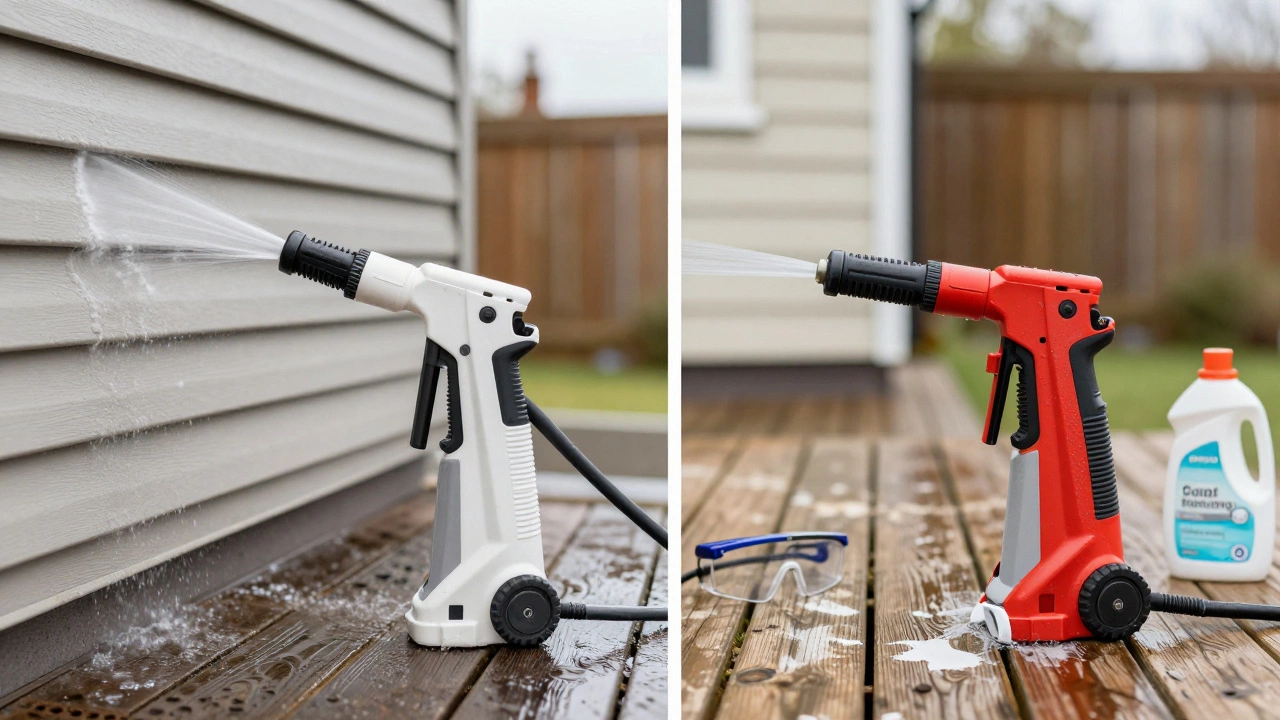
Pressure washing isn’t just about water. Dirt, algae, and mold need help breaking down. That’s where detergent comes in.Most electric pressure washers have a built-in detergent tank or suction hose. You don’t need fancy chemicals. A simple mix of water and oxygen bleach (like OxiClean) works better than harsh cleaners and won’t kill your plants. Avoid chlorine bleach - it stains brick and kills grass.
Always use the black (60°) nozzle for applying detergent. Let it sit for 5-10 minutes to work. Then switch to the green or white nozzle to rinse. Never spray detergent with a narrow nozzle - it can damage surfaces and is dangerous to your skin and eyes.
What to Buy: Three Real-World Picks
Here’s what actually works for UK homes in 2026:| Model | Type | PSI | GPM | Best For |
|---|---|---|---|---|
| Kärcher K5 Premium | Electric | 2,000 | 1.5 | Brick, driveways, patios, general house cleaning |
| Bosch Aquatak 135 | Electric | 1,700 | 1.4 | Vinyl siding, windows, garden furniture, small homes |
| Greenworks GPW1801 | Electric | 1,800 | 1.5 | Wood decks, fences, light algae removal |
All three are electric, all are under £300, and all come with multiple nozzles and detergent systems. The Kärcher K5 is the most powerful and durable. The Bosch is the quietest and easiest to store. The Greenworks is the most affordable and still does the job.
What to Avoid
Don’t fall for these traps:- Gas washers under £400 - They’re loud, heavy, and often poorly made. You’ll regret buying one for house cleaning.
- PSI over 3,000 - You don’t need it. You’ll damage your home.
- Nozzle sets without 40° - If it doesn’t include a wide-angle nozzle, skip it.
- “All-in-one” cleaners - If it claims to clean your house, car, and roof in one go, it’s lying. Different surfaces need different care.
Pro Tips for Safe, Effective Cleaning
- Always turn off the water before connecting or disconnecting hoses.
- Wear safety glasses and closed shoes. Water under pressure can cut skin.
- Start from the top and work down. Let gravity help rinse dirt away.
- Don’t pressure wash in direct sunlight. Water dries too fast, leaving streaks.
- Keep pets and kids indoors. The noise and spray are scary and unsafe.
- After use, drain the hose and store in a dry place. Freezing temperatures can crack internal parts.
How Often Should You Pressure Wash Your House?
In the UK’s damp climate, algae and mildew build up fast. Most homes benefit from a clean every 1-2 years. If you live near trees or in a shaded area, every year. If your house gets full sun and you’re in a dry region like East Anglia, every 2-3 years is fine.Don’t wait until it looks bad. Once algae spreads under paint or sealant, it’s harder to remove - and may need professional help.
What If I Just Rent One?
Many DIY stores - B&Q, Homebase, Toolstation - rent pressure washers for £20-£40 a day. That’s a smart option if you only need it once or twice a year. Look for models with detergent systems and a 40° nozzle. Ask for the Kärcher K5 or Bosch Aquatak - they’re the most reliable in stock.Just remember: rental units are used hard. Check the hose for cracks, test the trigger, and make sure the nozzles aren’t clogged before you start.
Can I use a pressure washer on my windows?
Yes, but only with the 40° nozzle and at low pressure - under 1,500 PSI. Always keep the nozzle at least 18 inches away. Never use a narrow spray. You can crack glass or force water into seals, leading to leaks. For best results, clean windows with a soft brush and squeegee after a light rinse.
Is it safe to pressure wash vinyl siding?
Absolutely - if you do it right. Use the 40° nozzle, keep pressure under 1,800 PSI, and spray at a slight downward angle. Never spray upward - that forces water behind the panels, which can cause rot or mold inside walls. Start from the top and work down. Test a small area first.
Do I need a hot water pressure washer for my house?
No. Hot water units are for grease, oil, or industrial cleaning. For dirt, algae, and mud on your house, cold water with detergent works just fine. Hot water machines cost over £1,000 and are overkill for home use.
How long does it take to clean a house with a pressure washer?
For a typical UK semi-detached house - siding, driveway, and patio - expect 1.5 to 2 hours with a good electric washer. If you’re new, add another 30 minutes for setup and learning the nozzle settings. The first time is always slower.
Will pressure washing remove paint?
It can - especially if the paint is old, chalky, or poorly applied. Always test on a hidden spot first. Use the 40° nozzle and keep distance. If paint starts peeling, reduce pressure or switch to a soft brush and detergent. Don’t force it.
Can I use a pressure washer on my roof?
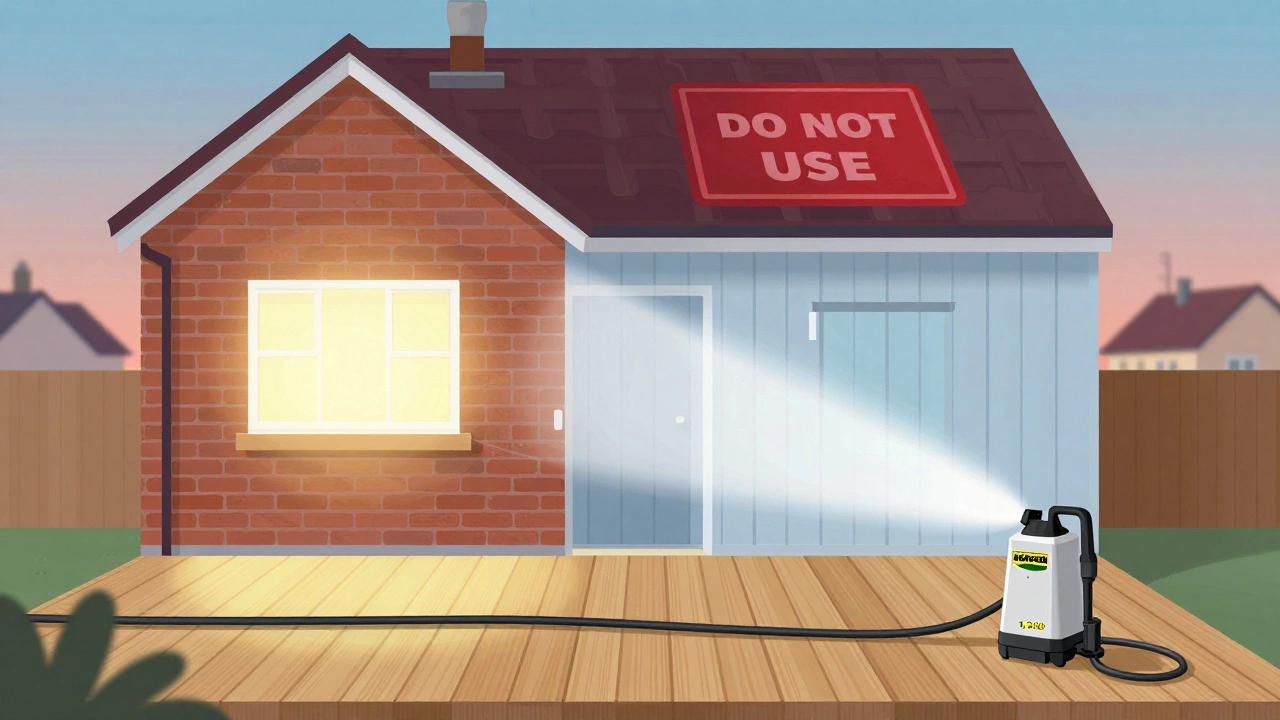
Never. Roof tiles - whether concrete, clay, or slate - are porous and fragile. High pressure can crack them, dislodge granules, or force water under the tiles, causing leaks. Roof cleaning should be done with low-pressure sprayers and biodegradable algae treatments, applied by hand. Leave this to professionals.