Natural Disinfectant Recipe Generator
Customize Your Cleaner
Ready to Clean?
Select your preferences and click generate to get a safe, effective natural cleaning recipe tailored to your home.
You walk into your kitchen, and it smells like lemons. It looks spotless. But does it actually kill the bacteria hiding on those countertops? That is the tricky part about switching to natural disinfectants. For years, we’ve been told that if a cleaner doesn’t sting our eyes or smell like chemicals, it isn’t working. That myth is finally dying out, but replacing harsh bleach with something safer requires knowing exactly what works and what is just marketing fluff.
Living in Bristol, where green living is more than a trend-it’s a lifestyle-I’ve spent the last decade testing everything from essential oil sprays to DIY vinegar mixes. The truth is, not all natural ingredients are created equal. Some are great degreasers but terrible at killing germs. Others are powerful disinfectants but can damage your surfaces if you aren’t careful. This guide cuts through the noise to tell you which natural options actually sanitize your home effectively without the toxic fumes.
Quick Summary: The Top Contenders
- Hydrogen Peroxide (3%): The most effective natural alternative to bleach for killing viruses and bacteria.
- White Distilled Vinegar: Excellent for cleaning and mild disinfection, but do not rely on it alone for serious pathogens.
- Tea Tree Oil: A potent antimicrobial agent, best used in combination with other cleaners for high-touch areas.
- Lemon Juice: Great for stain removal and fresh scent, but lacks strong disinfecting power on its own.
- Castile Soap: The best base for general cleaning; removes dirt mechanically rather than chemically.
Understanding What “Disinfectant” Really Means
Before we mix anything, we need to clear up a common confusion. Cleaning and disinfecting are two different jobs. Cleaning physically removes dirt, grime, and some germs using soap and water. Disinfecting kills germs on surfaces and objects. When you buy a bottle labeled “natural cleaner,” check the fine print. Many products clean beautifully but offer zero disinfecting power.
To be considered a true disinfectant, a substance must be proven to kill specific pathogens like influenza, E. coli, or Staphylococcus aureus. In the world of natural cleaning, this is where things get interesting. The UK Health Security Agency and international bodies like the CDC recognize certain natural agents as effective, provided they are used correctly. The key factors are concentration and contact time. You cannot just spray and wipe immediately. The surface needs to stay wet for a specific period-usually five to ten minutes-to let the active ingredients do their work.
The Heavy Hitters: Proven Natural Disinfectants
If you want genuine germ-killing power without chlorine bleach, these are your best bets. I have tested these extensively in my own home, particularly during flu season, and they hold up remarkably well when used properly.
1. Hydrogen Peroxide
Hydrogen Peroxide is a colorless liquid chemical compound with the formula H₂O₂, widely used as an antiseptic and oxidizing agent. Specifically, the 3% solution you buy at any pharmacy is a powerhouse. It breaks down into water and oxygen, leaving no toxic residue. Studies show it is effective against a wide range of bacteria and viruses, including norovirus and influenza. Unlike bleach, it does not release harmful volatile organic compounds (VOCs) into your air.
How to use it: Pour undiluted 3% hydrogen peroxide into a dark spray bottle (light degrades it). Spray heavily on surfaces like cutting boards, bathroom tiles, and door handles. Let it sit for five to ten minutes. Wipe dry. Do not mix it with vinegar, as this creates peracetic acid, which can irritate your skin and lungs.
2. White Distilled Vinegar
Vinegar gets a lot of love, but also a lot of criticism. It is acidic, with a pH of around 2.5, which helps break down mineral deposits, grease, and soap scum. It has antimicrobial properties and can kill about 80-90% of bacteria, including Salmonella and E. coli. However, it is not sporicidal, meaning it won’t kill tough bacterial spores or hardy viruses like norovirus on its own. Think of vinegar as a fantastic cleaner with mild disinfecting abilities, not a hospital-grade sterilizer.
How to use it: Mix equal parts white distilled vinegar and water in a spray bottle. Add a few drops of tea tree or lavender oil to boost its antimicrobial effect. Use it for kitchen counters, glass, and mirrors. Avoid using it on natural stone like marble or granite, as the acid will etch the surface.
3. Tea Tree Oil
Tea Tree Oil is an essential oil extracted from the leaves of the Melaleuca alternifolia plant, known for its strong antiseptic and anti-inflammatory properties. Native to Australia, this oil has been studied for decades for its ability to kill bacteria, fungi, and viruses. Research published in journals like *Phytotherapy Research* confirms its efficacy against MRSA and Candida albicans. It is one of the few natural oils that retains its potency even after drying, offering some residual protection.
How to use it: Essential oils are concentrated. Never apply them directly to surfaces. Mix 20-40 drops of tea tree oil with water and a little castile soap in a spray bottle. Shake well before each use. This makes an excellent all-purpose disinfectant spray for bathrooms and kitchens.
The Supporting Cast: Cleaners vs. Disinfectants
Not every natural ingredient kills germs, but they all play a role in a healthy home. Understanding their limits prevents you from relying on lemon juice to stop a stomach bug, for instance.
| Ingredient | Primary Function | Disinfecting Power | Best Used On |
|---|---|---|---|
| Hydrogen Peroxide | Oxidizing Agent | High (Viruses & Bacteria) | Cutting boards, bathrooms, spills |
| White Vinegar | Degreaser / Descaler | Moderate (Bacteria only) | Glass, stainless steel, faucets |
| Tea Tree Oil | Antimicrobial | High (Fungi & Bacteria) | Bathroom tiles, shower curtains |
| Lemon Juice | Stain Remover / Deodorizer | Low | Fruit stains, odors, brass polish |
| Castile Soap | Surfactant (Lifts Dirt) | None (Mechanical Removal) | Floors, walls, general wiping |
| Baking Soda | Abrasive / Deodorizer | None | Scrubbing sinks, ovens, fridge odors |
DIY Recipes for Everyday Disinfecting
Creating your own cleaners saves money and reduces plastic waste. Here are three reliable formulas I use weekly. Remember, simplicity is key. If a recipe calls for seven obscure ingredients, it’s probably unnecessary.
The All-Purpose Disinfectant Spray
This is my go-to for kitchen counters and bathroom sinks. It combines the mechanical cleaning power of soap with the antimicrobial strength of tea tree and eucalyptus oils.
- 1 cup distilled water
- 1 cup white distilled vinegar
- 1 tablespoon liquid Castile soap
- 20 drops tea tree essential oil
- 10 drops eucalyptus essential oil
Instructions: Combine all ingredients in a spray bottle. Shake gently to avoid creating too much foam. Spray on surfaces and let sit for 10 minutes before wiping with a microfiber cloth. The vinegar smell dissipates quickly, leaving behind a faint herbal scent.
The High-Strength Surface Sanitizer
For times when someone is sick, or you’ve handled raw chicken, use this hydrogen peroxide-based spray. It is stronger and should be stored in an opaque bottle.
- 1/2 cup 3% hydrogen peroxide
- 1/2 cup distilled water
- 10 drops thyme essential oil (optional, for added antibacterial boost)
Instructions: Mix in a dark spray bottle. Spray generously on high-touch areas like light switches, doorknobs, and phone screens. Allow to air dry or wipe after 5 minutes. Do not store this mixture for more than a week, as hydrogen peroxide degrades over time.
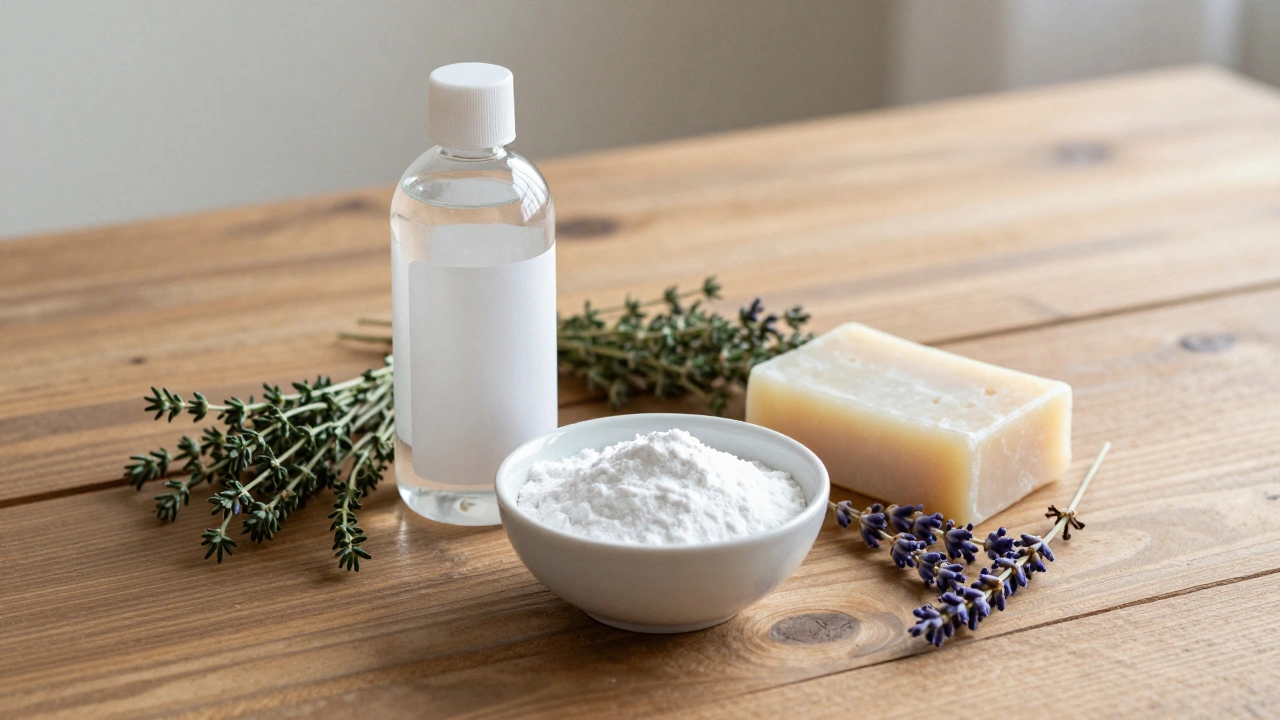
The Bathroom Scrub Paste
Soap scum and mold hate baking soda. This paste is abrasive enough to scrub without scratching ceramic or fiberglass.
- 1/2 cup baking soda
- 1/4 cup hydrogen peroxide
- 1 teaspoon dish soap (plant-based)
Instructions: Mix into a paste. Apply to showerheads, tubs, and tile grout. Let it sit for 15 minutes. Scrub with a non-abrasive sponge and rinse thoroughly. The fizzing action helps lift dirt from porous surfaces.
Common Mistakes to Avoid
Even with the right ingredients, technique matters. Here are the pitfalls that make natural cleaning fail.
Mixing Vinegar and Bleach: I cannot stress this enough-never mix vinegar with bleach. Even if you are transitioning to natural, if you still have old bleach bottles lying around, keep them separate. Mixing them creates chloramine gas, which can cause severe respiratory distress. Stick to natural ingredients exclusively to avoid accidental dangerous reactions.
Ignoring Contact Time: Spraying a disinfectant and wiping it off immediately is useless. The active ingredients need time to penetrate the cell walls of bacteria and viruses. Set a timer for 5-10 minutes. If the surface dries out before then, re-spray it.
Using Tap Water: Tap water contains minerals and sometimes chlorine. For consistent results, especially in recipes with essential oils, use distilled water. Minerals can cloud glass surfaces and reduce the effectiveness of delicate essential oil blends.
Overlooking Microfiber Cloths: Your cleaning tool is as important as your solution. Cotton towels harbor bacteria once they get damp. Microfiber cloths trap dust and microbes in their fibers rather than spreading them around. Wash them separately in hot water without fabric softener to maintain their electrostatic charge.
When to Stick with Commercial Products
Natural disinfectants are excellent for daily maintenance and most household pathogens. However, there are exceptions. If you are dealing with a confirmed outbreak of norovirus, or if you have a compromised immune system in the household, consider using EPA-registered commercial disinfectants for those specific instances. Natural options are powerful, but they are not magic. They require diligence and correct usage.
Also, be wary of “greenwashing.” Just because a bottle says “eco-friendly” or “plant-based” doesn’t mean it disinfects. Look for active ingredients listed on the back. If it doesn’t list hydrogen peroxide, alcohol (at least 70%), or specific essential oils with known antimicrobial properties, it’s likely just a scented cleaner.
Final Thoughts on Safer Homes
Switching to natural disinfectants is not about being perfect; it’s about reducing exposure to harsh chemicals while keeping your home hygienic. By understanding the science behind ingredients like hydrogen peroxide and tea tree oil, you can create a cleaning routine that is both effective and safe for your family and pets. Start with one room, test a recipe, and adjust based on what works for your lifestyle. Your lungs-and the environment-will thank you.
Is vinegar a good disinfectant?
Vinegar is a mild disinfectant. It can kill about 80-90% of bacteria, including Salmonella and E. coli, due to its acidity. However, it is not effective against viruses like norovirus or influenza, nor does it kill bacterial spores. It is best used as a general cleaner with mild antimicrobial benefits, not as a primary disinfectant for serious hygiene concerns.
Can I mix hydrogen peroxide and vinegar?
No, you should not mix hydrogen peroxide and vinegar in the same container. While they are both safe individually, mixing them creates peracetic acid, a corrosive substance that can irritate your skin, eyes, and respiratory system. Use them separately, allowing the first to dry before applying the second if desired.
How long does natural disinfectant take to work?
Most natural disinfectants, such as hydrogen peroxide and tea tree oil solutions, require a contact time of 5 to 10 minutes to effectively kill germs. Ensure the surface remains wet during this period. If it dries faster, reapply the solution. Wiping it off immediately reduces its efficacy significantly.
Are essential oils safe for pets?
Some essential oils are toxic to pets, particularly cats and dogs. Tea tree oil, for example, can be harmful to cats if ingested or applied to their skin. Always research specific oils before using them in homes with pets. Generally, keeping pets out of the room until the cleaned surface is completely dry minimizes risk. Lavender and citrus oils are generally safer but should still be used with caution.
What is the best natural disinfectant for bathrooms?
A combination of hydrogen peroxide and tea tree oil is highly effective for bathrooms. Hydrogen peroxide kills mold and bacteria, while tea tree oil provides antifungal properties and helps prevent regrowth. For daily cleaning, a vinegar and water mix with tea tree oil works well for removing soap scum and maintaining freshness.
Does lemon juice kill bacteria?
Lemon juice has mild antibacterial properties due to its citric acid content, but it is not a strong disinfectant. It is better suited for removing stains, deodorizing, and polishing surfaces. For killing significant amounts of bacteria or viruses, rely on hydrogen peroxide or alcohol-based solutions instead.