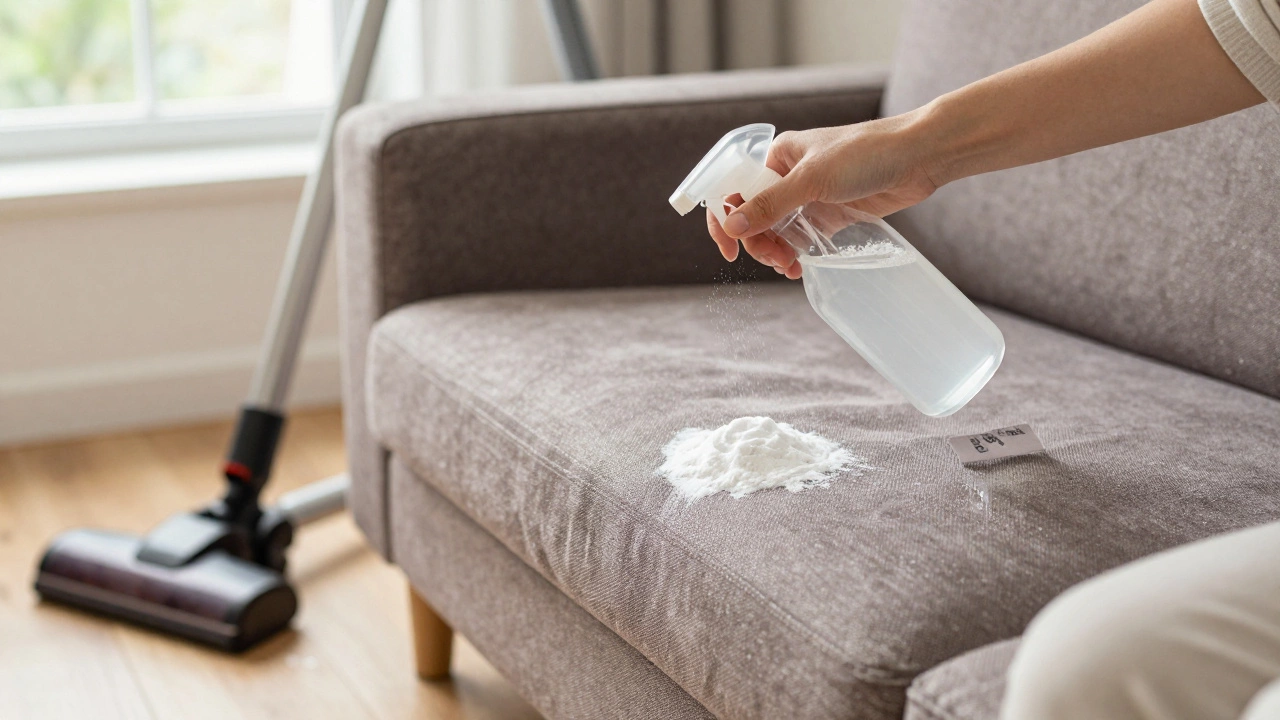
Stains on your sofa. Pet hair stuck in the cushions. That weird smell no one wants to admit is coming from the armchair. You don’t need to spend £100 on a professional cleaner to fix it. Cleaning upholstery cheaply isn’t just possible-it’s easier than you think. Most fabric sofas and chairs can be revived with stuff you already have in your kitchen or laundry cupboard.
Know Your Fabric First
Before you grab any cleaner, check the tag on your upholstery. It’ll say something like W, S, SW, or X. These codes tell you what kind of cleaning is safe.
- W means water-based cleaners are fine. Most cotton, linen, or polyester blends fall here.
- S means solvent-based cleaners only. No water. Use rubbing alcohol or dry foam.
- SW means you can use either water or solvent. More flexible.
- X means vacuum only. No liquids. Think silk, velvet, or antique fabrics.
Ignore this step, and you could ruin your sofa. I’ve seen people pour vinegar on a silk chair and end up with stiff, discoloured patches. Don’t be that person.
Step-by-Step: Clean Upholstery Cheaply with Baking Soda and Vinegar
Here’s the cheapest, most effective method for most fabric sofas: baking soda and white vinegar. Together, they lift stains, kill odours, and leave fabric fresh-no chemicals, no expensive machines.
- Start by vacuuming. Use the brush attachment to get dust, crumbs, and pet hair out of every crevice. Do this weekly to prevent deep stains.
- Sprinkle baking soda generously over the entire surface. Focus on stained or smelly areas. Use at least half a cup for a standard two-seater.
- Let it sit for 15-20 minutes. Baking soda pulls odours out of the fabric like a sponge.
- While it sits, mix one part white vinegar with one part water in a spray bottle. Don’t use apple cider vinegar-it leaves a colour tint.
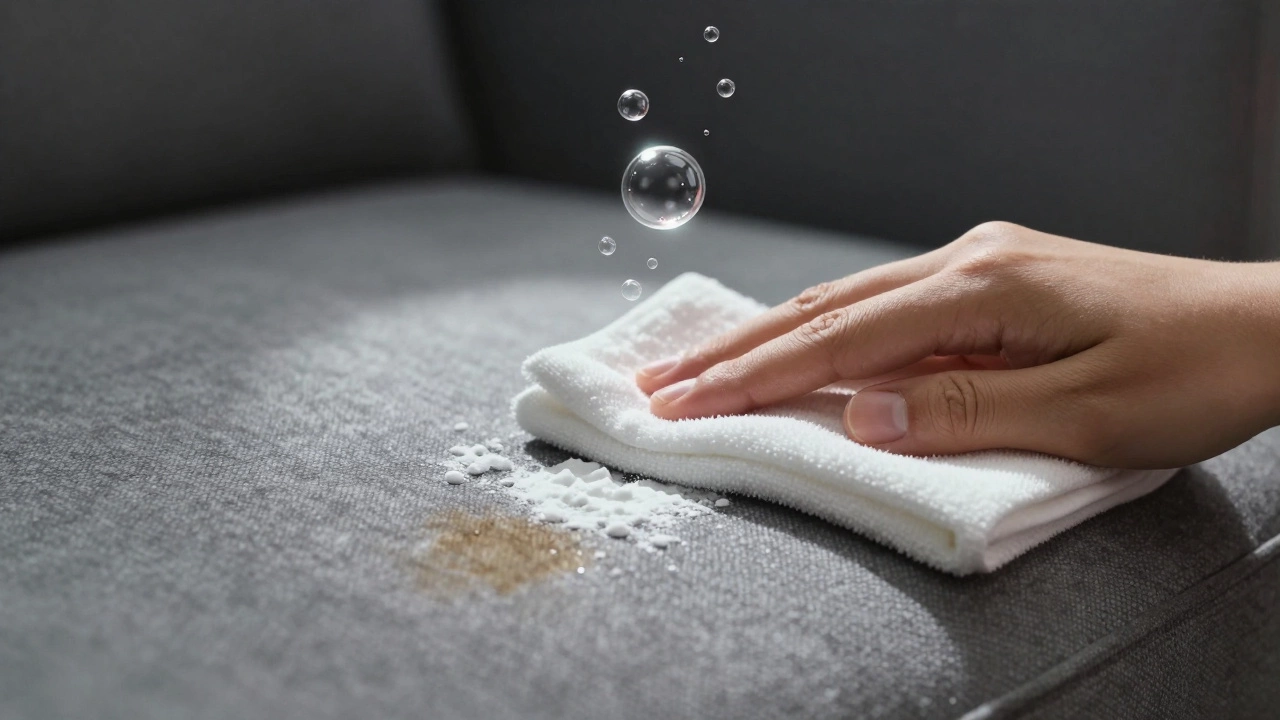
- Lightly mist the stained areas. Don’t soak it. You want damp, not dripping. The vinegar reacts with the baking soda and creates tiny bubbles that lift dirt.
- Use a clean, white cloth to gently blot the area. Don’t rub. Rubbing pushes stains deeper.
- Let it air dry completely. Open windows. Use a fan if you have one. Damp fabric breeds mould.
This method works on coffee spills, wine stains, and even old pet accidents. I’ve used it on a 12-year-old sofa in Bristol that smelled like a dog’s wet fur. Two rounds of this, and it was good as new.
For Tough Stains: Dish Soap and Water
Not all stains respond to baking soda. Grease, ink, or dried-on food need a bit more muscle.
Make a paste with:
- 1 tablespoon mild dish soap (like Fairy or Ecover)
- 2 tablespoons cold water
- 1 tablespoon hydrogen peroxide (optional, for white or light fabrics only)
Test this on a hidden spot first. Hydrogen peroxide can bleach dark fabrics. If it’s safe, dab the paste onto the stain with a soft toothbrush. Gently scrub in circles. Wipe away with a damp cloth. Dry with a towel.
This combo removes crayon marks from kids’ sofas, lipstick from armrests, and even dried-on gravy from Sunday dinner disasters.
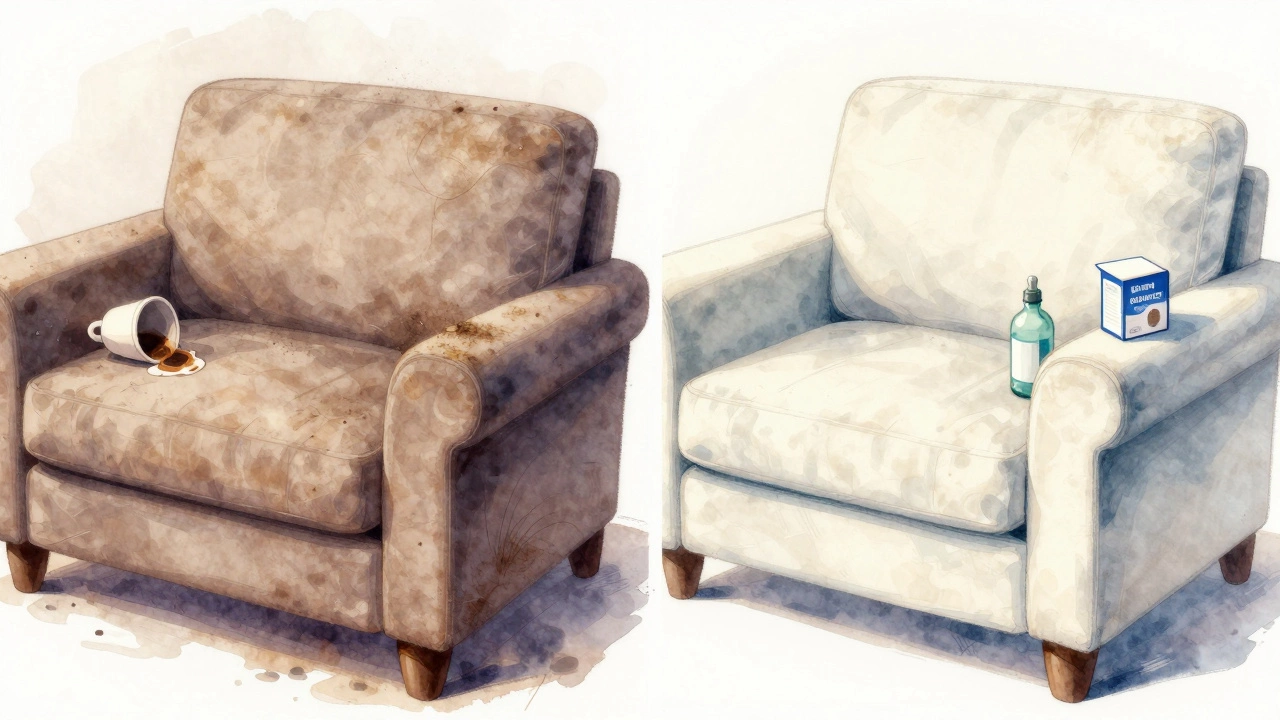
Dealing with Pet Odours and Accidents
Animals don’t care if your sofa is £800. They’ll mark it if they’re anxious, sick, or just being dogs.
For fresh accidents: Blot up as much as you can with paper towels. Don’t rub. Then spray with equal parts water and vinegar. Let it sit for 10 minutes. Sprinkle baking soda. Vacuum after 20 minutes.
For old odours: Use an enzyme cleaner. Yes, you can buy one cheaply-brands like Nature’s Miracle or Biokleen cost under £10 for a 500ml bottle. Enzymes break down urine proteins so they don’t smell anymore. Regular cleaners just mask the smell. Enzymes kill it.
Apply it to the affected area, let it soak for 15 minutes, then blot dry. Repeat if needed. One bottle lasts for 3-4 treatments.
What Not to Do
People try all kinds of weird stuff. Here’s what doesn’t work-and can make things worse:
- Boiling water-melts glue in seams and shrinks fabric.
- Undiluted bleach-turns coloured fabric white or yellow.
- Windex or glass cleaner-contains ammonia. Damages upholstery fibres over time.
- Steam cleaners from Amazon-most cheap ones leak water and leave backing soggy. You’ll get mould under the fabric.
Also, never use a hairdryer to speed up drying. The heat can set stains and shrink fabric. Let it dry naturally.
How Often Should You Clean Upholstery?
You don’t need to deep clean every week. But regular maintenance saves money.
- Weekly: Vacuum with brush attachment.
- Monthly: Sprinkle baking soda, let sit 15 minutes, vacuum. This removes dust mites and odours.
- Every 3-6 months: Do a full clean with vinegar and soap if you have kids, pets, or heavy use.
People who do this keep their sofas looking new for 10+ years. Those who wait until stains set? They replace them every 5 years. That’s £500+ wasted.
When to Call a Pro
There are times when DIY won’t cut it:
- Your sofa is leather, suede, or velvet and you’re not sure how to clean it.
- There’s mould growing under the cushions (yes, that happens if it’s been damp for weeks).
- Stains are deep, dark, and spread across the whole seat.
Professional upholstery cleaning in the UK costs between £80 and £150. But if you’ve tried everything and it still smells or looks dirty, it’s worth it. Just make sure they use low-moisture methods. High-pressure steam ruins fabric.
Save Money, Extend Life
Cleaning upholstery cheaply isn’t about being cheap. It’s about being smart. A £200 sofa can last 15 years with basic care. Without it? Five years max.
Keep a small spray bottle of vinegar-water mix in your cupboard. Always have baking soda in the fridge. A good vacuum with a brush head costs less than £50 and lasts a decade.
Don’t wait for the big mess. Do a little every month. Your wallet-and your sofa-will thank you.
Can I use vinegar on my velvet sofa?
No. Velvet is usually marked with an "X" on the tag, meaning only vacuuming is safe. Vinegar can leave water marks and flatten the pile. For velvet, use a dry foam upholstery cleaner or call a professional.
Will baking soda damage my fabric?
No, baking soda is gentle and non-toxic. It won’t harm cotton, polyester, or linen. Just make sure you vacuum it all up after. Leftover powder can attract moisture and dust.
Can I use a carpet cleaner on my sofa?
Only if it’s designed for upholstery. Most carpet cleaners use too much water and pressure, which can soak through to the foam and cause mould. If you use one, set it to the lowest moisture setting and go slowly.
Why does my sofa still smell after cleaning?
If the smell lingers, the odour is probably trapped in the padding or frame. Baking soda and vinegar only clean the surface. For deep odours, especially from pets, use an enzyme cleaner on the fabric and let it soak. If that doesn’t work, the padding may need replacing.
Is it cheaper to clean upholstery or buy a new one?
Cleaning is almost always cheaper. A basic sofa costs £300-£600. A professional clean is £80-£150. Even if you need to replace the cushions, it’s still less than a full replacement. Plus, you keep the style you already love.