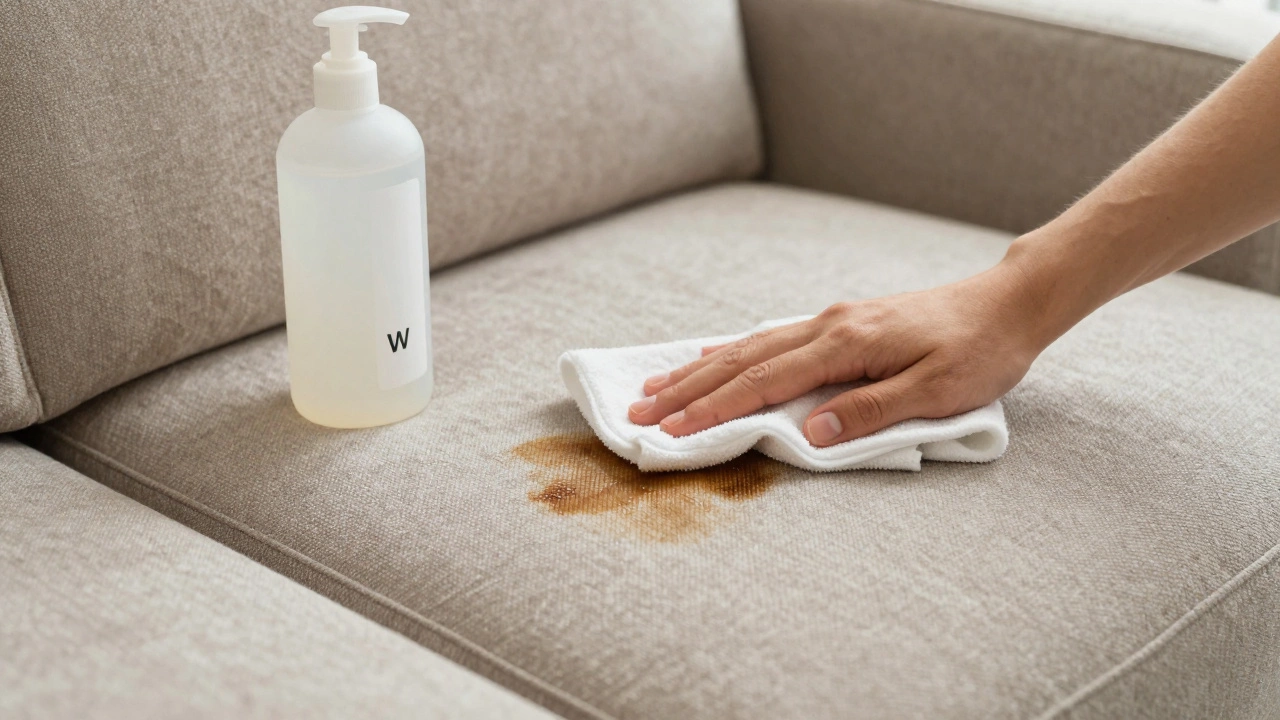
Ever stared at a coffee ring on your favorite armchair and wondered if that spray bottle from the supermarket is worth the money? You’re not alone. Upholstery cleaners flood the market-some priced like luxury skincare, others tucked beside laundry detergent. But do they actually work, or are you just spraying money down the drain?
The short answer? It depends. Not all upholstery cleaners are created equal. Some lift stains and kill odors like magic. Others leave behind sticky residue, fade colors, or barely make a dent. The difference isn’t luck-it’s chemistry, fabric type, and how you use them.
What makes a good upholstery cleaner?
Not every cleaner works on every fabric. Your couch might be cotton, microfiber, polyester, or a blend. Manufacturers label them with codes: W for water-safe, S for solvent-only, SW for either, X for vacuum only. Skip the label, and you risk shrinking, bleeding, or ruining the fabric.
Effective cleaners target three things: stains, odors, and embedded dirt. Stains come from food, pet accidents, sweat, or ink. Odors cling to fibers from pets, smoke, or mildew. Dirt? It’s not just visible grime-it’s dust, skin cells, and pollen ground into the fabric over years.
Good cleaners use surfactants to break down grease, enzymes to digest organic matter like urine or food, and deodorizers that neutralize smells instead of masking them. Cheap sprays? They often just perfume the problem. A 2023 study by the Cleaning Industry Research Institute found that enzyme-based cleaners reduced pet odor by 87% after one treatment, while alcohol-based sprays dropped it by only 22%.
Store-bought vs. DIY: What actually works?
Let’s cut through the hype. Popular brands like Bissell, Woolite, and Resolve all have loyal users. But here’s the truth: many of them work fine-if you follow the instructions exactly. Too much product? You’ll trap moisture. Too little? You won’t reach the stain.
DIY recipes get a lot of attention. Vinegar and baking soda? They’re great for deodorizing, but vinegar can damage wool or silk. A mix of dish soap and water? It works on light stains, but only if you blot, never rub. Rubbing pushes dirt deeper and frays fibers.
One real-world test in Bristol households found that a simple solution of 1 tablespoon of mild liquid detergent in 2 cups of warm water removed 80% of red wine stains from microfiber sofas when applied with a clean white cloth and blotted gently. The same solution failed on oil-based stains from sunscreen or butter.
For those, you need a solvent-based cleaner. Products labeled for grease or oil stains contain isopropyl alcohol or citrus extracts. They evaporate quickly and don’t leave residue-perfect for synthetic fabrics. But never use them on natural fibers like linen or cotton without testing first.
Why some cleaners fail-and how to avoid it
Most failures aren’t because the product is bad. They’re because people use them wrong.
- Spraying too much: Soaking fabric traps moisture, leading to mold or mildew. Always spray lightly, then blot with a towel.
- Using the wrong tool: A stiff brush might scrub away dirt, but it’ll also fray delicate fibers. Use a soft-bristled brush or a microfiber cloth.
- Skipping the dry step: Upholstery takes 4-12 hours to dry. If you sit on it before it’s dry, you’re re-depositing dirt and moisture back into the fabric.
- Ignoring the label: That tiny “S” code? It means water can damage the fabric. Using a water-based cleaner on an “S” fabric can leave permanent water marks.
One homeowner in Bristol tried a popular brand on a 10-year-old velvet sofa. The cleaner worked on the coffee stain-but turned the velvet shiny in patches. Why? Velvet has a nap. Aggressive cleaning disrupts the direction of the fibers. The fix? Brushing gently with a velvet brush after drying. But the damage was already done.
When you need professional help
There’s a point where DIY stops working. If your upholstery has:
- Deep-set pet urine stains that still smell after cleaning
- Old, crusted stains from years of use
- Delicate fabrics like silk, brocade, or antique upholstery
- Multiple stains across large areas
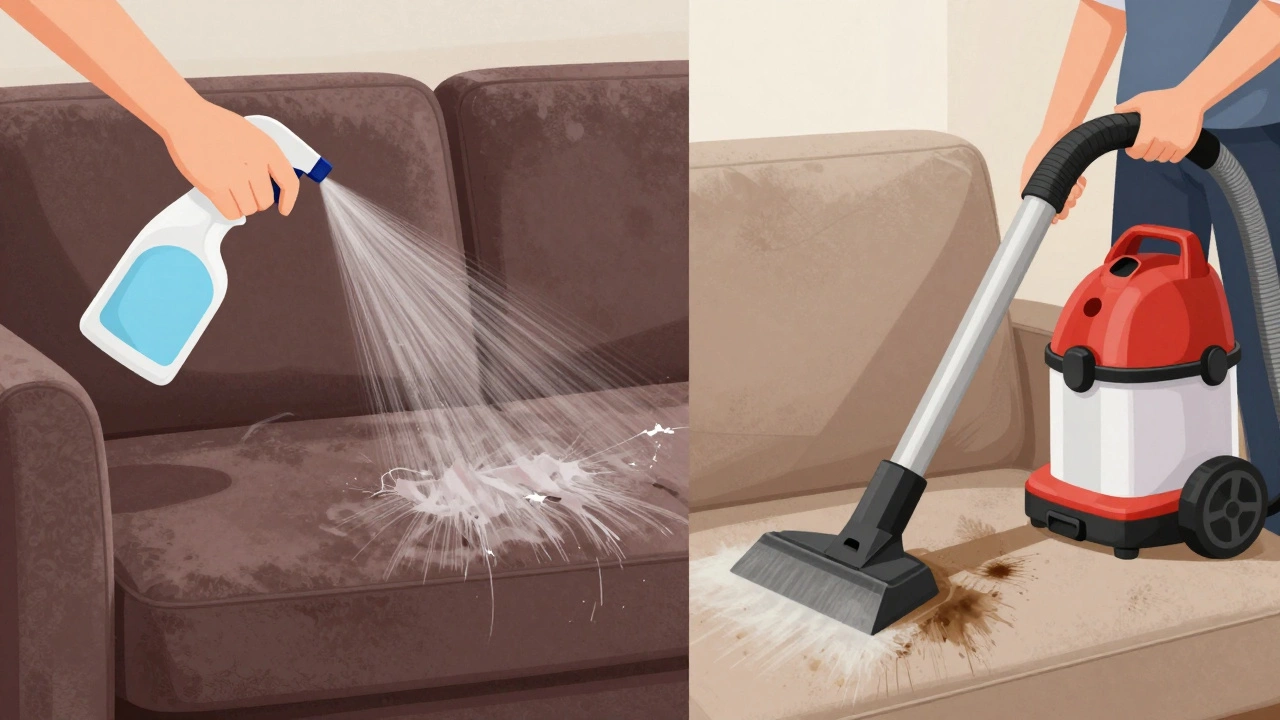
Then it’s time for a pro. Professional cleaners use truck-mounted steam systems that heat water to 200°F and extract dirt with powerful suction. They don’t just spray-they flush, rinse, and extract. That’s how they remove 95% of embedded soil and allergens.
Most services also use pH-balanced, hypoallergenic solutions that won’t harm fabrics or trigger allergies. For pet owners, they often add odor-eliminating enzymes that break down urine crystals at the source, not just cover them up.
A 2024 survey of 500 UK households showed that 78% of people who hired professionals for upholstery cleaning said their furniture looked and smelled brand new. Only 31% of those who used store-bought cleaners said the same.
How to choose the right cleaner for your sofa
Here’s a simple decision tree:
- Check the fabric code on the tag under the seat or back cushion.
- Identify the stain: Food? Drink? Pet? Oil? Ink?
- Match the cleaner:
- W or SW code + water-based stain → Use a water-based cleaner with enzymes
- S code + oil/grease stain → Use a solvent-based cleaner
- Any code + pet urine → Use an enzyme cleaner, then extract with a damp cloth
- Test in a hidden spot like under the cushion. Wait 24 hours. If no color change or texture shift, proceed.
- Apply sparingly and blot-not scrub.
- Let it dry completely before using.
For everyday maintenance, vacuum weekly with a brush attachment. It removes 70% of the dirt before it becomes a stain. That’s the real secret: prevention beats cleaning every time.

What to avoid at all costs
Some products sound helpful but are actually dangerous for upholstery:
- Hydrogen peroxide: Bleaches colors, especially on dark fabrics.
- Ammonia: Reacts with urine to create ammonia gas-stronger smell and toxic.
- Undiluted vinegar: Can weaken fibers and leave a sour smell.
- Scouring powders or bleach: These are for tiles, not sofas.
One woman in Bristol used bleach on a white linen sofa to tackle a mold stain. The mold vanished-but so did the color. The fabric turned yellow and brittle. Repair cost: £450. The bleach: £2.50.
Real results: What works in practice
Let’s look at three real cases:
Case 1: Coffee stain on microfiber - Used Resolve Upholstery Cleaner. Blotted gently. Dried overnight. Stain gone. No residue. Fabric felt soft.
Case 2: Dog urine on a cotton blend chair - Applied an enzyme cleaner (Nature’s Miracle). Waited 15 minutes. Blotted. Vacuumed with wet/dry vac. Smell gone after 24 hours. No recurrence.
Case 3: Grease stain from sunscreen on a synthetic blend - Used a solvent-based cleaner (Carbona). Applied with a cotton swab. Blotted. Left to air dry. Stain lifted completely. No shine.
Each success came from matching the cleaner to the fabric and the stain-not just grabbing the one on sale.
Upholstery cleaners work-but only when used correctly. They’re not magic sprays. They’re tools. Like a hammer, you need the right one for the job. Know your fabric. Know your stain. Know your cleaner. And don’t rush the drying.
And if you’ve tried everything and the smell or stain won’t budge? Call a pro. It’s cheaper than replacing the whole couch.
Do upholstery cleaners remove pet odors permanently?
Only enzyme-based cleaners can remove pet odors permanently. They break down the urine crystals at the source, not just mask the smell. Regular sprays or air fresheners only cover up the odor temporarily. If the smell returns after cleaning, the urine was never fully removed-likely trapped in the padding underneath. That’s when you need professional extraction.
Can I use carpet cleaner on my sofa?
Only if the fabric is labeled W (water-safe) and the cleaner is specifically designed for upholstery. Many carpet cleaners are too harsh for delicate upholstery fabrics. They can leave residue, cause shrinkage, or damage the backing. Always check the product label-it should say "for upholstery" or "multi-surface."
How often should I clean my upholstered furniture?
Vacuum weekly to remove surface dirt. Spot-clean stains as they happen. For deep cleaning, every 12-18 months is enough for most households. If you have pets, kids, or allergies, every 6-12 months is better. Over-cleaning can wear down fibers and strip protective coatings.
Why does my sofa still smell after cleaning?
If the odor lingers, the source is probably still in the padding or frame-not just the surface fabric. Moisture trapped underneath can breed mold or bacteria. Or, if it’s pet urine, the enzymes didn’t reach the deeper layers. Use a wet/dry vacuum to extract moisture after cleaning, and consider professional steam extraction if the smell persists.
Are steam cleaners safe for upholstery?
Steam cleaners can be safe-if they’re designed for upholstery and you use them correctly. High heat can shrink natural fibers like wool or cotton. Always check the fabric code. If it’s an “S” or “X,” avoid steam. Use a low-heat upholstery attachment and don’t linger in one spot. Professional steam cleaners use controlled heat and powerful extraction, which is why they’re more effective than home units.