Car Upholstery Cleaner: Best DIY Solutions and What Actually Works
When you’re dealing with a stained, smelly, or sticky car seat, a good car upholstery cleaner, a product or mixture designed to safely remove dirt, stains, and odors from fabric car seats. Also known as fabric seat cleaner, it’s not just about looks—it’s about health. Trapped crumbs, sweat, pet hair, and spills turn into bacteria and allergens over time. A proper clean doesn’t just make your car smell better; it makes it safer for you and your family.
Most people try bleach, harsh chemicals, or just water—and end up with faded fabric, stiff material, or worse, permanent damage. The truth? You don’t need expensive sprays. Simple things like white vinegar, a natural acid that breaks down grease and neutralizes odors without toxic residues. Also known as distilled vinegar, it’s been used for decades in home cleaning and works just as well on car seats. Mix it with water and a drop of dish soap, and you’ve got a solution that tackles wine, coffee, and even old food stains. Then there’s baking soda, a mild abrasive and odor absorber that lifts dirt and neutralizes smells when left to sit. Also known as sodium bicarbonate, it’s the secret behind most homemade upholstery cleaners. Sprinkle it on, let it sit for 15 minutes, then vacuum. No scrubbing, no residue.
But not all fabrics are the same. Some car seats are synthetic, others are woven cotton blends, and a few are leather-look vinyl. The wrong cleaner can shrink, stiffen, or discolor them. That’s why you need to know your material before you start. Most manufacturers put a tag under the seat with a code like "W" for water-safe or "S" for solvent-only. If you don’t see one, test any solution on a hidden spot first. And always, always vacuum first. Dirt on top of a stain? You’re just grinding it in.
Stains from pets, kids, or spilled drinks are common—but they’re not impossible. Grease from snacks? Use a bit of Dawn dish soap. Red wine? Blot, don’t rub, then hit it with vinegar. Sweat and body oils? Baking soda does the trick. And if you’ve got lingering smells, don’t just spray perfume over it. That’s masking, not cleaning. A good clean removes the source. That’s why DIY solutions beat store-bought ones most of the time: you control what goes on your fabric.
You’ll find plenty of guides online that say you need a steam cleaner or a $50 gadget. You don’t. The real power comes from knowing what works, when to use it, and how to avoid common mistakes. Below, you’ll find real-tested methods from people who’ve cleaned their own cars—not just bought a spray and hoped for the best. From simple vinegar mixes to step-by-step stain removal for tough cases, these posts give you the exact steps, ratios, and timing that actually make a difference. No fluff. No marketing. Just what works.
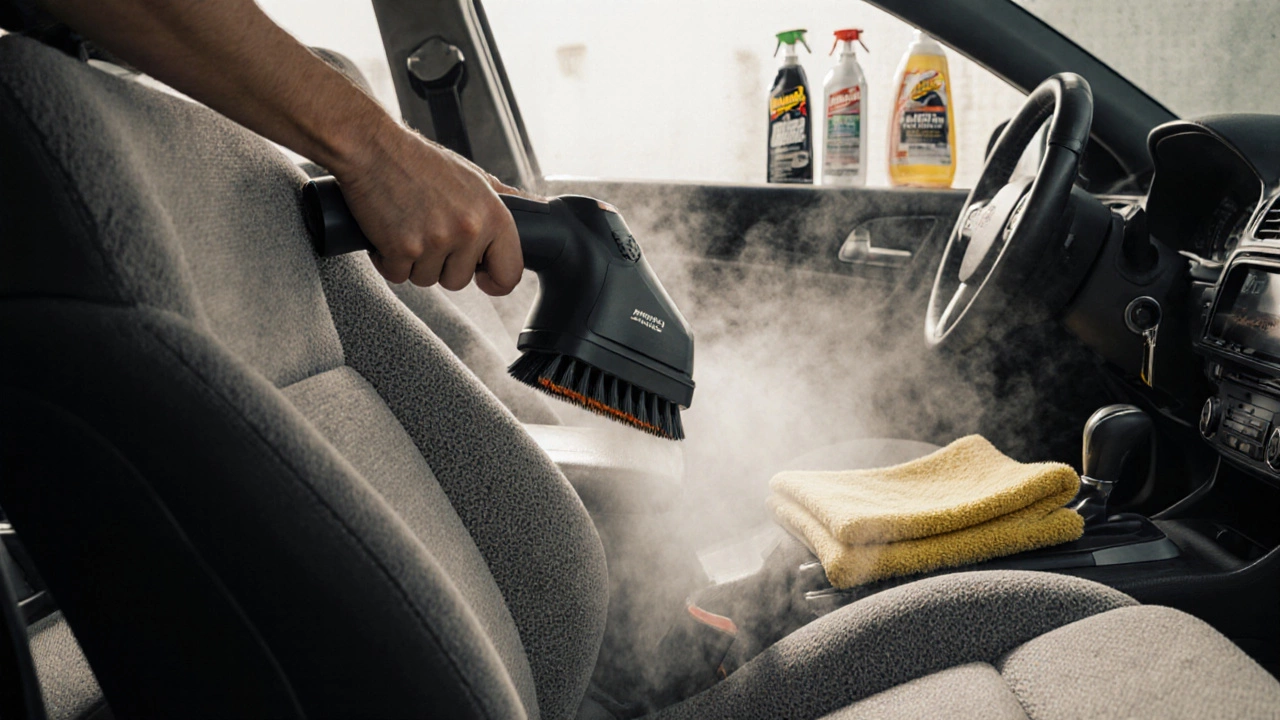
What Do Detailers Use to Clean Upholstery? Tools, Products, and Techniques Revealed
Detailers use specialized cleaners, steam, and tools to remove stains and odors from car upholstery. Learn what products and techniques professionals rely on for long-lasting results.
Read More