Ever sat in a car and wondered how the seats look so fresh, even after years of spills, pet hair, and sweat? It’s not magic. It’s upholstery cleaning-and the pros know exactly what works and what doesn’t.
What Detailers Actually Use on Car Upholstery
Professional detailers don’t rely on one magic spray. They use a mix of tools and products tailored to the fabric type. Most cars have one of three upholstery materials: cloth, vinyl, or leather. Each needs a different approach.
For cloth seats, detailers start with a high-powered vacuum. They don’t just skim the surface-they go deep. A brush attachment pulls out crumbs, sand, and pet dander trapped in the fibers. After vacuuming, they apply a specialized fabric cleaner. Products like Chemical Guys Fabric Clean or Meguiar’s Carpet & Upholstery Cleaner are common because they break down oils and stains without leaving residue.
They don’t just spray and wipe. They agitate. A medium-bristle brush-often with a long handle-lets them scrub in small circles. This lifts dirt from deep inside the weave. Then, they use a microfiber towel to blot, not rub. Rubbing spreads stains. Blotting pulls them out.
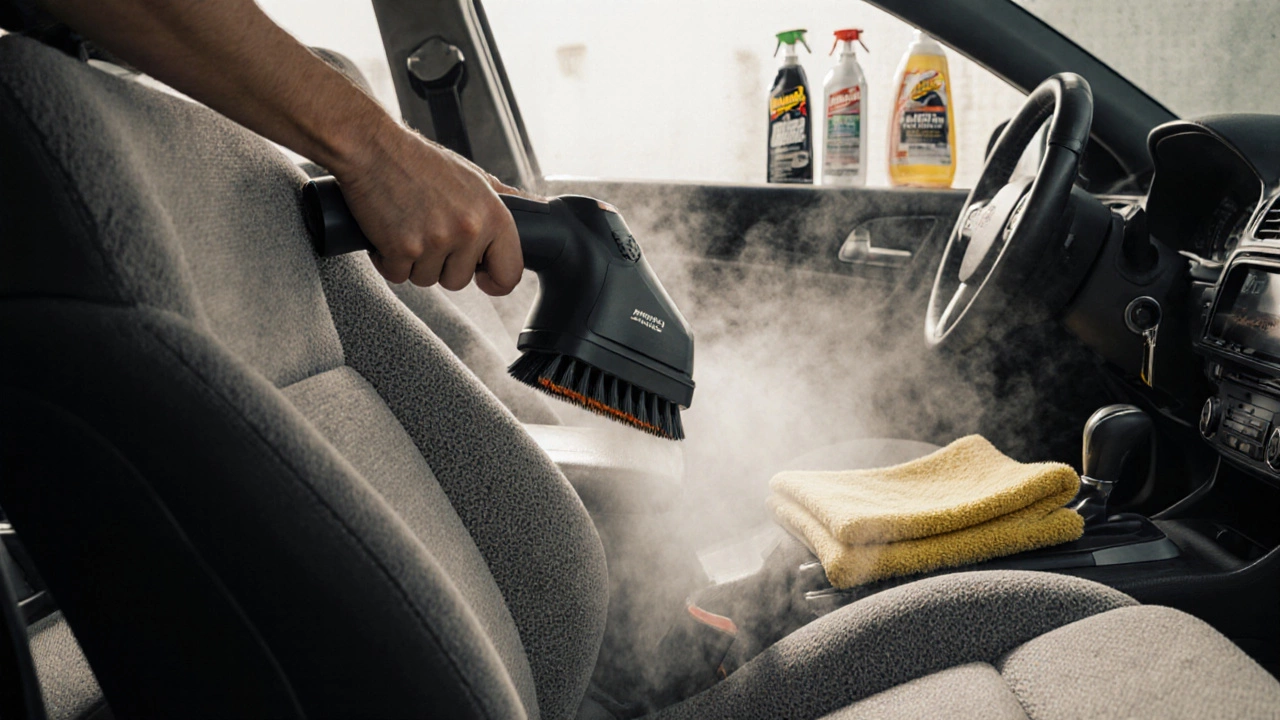
Steam Cleaners: The Secret Weapon
Many detailers swear by portable steam cleaners. Not the big floor models. These are handheld units like the Bissell SpotClean Pro or the McCulloch MC1375. They heat water to over 200°F and shoot pressurized steam directly into the fabric.
Why steam? Heat kills bacteria, melts grease, and loosens stubborn stains from coffee, soda, or food. It also dries faster than wet chemicals. That’s critical-no one wants a damp seat for hours. Detailers use steam on cloth and some synthetic blends, but avoid it on delicate fabrics like suede or unsealed leather.
Steam alone won’t remove set-in stains. That’s why it’s paired with a pre-treatment. A spot cleaner goes on first, then steam follows. The heat activates the cleaner and pushes it deeper.
What About Leather and Vinyl?
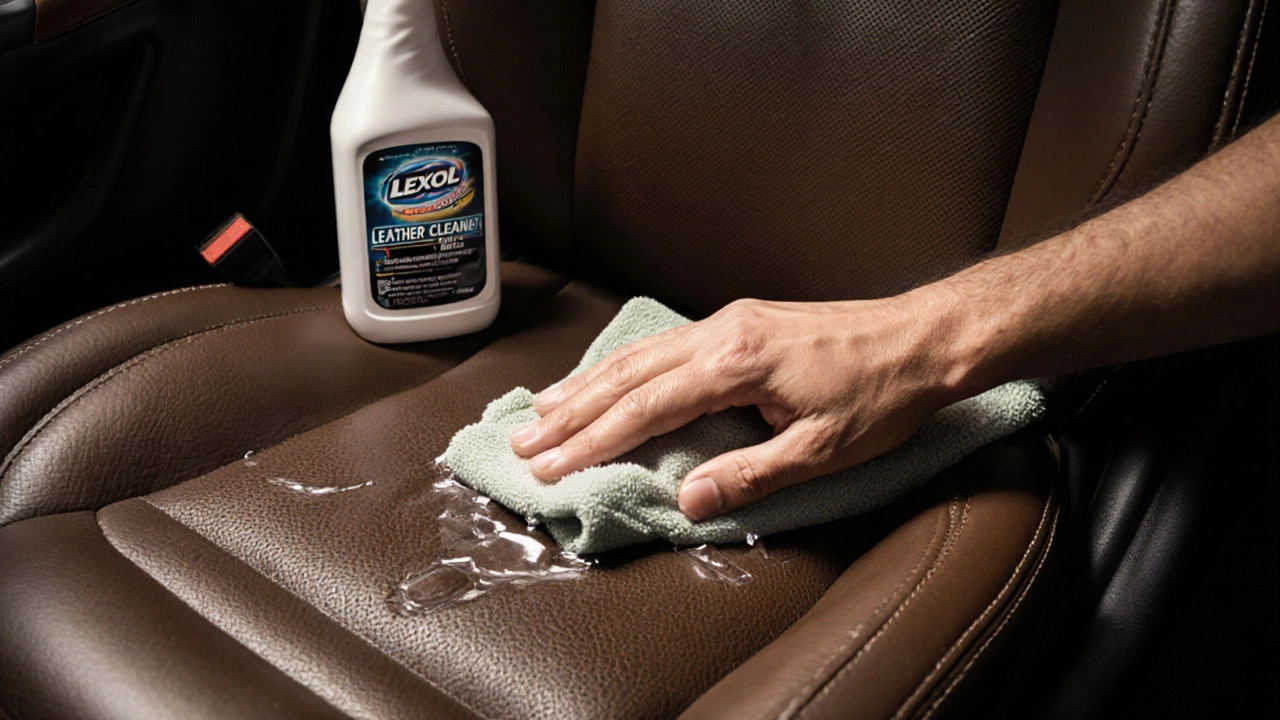
Leather and vinyl need different care. You can’t use fabric cleaners on them-they’ll dry out the material. Detailers use pH-balanced leather cleaners like Lexol Leather Cleaner or Chemical Guys Leather Cleaner. These remove dirt without stripping natural oils.
After cleaning, they apply a conditioner. This isn’t optional. Leather cracks without moisture. A good conditioner restores flexibility and adds a light protective layer. Vinyl gets a similar treatment, but with a product made specifically for synthetic surfaces. Products like 303 Aerospace Protectant keep vinyl from fading and cracking in sunlight.
Some detailers skip the conditioner on vinyl if it’s just a quick clean. But for full detailing jobs, conditioning is standard. It’s what separates a clean seat from a long-lasting one.
Stain-Specific Solutions
Not all stains are the same. Detailers have go-to tricks for common messes:
- Coffee or tea: Blot immediately, then use a mix of white vinegar and water (1:1). Vinegar neutralizes tannins without bleaching fabric.
- Grease or oil: Sprinkle baking soda or cornstarch on the stain. Let it sit 15 minutes to absorb the oil. Vacuum it up, then apply a degreaser like Simple Green diluted 1:4 with water.
- Urine or vomit: Enzymatic cleaners are the only real fix. Products like Nature’s Miracle break down organic matter at the source. Regular cleaners just mask the smell.
- Ink: Rubbing alcohol (70% isopropyl) on a cotton swab. Test first-it can fade some fabrics.
- Mud: Let it dry completely. Then brush it off with a stiff brush before cleaning.
Always test any cleaner on a hidden spot first. Under the seat or behind a headrest is ideal. Some dyes aren’t colorfast, and a strong cleaner can ruin the fabric.
Tools of the Trade
It’s not just about the products. Detailers rely on specific tools:
- Upholstery brush: Nylon or boar bristle, medium stiffness. Used for scrubbing.
- Microfiber towels: At least 10-15 per job. They trap dirt and don’t shed.
- Extraction machine: For deep cleaning, some shops use a portable extractor that sprays and sucks in one pass. These are common in mobile detailing services.
- Odor neutralizer: Ozone generators or activated charcoal sprays tackle lingering smells after cleaning.
- Protective spray: After cleaning, many detailers apply a fabric protector like Scotchgard. It creates a barrier against future spills.
These tools aren’t fancy. But using them correctly makes all the difference. A $15 brush used properly beats a $100 gadget used wrong.
What Not to Use
Many people ruin upholstery by using the wrong stuff. Here’s what detailers avoid:
- Household bleach: It eats fibers and turns colors white.
- Windex or glass cleaner: Contains ammonia, which damages fabric dyes and leather.
- Dish soap: Too harsh. Leaves a sticky residue that attracts dirt.
- Scouring pads: They scratch and fray upholstery.
- Too much water: Soaking seats leads to mold, mildew, and ruined padding.
Even if something works on your kitchen counter, it’s not safe for your car seats.
How Often Should Upholstery Be Cleaned?
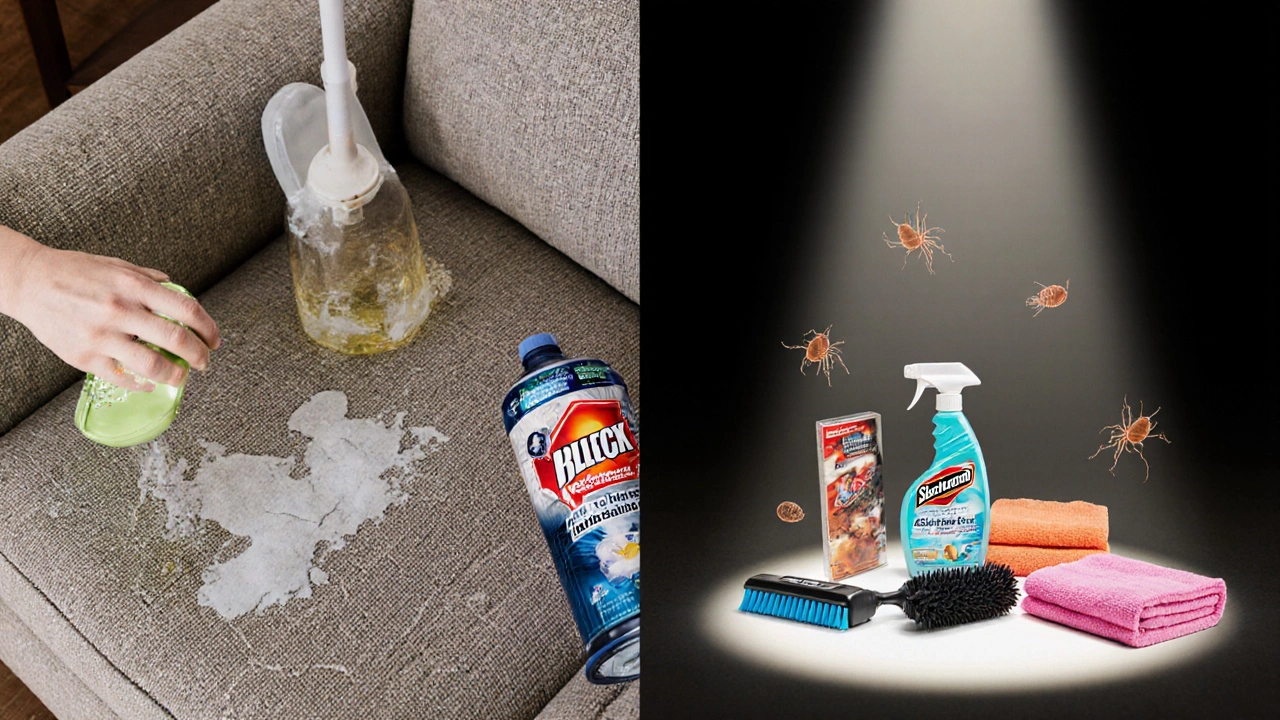
Detailers recommend cleaning every 6-12 months for average use. If you have kids, pets, or commute daily, every 3-4 months is better. Dirt builds up over time. It’s not just about looks-it’s about health. Dust mites, allergens, and bacteria live in upholstery.
Spot cleaning spills right away helps. But deep cleaning every few months removes what vacuuming misses. That’s why many car owners hire detailers twice a year-spring and fall.
DIY vs. Professional Cleaning
You can clean upholstery yourself. But detailers have advantages:
- Pro-grade tools: Extractors and steamers you can’t rent cheaply.
- Experience: They know which cleaners work on which fabrics. No guesswork.
- Time: A full detail takes 2-4 hours. Most people don’t have that kind of day.
- Results: Professional jobs look better and last longer.
If you’re tackling it yourself, stick to mild cleaners and take your time. Rushing leads to mistakes.
Final Tip: Prevention Is Cheaper Than Cleaning
The best upholstery cleaner is prevention. Use seat covers in winter. Keep wipes in the console for quick spills. Vacuum weekly. These small habits cut cleaning time in half and extend the life of your seats.
Upholstery isn’t disposable. With the right care, it can look new for years-even in a high-mileage car. It’s not about spending more. It’s about spending smart.