Spring Cleaning Strategy Planner
Select your preferences and click "Generate My Strategy" to see your customized cleaning plan.
Key Takeaways
- Roughly 60% to 75% of households engage in some form of deep seasonal cleaning.
- Millennials and Gen Z are shifting toward "micro-cleaning" rather than one giant annual event.
- The most common trigger for spring cleaning is the desire for a mental health reset.
- Professional services are seeing a spike in demand for specialized tasks like carpet and window cleaning.
The Real Numbers on Seasonal Cleaning
When you look at consumer behavior data, spring cleaning is a seasonal deep-cleaning process where homeowners perform tasks neglected during routine weekly tidying. Based on industry surveys and home management data, roughly 65% of households report performing a dedicated "spring clean" every year. However, if you define this as a full-home overhaul-meaning every room is scrubbed from top to bottom-that number drops closer to 30%.
Why the discrepancy? Because most people practice what psychologists call "selective cleaning." They might tackle the kitchen and the master bedroom but leave the guest room or the attic untouched. In the UK and US, the peak window for this activity is between March and May, though this fluctuates based on local weather patterns. For example, a rainy April in Bristol might push someone to focus on indoor decluttering before tackling the garden.
Who Is Actually Cleaning?
Not every demographic approaches the annual scrub the same way. There is a noticeable divide based on age and living situation. Homeowners with children tend to be more rigorous about seasonal cleaning, often driven by the need to remove winter allergens and dust mites before the pollen season hits its peak. This is where the connection to Indoor Air Quality becomes critical; removing dust buildup reduces respiratory triggers for families.
On the other hand, younger renters are moving away from the "one big weekend" approach. Instead, they adopt a method similar to the KonMari Method, which focuses on tidying as a lifestyle choice rather than a seasonal chore. This shift means that while fewer young people might identify as "spring cleaners," they may actually spend more total hours cleaning throughout the year by breaking tasks into smaller, manageable chunks.
| Household Type | Likelihood of Annual Deep Clean | Primary Motivation | Commonly Outsourced Task |
|---|---|---|---|
| Suburban Homeowners | High (70%+) | Property Value/Maintenance | Window Cleaning |
| Urban Renters | Moderate (40-50%) | Mental Clarity/Organization | Professional Carpet Cleaning |
| Empty Nesters | High (60%+) | Routine/Tradition | Gutter Clearing |
The Psychology Behind the Scrub
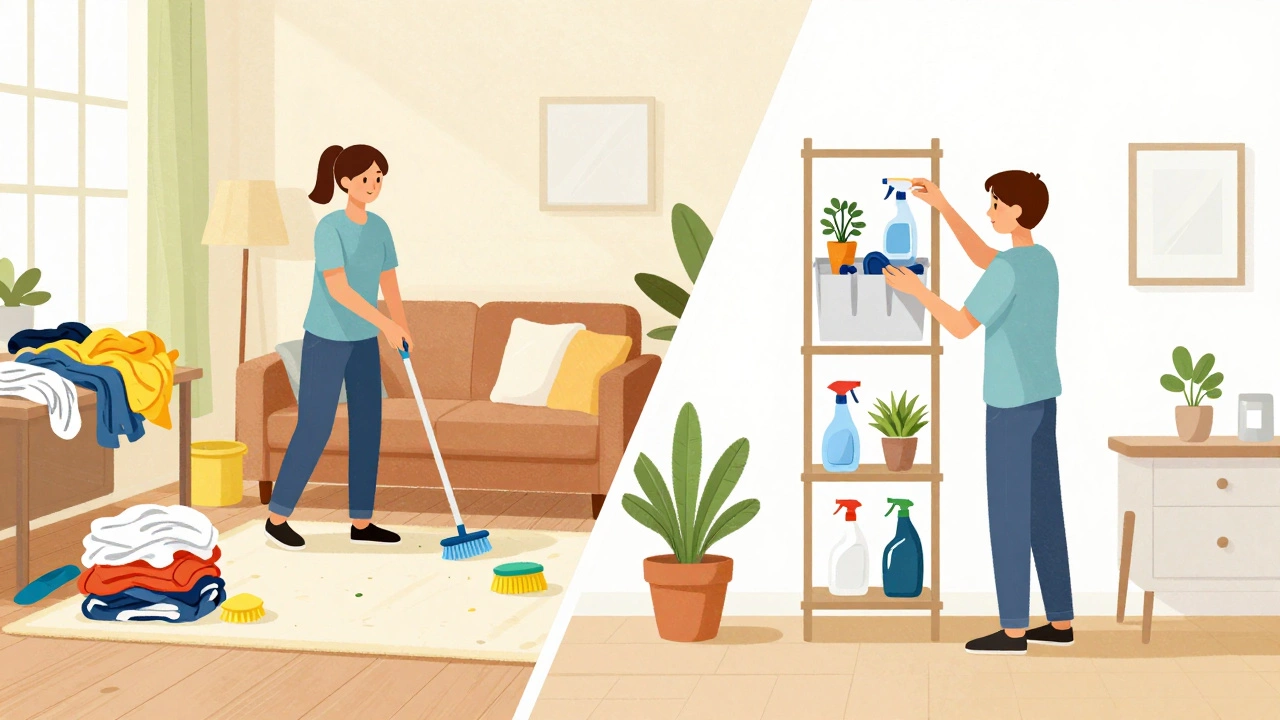
Ever wonder why we feel the need to scrub the oven just because the sun came out? It's not just about the dirt. There is a strong link between our physical environment and our mental state. This process is often an act of "environmental mastery," where cleaning a chaotic space provides a sense of control and a fresh start. Many people report a significant drop in stress levels after a successful decluttering session.
This psychological push is why we see a massive spike in the sale of Cleaning Supplies-specifically heavy-duty degreasers and microfiber cloths-during the first quarter of the year. People aren't just buying soap; they're buying the feeling of a new beginning. It's a ritualistic behavior that mirrors the changing of the seasons.
Common Pitfalls and the "Cleaning Burnout"
The biggest mistake people make is the "all-or-nothing" trap. They spend an entire weekend cleaning, only to feel completely exhausted and discouraged when they realize they didn't even get to the garage. This leads to cleaning burnout, where the task becomes so overwhelming that it's avoided for another entire year.
To avoid this, a better strategy is the "Zone Cleaning" approach. Instead of treating the whole house as one giant project, you divide it into zones. For example, Week 1 is the kitchen, Week 2 is the living area, and so on. This keeps the momentum high and prevents the physical crash that comes from spending eight hours straight on your hands and knees scrubbing floors.
When to Call in the Pros
While most people handle the dusting themselves, certain tasks are simply too big for a household vacuum. This is where Home Cleaning Services come into play. Data suggests that about 25% of those who spring clean will hire a professional for at least one specialized task. Why? Because some things are just a nightmare to do alone.
Take Upholstery Cleaning as an example. A home steam cleaner often lacks the suction power of an industrial machine, meaning dirt stays trapped deep in the fabric. The same goes for Window Cleaning on a two-story home; the risk of a ladder accident far outweighs the cost of hiring a professional. When you outsource these high-effort tasks, you free up your energy for the organization and decluttering parts of the process that actually provide the most mental relief.
The Evolution of Cleaning: Eco-Friendly Trends
The way we clean is changing. We're seeing a massive move toward Eco-Friendly Cleaning. People are swapping harsh bleach and ammonia for biodegradable alternatives like white vinegar, baking soda, and citric acid. This isn't just for the planet; it's for the people living in the house. Harsh chemicals can linger in the air, especially in poorly ventilated rooms, causing irritation for pets and children.
Modern cleaning is less about "sterilizing" and more about "sustaining." This means using high-quality tools that last for years rather than disposable wipes that end up in landfills. The focus has shifted from a superficial shine to a deeper, healthier home environment.
Does the percentage of people who spring clean vary by country?
Yes, it does. In Northern Europe and North America, there is a very distinct peak in spring cleaning due to the harsh winters that keep people indoors. In tropical climates, "spring cleaning" is less of a timed event and more of a recurring necessity to manage humidity and mold growth throughout the year.
What is the most common task people skip during spring cleaning?
The most frequently neglected areas are high-reach zones (like ceiling fans and top-of-cabinet dust) and the interior of appliances, such as the coils behind the refrigerator or the dishwasher filter. These are often skipped because they require more effort or specific tools.
Is it better to clean or declutter first?
Always declutter first. There is no point in cleaning around an object you are just going to throw away. Removing the "junk" first gives you clear surfaces and a better understanding of what actually needs deep cleaning, which saves you hours of wasted effort.
How often should a professional deep clean be performed?
For most households, a professional deep clean every 6 to 12 months is sufficient. However, homes with pets, young children, or people with severe allergies may benefit from a professional refresh every 3 to 4 months to keep allergens and dander under control.
Why do some people feel more anxious during spring cleaning?
This is often due to "decision fatigue." When you face a mountain of belongings and have to decide what to keep and what to toss for every single item, your brain can become overwhelmed. Breaking the process into 15-minute intervals can help reduce this anxiety.
Next Steps for Your Home
If you're feeling overwhelmed by the thought of a total house reset, don't try to do it all in one weekend. Start with a "triage" phase: go through one room and just remove the obvious trash. Once the clutter is gone, pick one high-impact area-like the kitchen-and focus your energy there. If you hit a wall with tasks like scrubbing the carpets or cleaning the exterior windows, don't feel guilty about calling a professional. The goal isn't to do every single thing yourself; the goal is to end up with a space where you can actually breathe and relax.