Stain Removal Success Estimator
Stain Removal Success Calculator
Estimate your chances of successfully removing urine stains based on treatment method and stain age.
If you’ve ever woken up to the smell of pee on your mattress, you know how fast panic sets in. It’s not just the odor-it’s the stain, the lingering dampness, and the fear that your mattress is ruined. You’ve probably heard that vinegar is a miracle cleaner. But does it really work on pee stains? The short answer: vinegar helps, but it’s not a magic fix on its own. You need the right method, timing, and follow-up steps to actually get rid of both the stain and the smell.
Why pee stains are so hard to remove
Urine isn’t just water and salt. When it dries, it turns into uric acid crystals. These crystals bond deep into mattress fibers, foam, and even the padding underneath. Regular cleaning products don’t break them down-they just spread them around. That’s why the smell comes back, even after you think you’ve cleaned it. Bacteria feed on those crystals, and every time the area gets warm or humid, they wake up and release ammonia gas. That’s the stink you can’t escape.How vinegar actually works on pee stains
White distilled vinegar is acidic, and uric acid is alkaline. When you pour vinegar on a pee stain, the acid neutralizes the alkaline crystals. This breaks the bond between the uric acid and the mattress material. Vinegar also kills some bacteria and helps lift odor-causing compounds. But vinegar alone won’t pull the stain out of deep layers. It needs help from an absorbent material and time to work.Step-by-step: Cleaning pee from a mattress with vinegar
- Blot, don’t rub. Use clean, dry towels to soak up as much liquid as possible. Rubbing pushes the urine deeper. Press down firmly and swap towels until no more liquid transfers.
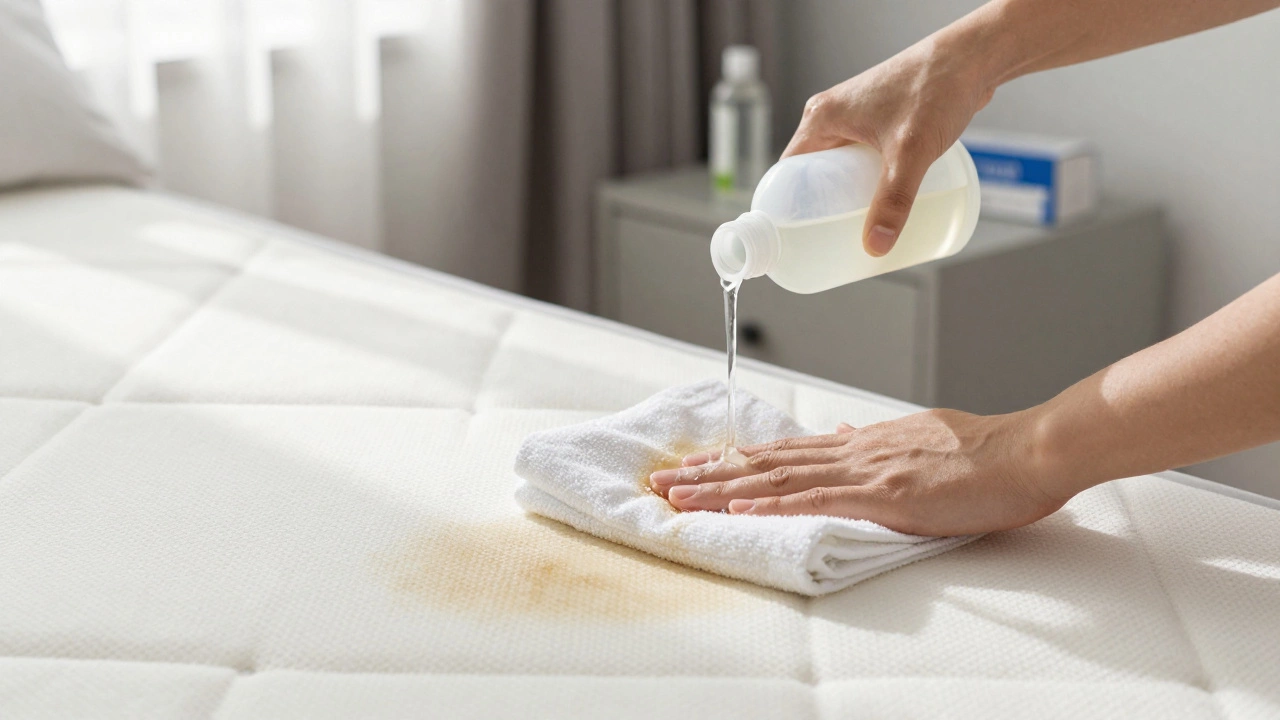
- Apply white vinegar. Pour undiluted white distilled vinegar directly onto the stained area. Use enough to soak through the top layer but not flood the mattress. You’ll hear a hissing sound-that’s the acid reacting with the uric acid. Let it sit for 5 to 10 minutes.
- Blot again. Use fresh towels to soak up the vinegar. It’ll look dirty now-that’s the stain being lifted. Don’t skip this step. Leaving vinegar wet too long can damage the foam.
- Sprinkle baking soda. Cover the entire damp area with a thick layer of baking soda. This absorbs remaining moisture and odor. Let it sit for at least 8 hours, preferably overnight.
- Vacuum thoroughly. Use a vacuum with a brush attachment to remove all the baking soda. If you leave residue, it’ll attract dust and might cause itching.

What not to do
A lot of online advice tells you to use hydrogen peroxide, bleach, or ammonia. Don’t. Hydrogen peroxide can bleach your mattress fabric. Bleach reacts with urine to create toxic chloramine gas. Ammonia? That’s already in urine-adding more just makes the smell worse. And never use a steam cleaner. The heat sets the uric acid crystals deeper into the foam, making the stain permanent.When vinegar isn’t enough
If the stain is old, deep, or the smell won’t go away after vinegar and baking soda, you need an enzyme cleaner. These aren’t just another spray-they contain live bacteria that eat uric acid crystals. Brands like Nature’s Miracle, Urine Off, and Rocco & Roxie are designed for this. They’re used by pet owners, hospitals, and landlords dealing with persistent urine issues. Apply according to the label, then let it dry naturally. No rinsing needed.Preventing future accidents
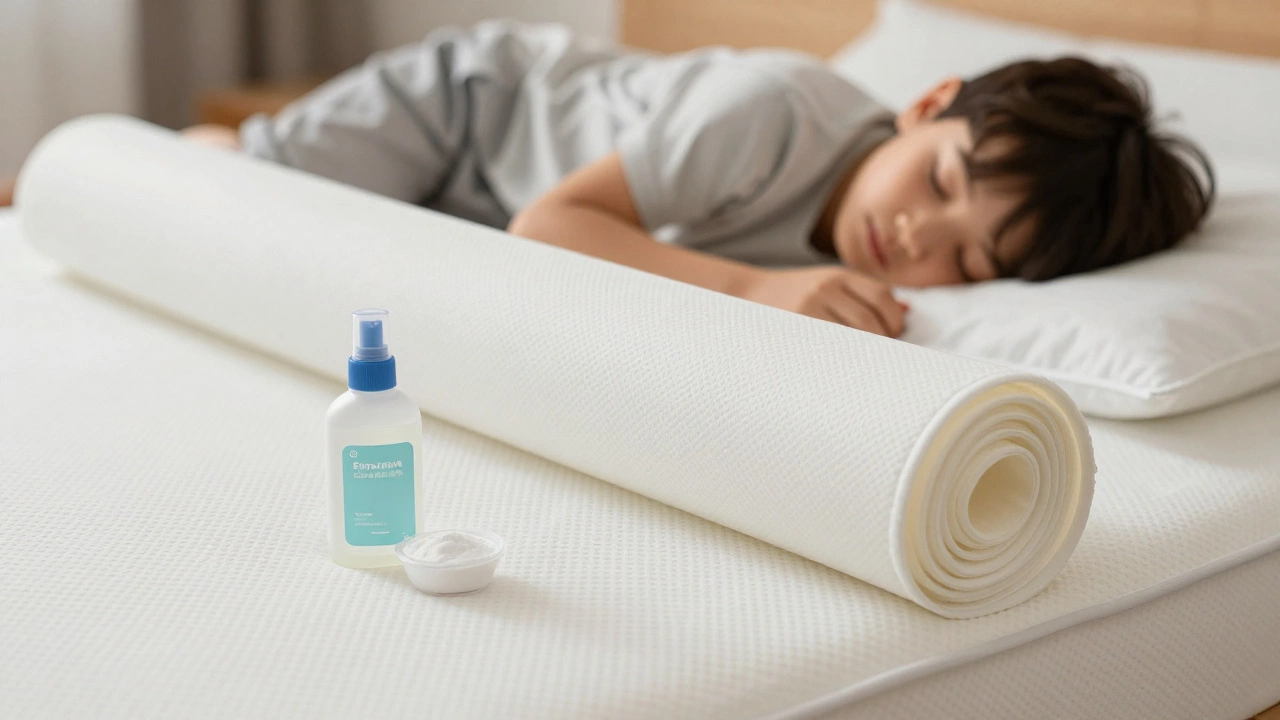
Once you’ve cleaned the mattress, protect it. A waterproof mattress protector isn’t optional-it’s essential. Look for one made of breathable, cotton-backed polyurethane. It stops liquids from reaching the mattress while still feeling soft. Wash it every 2 weeks. If you have kids, pets, or medical incontinence, consider a double-layer protector. Also, keep a small bottle of vinegar and baking soda in your linen closet. The faster you treat a spill, the easier it is to remove.