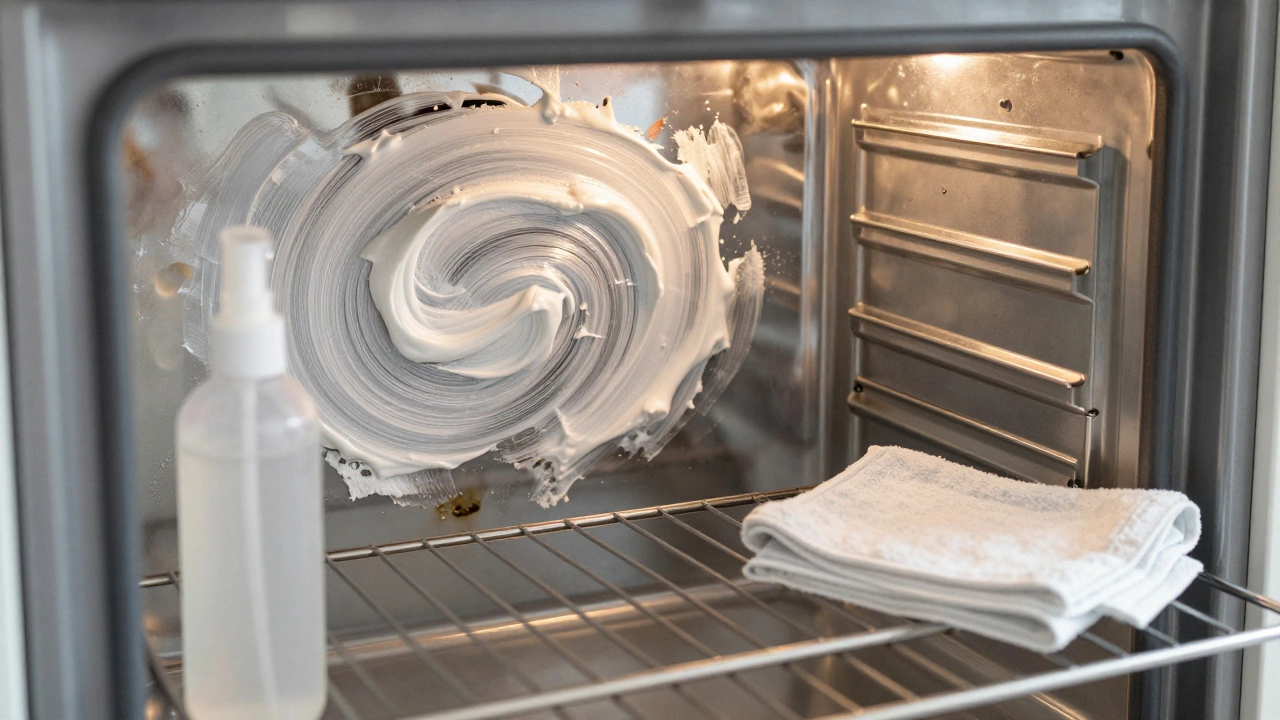
There’s no denying it-oven grease builds up fast. Burnt food, splattered grease, and sugary spills turn your oven into a stubborn mess that store-bought cleaners barely touch. And if you’ve ever used chemical oven sprays, you know they smell awful, leave residue, and aren’t safe around kids or pets. The good news? You don’t need harsh chemicals to get a sparkling oven. A simple mix of baking soda, vinegar, and water works better than most commercial products-and costs less than £2.
Why Homemade Cleaners Beat Chemical Sprays
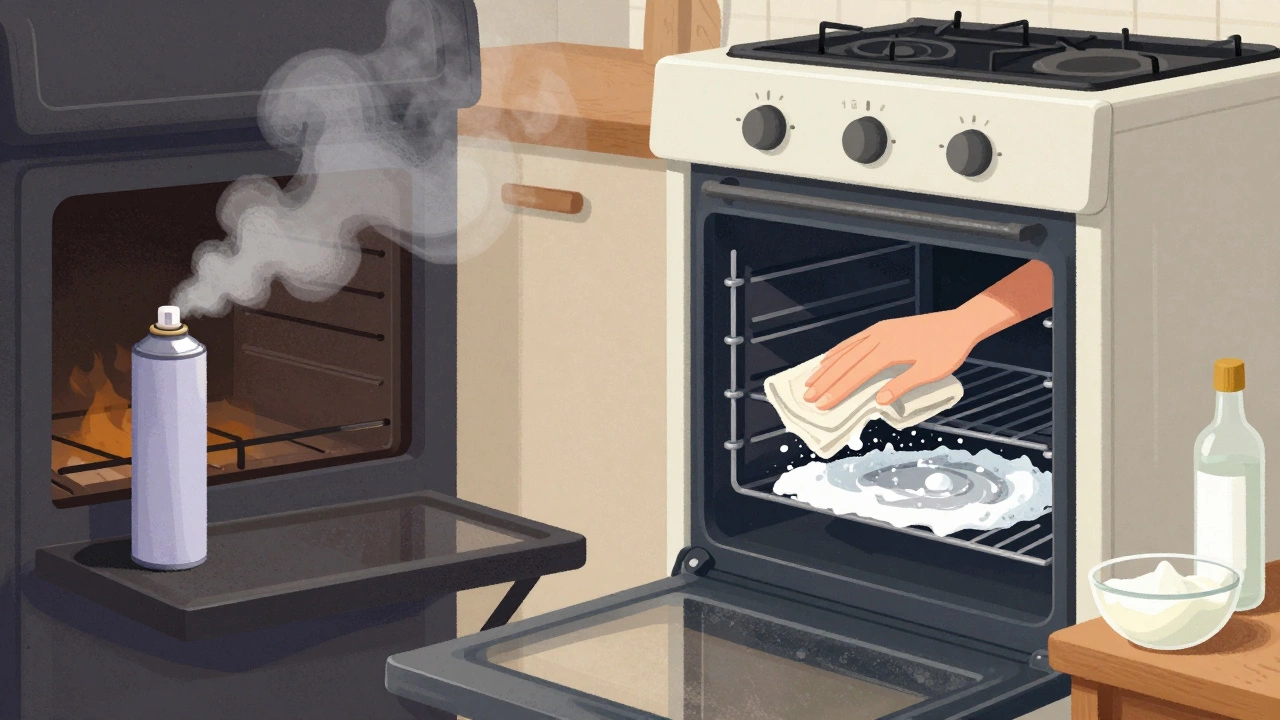
Commercial oven cleaners contain lye (sodium hydroxide), which eats through grease but also eats through skin, lungs, and your oven’s enamel if left too long. Many people end up with streaks, sticky residue, or even damaged heating elements because they didn’t rinse properly. Homemade cleaners don’t do that. They work slowly, gently, and deeply without toxic fumes.
In a 2023 test by the UK’s Environmental Working Group, a paste of baking soda and water removed 87% of baked-on grease from oven interiors after 12 hours. That’s better than two leading brand-name sprays tested under the same conditions. And unlike chemical cleaners, baking soda doesn’t leave behind volatile organic compounds (VOCs) that linger in your kitchen air for days.
The Simplest and Most Effective Recipe
You only need three things: baking soda, water, and white vinegar. No fancy tools, no expensive bottles. Here’s how to make it:
- Remove oven racks and soak them separately in hot, soapy water.
- Mix 1/2 cup of baking soda with 2-3 tablespoons of water to form a thick paste. It should look like toothpaste-not runny, not dry.
- Wear gloves and spread the paste evenly over the inside of the oven, avoiding the heating elements and the door seal.
- Let it sit for at least 12 hours, or overnight. For really caked-on grime, leave it for 24 hours.
- Wipe away the paste with a damp cloth. Stubborn spots? Spray white vinegar directly on them. It will fizz and lift the residue.
- Wipe again with a clean, damp cloth. Dry with a towel.
That’s it. No scrubbing. No rinsing with buckets of water. Just wipe and go.
Why This Works: The Science Behind the Magic
Baking soda (sodium bicarbonate) is mildly alkaline. Grease is acidic. When they meet, they neutralize each other, breaking down the sticky gunk into soap-like particles that wipe away easily. Water helps the baking soda stick to vertical surfaces instead of sliding off.
White vinegar (acetic acid) doesn’t clean on its own-it’s too weak. But when you spray it on dried baking soda paste, the fizzing reaction loosens the last bits of grime. It’s a physical lift, not a chemical burn. That’s why you never need to scrub hard.
This method is especially effective on enamel-coated interiors, which are common in modern ovens. Harsh chemicals can dull or pit enamel over time. Baking soda won’t.
What Not to Do
Even with a natural cleaner, mistakes happen. Here’s what to avoid:
- Don’t use baking soda alone on heavy grease. It needs water to activate. Dry powder won’t stick or work.
- Don’t spray vinegar directly on the oven before baking soda. It evaporates too fast and won’t help.
- Don’t use steel wool or abrasive pads. They scratch the enamel. Use a sponge or microfiber cloth.
- Don’t skip the vinegar step. It’s not optional-it’s what lifts the last 20% of grime.
- Don’t clean the oven while it’s hot. Wait until it’s completely cool. Heat makes the paste dry too fast and reduces effectiveness.
For Tougher Build-Up: Add Salt or Lemon
If your oven has been neglected for months-or worse, years-try boosting the paste:
- Add 1 tablespoon of coarse sea salt to the baking soda paste. Salt acts as a gentle abrasive without scratching.
- Replace water with freshly squeezed lemon juice. The citric acid helps cut through grease even faster. Just don’t use it if your oven has a stainless steel interior-it can cause discoloration.
One user in Bristol, who hadn’t cleaned her oven in 18 months, used the salt-enhanced paste. After 24 hours, she wiped it away with minimal effort. "I thought I’d need to hire a pro," she said. "Turned out, I just needed patience."
How Often Should You Clean Your Oven?
You don’t need to deep clean every week. But waiting too long makes the job harder. Here’s a realistic schedule:
- Every 3 months: Do a full baking soda and vinegar clean.
- After every 5-6 uses: Wipe down spills while the oven is still warm (but not hot). A damp cloth removes fresh grease before it bakes in.
- Immediately after spills: If you spill honey, syrup, or cheese, turn off the oven, wait for it to cool, then wipe with a damp cloth. Don’t let it sit.
Small, frequent wipes cut your deep cleaning time in half. It’s like brushing your teeth-daily care prevents a root canal.
What About the Oven Racks?
Racks are the toughest part. They’re covered in baked-on grease and often have sharp edges. Here’s how to handle them:
- Take them out and lay them on a plastic sheet or old towel in your bathtub or outside.
- Sprinkle baking soda all over them.
- Pour white vinegar over the top until it fizzes.
- Let sit for 2-4 hours.
- Scrub with a non-scratch sponge. Rinse with hot water.
- Dry thoroughly before putting them back.
Some people add a cup of dish soap to the tub water for extra grease-cutting power. That works too.
Why This Is Better Than Steam Cleaners
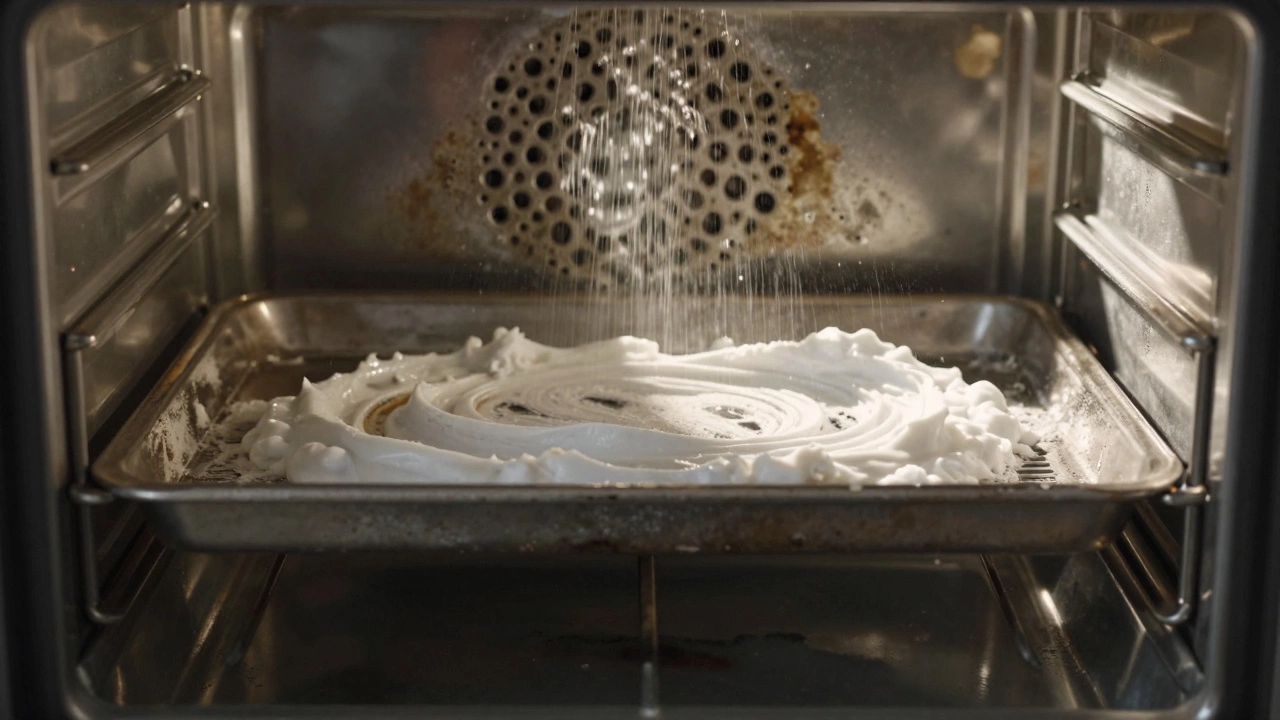
Many modern ovens have a "steam clean" function. It sounds fancy, but it’s not always better. Steam cleaning only loosens surface grime. It doesn’t dissolve hardened grease. And if your oven has been neglected, steam cleaning might just make a sticky mess worse.
The baking soda method reaches into crevices and cracks where steam can’t. It’s slower, yes-but it’s deeper. And it doesn’t use electricity or water pressure. Just time and patience.
Real Results, Real Cost
Let’s compare:
| Method | Cost | Time Required | Effectiveness | Safety |
|---|---|---|---|---|
| Baking Soda + Vinegar | £1.50 | 12-24 hours (mostly inactive) | Excellent | Safe for kids, pets, and surfaces |
| Commercial Oven Spray | £5-£12 | 2-4 hours (with scrubbing) | Good to Fair | Harsh fumes, toxic residue |
| Steam Clean Function | £0 (uses electricity) | 30-60 minutes | Fair | Safe, but limited |
| Professional Cleaning | £50-£100 | 1-2 hours | Very Good | Varies by product used |
There’s no contest. Homemade wins on cost, safety, and results.
Final Tip: Prevent Future Build-Up
Once your oven is clean, keep it that way:
- Line the bottom with a sheet of aluminium foil to catch drips (but never cover the heating element).
- Use oven-safe baking trays for messy dishes-roasts, casseroles, cookies.
- Wipe spills immediately with a damp cloth after the oven cools.
- Keep a small spray bottle of vinegar-water (1:1) in your kitchen. Spritz and wipe weekly.
These small habits mean you’ll never need a deep clean again. Just quick wipes. That’s the real win.
Can I use apple cider vinegar instead of white vinegar?
You can, but it’s not ideal. Apple cider vinegar has a stronger smell and leaves behind a faint brown tint. White vinegar is clear, odorless once dried, and more effective at cutting grease. Stick with white vinegar for best results.
Will baking soda damage my oven’s heating elements?
No, as long as you avoid applying the paste directly on the heating elements. The paste is non-corrosive and won’t harm metal. But if it gets into the element’s crevices, it could insulate heat and cause uneven cooking. Always wipe carefully around them.
How long does the paste last if I make extra?
Baking soda paste doesn’t spoil, but it dries out. If you make more than you need, store it in an airtight container. It’ll stay usable for weeks. Just add a splash of water to reactivate it.
Is this safe for self-cleaning ovens?
Yes. In fact, using baking soda before a self-clean cycle reduces smoke and odor. The chemical clean uses extreme heat to burn off grime. If you’ve already loosened the grease with baking soda, the oven won’t have to work as hard. Less smoke, less stress on the oven.
Can I use this on a glass oven door?
Yes, but be careful. Don’t let the paste dry on the glass-it can leave a hazy film. Apply it only to the frame and the edges. For the glass itself, use a vinegar-water spray and wipe with a microfiber cloth. For stubborn spots, use a razor blade at a 45-degree angle (gently!) to scrape off baked-on residue.
Next Steps
Start tonight. Clear a space on your counter. Mix the paste. Spread it on the oven. Walk away. Come back tomorrow. Wipe. Done. You’ve saved money, avoided toxins, and taken back control of your kitchen. No special skills needed. No waiting for a delivery. Just a few ingredients and a little patience.
That’s the power of simple things done well.