Spring Cleaning Knowledge Quiz
Test Your Spring Cleaning Knowledge
Take this short quiz to see how much you know about the biology, psychology, and cultural traditions behind spring cleaning. You'll learn about the ancient connections and modern science behind your urge to clean!
What biological trigger makes people want to clean in spring?
Which ancient culture celebrated spring cleaning before Nowruz?
What hormone is reduced when days get longer in spring?
What psychological benefit does cleaning provide?
According to the article, what is the best way to approach spring cleaning?
What is the symbolic meaning of cleaning during spring?
How does technology affect spring cleaning urges today?
What is one of the practical tips given in the article for working with the urge?
Quiz Results
You scored 0 out of 8 questions correct.
Learn More
This quiz covered the biological, psychological, and cultural aspects of spring cleaning. Your score shows how much you understood about the ancient origins, modern science, and practical advice behind the spring cleaning urge. Keep exploring the article to deepen your understanding!
Every year, around late February or early March, something strange happens in homes across the country. Drawers get emptied. Windows get washed. Basements get dug into. People who barely vacuum once a month suddenly become obsessed with scrubbing baseboards and organizing spice racks. It’s not a coincidence. It’s not laziness catching up. It’s the spring cleaning urge-and it’s deeper than just wanting a cleaner house.
The Biological Trigger
Your body knows before your mind does that winter is ending. As daylight grows longer and temperatures creep up, your brain starts reacting to changes in sunlight exposure. Less darkness means less melatonin, the sleep hormone, and more serotonin, the mood booster. That chemical shift doesn’t just make you feel happier-it makes you want to move, to clear out, to start fresh.A 2021 study from the University of Pennsylvania found that people exposed to 10% more daylight in early spring showed a 23% increase in household cleaning activity within two weeks. It wasn’t about motivation. It was biology. Humans evolved to reset their environments when food became more available and survival pressures eased. That ancient drive is still wired into us. Spring cleaning isn’t a choice. It’s a biological reflex.
Cultural Patterns That Stick
This isn’t just a modern habit. Ancient Persians cleaned their homes from top to bottom before Nowruz, their New Year, which falls around the spring equinox. Jewish families remove all leavened bread before Passover. In China, families sweep away bad luck before Lunar New Year. These aren’t random traditions-they’re rituals tied to renewal.When European settlers brought these customs to North America, they merged with the practical need to open windows after months of closed-up homes. Coal fires, wood stoves, and heavy wool clothing left dust and soot everywhere. Spring was the only time you could safely open windows without freezing. Cleaning became a necessity-and then a ritual. Even today, when we don’t rely on fireplaces or wool coats, the pattern holds. We clean because we’ve always cleaned.
The Psychological Payoff
There’s a reason you feel better after organizing a closet. Clutter triggers stress. A 2010 UCLA study showed that women with cluttered homes had higher levels of cortisol, the stress hormone, than those with tidy spaces. When you clean, you’re not just removing dirt-you’re removing mental noise.Spring cleaning gives you control. Life feels unpredictable: work, relationships, news cycles. But a clean kitchen? That’s something you can fix. Every drawer you organize, every shelf you dust, gives your brain a tiny win. These small victories add up. They create a sense of order in a chaotic world. That’s why people clean before a big life change-moving, starting a new job, ending a relationship. It’s not about the mess. It’s about resetting your inner state.

Technology Doesn’t Kill the Urge-It Changes It
You’d think with smart vacuums, air purifiers, and self-cleaning ovens, we’d stop needing to spring clean. But the opposite is true. We’re more aware of what’s accumulating. We see dust on our phone screens when we take selfies. We notice mold around the showerhead because we watch home improvement TikToks. We compare our homes to Instagram reels of minimalist bedrooms.Modern life doesn’t reduce clutter-it just makes us notice it more. And we’re more willing to act. In 2024, searches for “spring cleaning checklist” jumped 67% from the year before. People aren’t cleaning less. They’re cleaning smarter. They’re using apps to track tasks, buying reusable microfiber cloths, and watching YouTube videos on how to declutter without crying. The urge hasn’t disappeared. It’s evolved.
Why It’s Not Just About the House
Spring cleaning rarely stops at the front door. People use it as a trigger to reset other parts of their lives. They delete old emails. They unfollow toxic social media accounts. They donate clothes they haven’t worn in two years. They finally call their dentist. They start a journal. They quit a habit they’ve been meaning to drop.That’s because cleaning becomes symbolic. When you throw out that expired yogurt, you’re symbolically letting go of something stale. When you reorganize your bookshelf, you’re reordering your priorities. Cleaning is the easiest way to create a physical metaphor for internal change. It’s safe. It’s visible. It’s measurable. You can see the difference. That’s powerful.

What Happens If You Don’t Do It?
Some people don’t spring clean. They don’t feel the urge. And that’s okay. Not everyone has the same biological sensitivity to seasonal shifts. Some cultures don’t emphasize it. Some lifestyles make it impractical. But if you feel restless, irritable, or stuck in January and February-without knowing why-you might be missing this reset.People who skip spring cleaning often report feeling “off” in April. They don’t know why. They think they’re just tired. But it’s not fatigue. It’s unresolved clutter-physical and mental. The energy you spent ignoring the mess doesn’t disappear. It lingers. It weighs on you. You don’t need to deep-clean your attic. But if you’ve been avoiding that one drawer for months, it’s probably holding you back more than you realize.
How to Work With the Urge, Not Against It
You don’t have to clean your whole house in one weekend. That’s how burnout starts. Instead, match the pace of the season.- Start small: Clean one drawer. Wash one window. Toss one bag of old clothes.
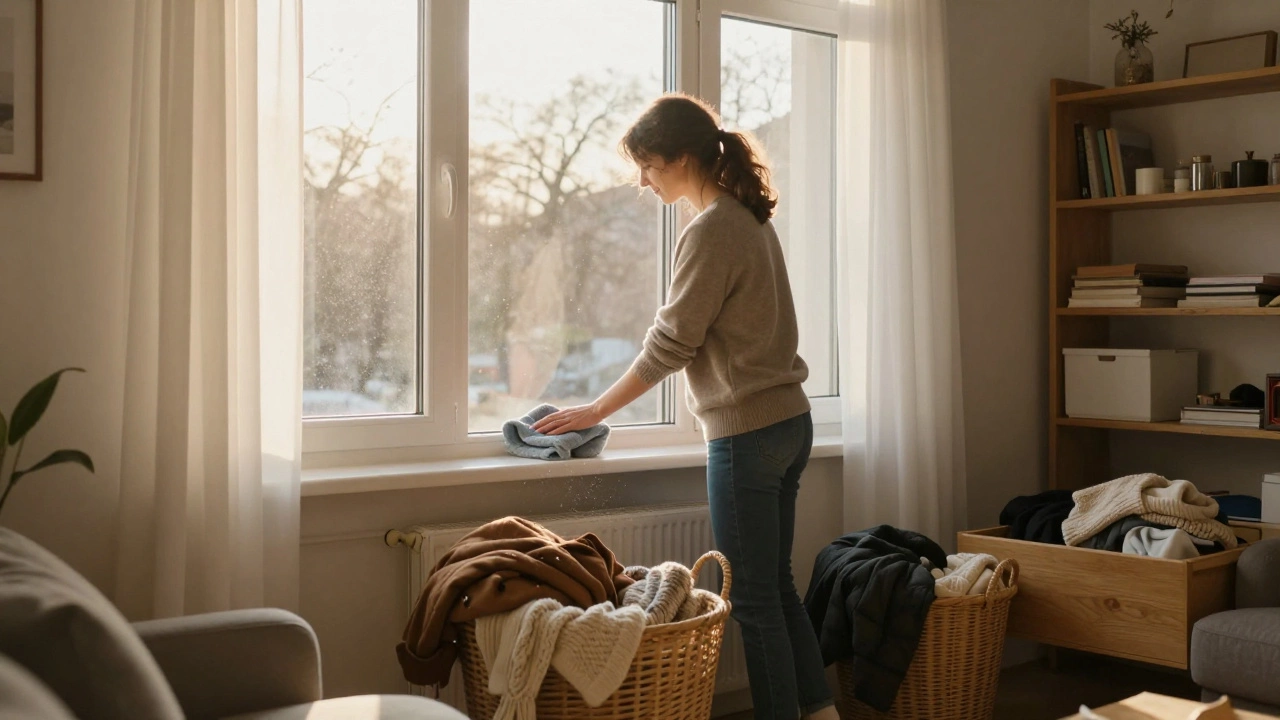
- Use light as your guide: Open a window in the morning. Clean the sill while the sun hits it.
- Focus on sensory wins: The smell of lemon cleaner. The sound of a vacuum. The feel of a clean towel.
- Let go of perfection: A slightly dusty shelf is fine. A cluttered desk doesn’t mean you’re lazy.
- Turn it into a ritual: Play one favorite song while you clean. Light a candle. Make tea afterward.
Spring cleaning isn’t about achieving a magazine-ready home. It’s about creating space-for light, for breath, for peace. The urge is real. It’s ancient. It’s useful. Listen to it. Don’t fight it. Let it move you, one small task at a time.
Why does spring cleaning feel so satisfying even if it’s hard work?
It feels satisfying because your brain releases dopamine with each small win-like finishing a drawer or wiping down a shelf. These tiny achievements trick your mind into feeling productive and in control. Even though the work is physical, the reward is psychological. You’re not just cleaning your home-you’re resetting your sense of order.
Is spring cleaning just a Western tradition?
No. Spring cleaning exists in many cultures under different names. Persians clean before Nowruz. Jewish families remove leavened bread before Passover. Chinese families sweep out bad luck before Lunar New Year. These rituals all align with the spring equinox or early spring, when days grow longer and survival pressures ease. The pattern is universal-it’s tied to nature’s rhythm, not geography.
Do I need to clean everything in one weekend?
No. Trying to do it all in a weekend leads to exhaustion, not relief. The goal isn’t perfection-it’s progress. Clean one room. Tackle one drawer. Wash one window. Spread it out over two or three weeks. Let the changing season guide your pace. You’ll feel better without burning out.
Why do I feel anxious when I see clutter, even if it’s not messy?
Clutter activates the brain’s threat response. Even if it’s not dirty, piled-up items signal disorganization-which your brain interprets as potential danger or loss of control. This is especially strong in spring, when your body is primed for renewal. The anxiety isn’t about the stuff-it’s about your brain wanting to restore balance.
Can I skip spring cleaning if I clean regularly all year?
Yes, if you’re already maintaining your space consistently. But most people don’t. Regular cleaning keeps things tidy, but spring cleaning targets the hidden buildup-behind furniture, in corners, in forgotten drawers. It’s the deep reset that monthly cleaning doesn’t reach. Even if you clean often, one big reset in spring can still feel refreshing.
If you’ve ever felt that strange pull to scrub the kitchen floor in March-even when you didn’t plan to-you now know why. It’s not about the dirt. It’s about the light. The lengthening days. The ancient rhythm of renewal. You’re not just cleaning your home. You’re answering a call older than houses, older than cities. And it’s okay to listen.