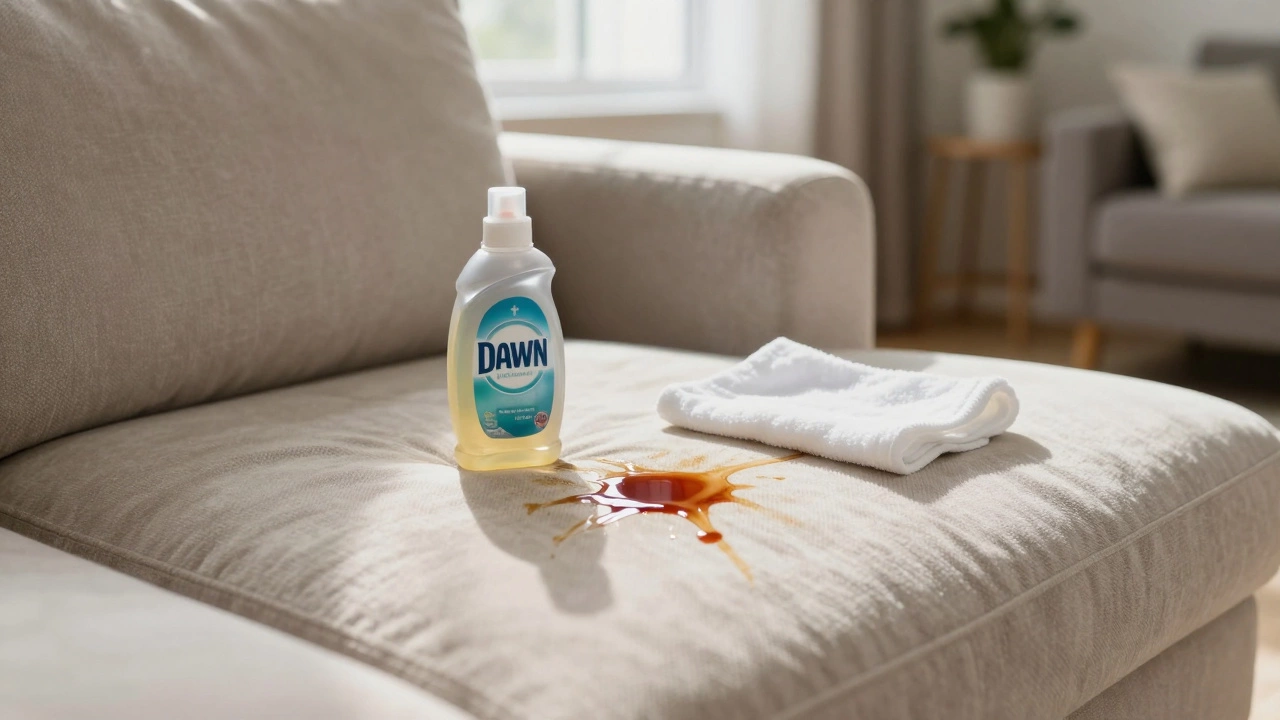
You spilled coffee on your favorite couch. Or your dog shook off after a rainstorm and left a wet, muddy trail. Or maybe your kid decided to turn the sofa into a painting canvas. Suddenly, you’re staring at a stained fabric seat and wondering: Dawn dish soap-the same stuff you use for greasy pans-could it work on upholstery?
It’s a common question. Online forums are full of people swearing by it. YouTube videos show it bubbling away on grimy couches. But here’s the truth: Dawn dish soap isn’t designed for upholstery. And using it wrong can do more harm than good.
Why People Think Dawn Works on Upholstery
Dawn is a powerful degreaser. It cuts through cooking oil, sticky syrup, and dried-on food. That’s why people assume it’ll handle grease, pet stains, and dirt on fabric. And yes, in some cases, it does lift stains quickly. But upholstery isn’t a stainless steel pan. Fabric absorbs liquids differently. And the fibers-whether cotton, polyester, microfiber, or wool-react badly to harsh surfactants.
Many users report success because they used a diluted solution, tested it in a hidden spot, and rinsed thoroughly. But those are exceptions, not rules. What works on a grease spot on a kitchen counter doesn’t mean it’s safe for your sofa’s delicate weave.
What Happens When You Use Dawn on Upholstery
Dawn contains sodium lauryl sulfate and other strong detergents. These are great for breaking down oils, but they’re also designed to be rinsed off with hot water-something you can’t do on a couch. Leftover residue attracts dirt. Over time, your cleaned spot becomes a magnet for dust and grime, making the stain worse than before.
Also, many upholstery fabrics have a protective coating. Brands like StainGuard or Scotchgard create a barrier to repel liquids. Dawn can strip that coating. Once it’s gone, the next spill sinks in faster and deeper. You didn’t clean the stain-you removed the defense system.
And don’t forget color fading. Even mild detergents can cause dyes to bleed, especially on older or low-quality fabrics. A white couch might look fine after cleaning, but your burgundy armrest? It could turn pink.
What Experts Recommend Instead
Professional upholstery cleaners use pH-balanced, fabric-specific cleaners. These are designed to lift stains without damaging fibers or finishes. You don’t need to spend hundreds on a machine-just use the right products.
Here’s what actually works:
- White vinegar and water (1:1): Great for odors and light stains. Vinegar breaks down organic matter without leaving residue.
- Baking soda: Sprinkle it on the fabric, let it sit for 15-20 minutes, then vacuum. It lifts smells and surface dirt.
- Specialized upholstery cleaners: Brands like Bissell, Resolve, or Hoover make sprays formulated for sofas and chairs. They’re safe for most fabrics and come with clear instructions.
- Isopropyl alcohol (70%): Use sparingly on synthetic fabrics. Dab, don’t rub. Works well on ink, marker, or grease.
Always test any cleaner on a hidden area first-like under a cushion or on the backrest. Wait 24 hours. If there’s no fading, swelling, or texture change, it’s safe to proceed.
How to Clean Upholstery Safely (Step by Step)
If you’re going to clean your sofa yourself, here’s the right way:
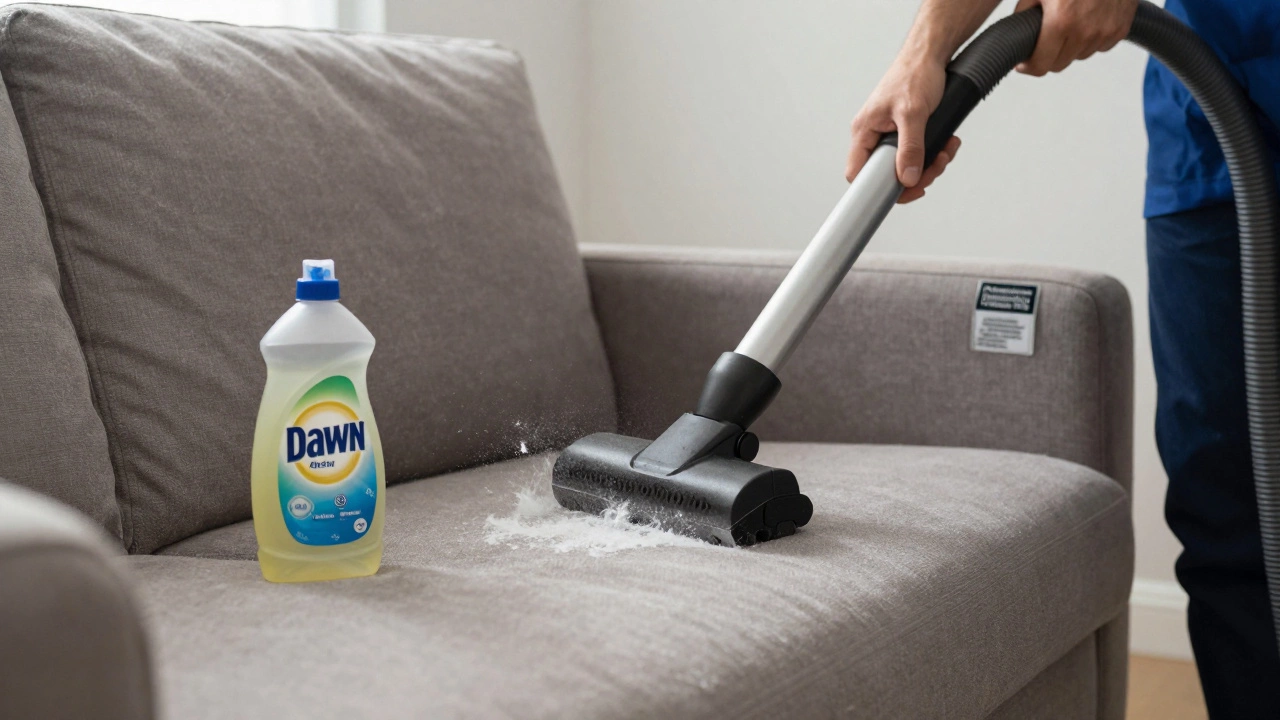
- Remove loose dirt. Vacuum thoroughly with the brush attachment. Pay attention to seams and crevices where crumbs and hair hide.
- Check the care label. Look for codes: W (water-safe), S (solvent-only), SW (either), X (professional clean only). If it says X, don’t attempt DIY.
- Spot-test. Apply your chosen cleaner to a hidden spot. Wait a day.
- Apply cleaner. Use a clean white cloth. Dab the stain gently. Never scrub-this frays fibers.
- Rinse with water. Dampen another cloth with plain water and blot the area to remove cleaner residue.
- Dry properly. Use a fan or open window. Don’t use a hairdryer on high heat. Let it air-dry completely before sitting on it.
For deep cleaning, rent a steam cleaner with upholstery attachments. Use only cleaners labeled for steam machines. Never use dish soap in them-it clogs the system and voids warranties.
When Dawn Might Be Okay (And How to Use It)
There’s one scenario where Dawn might be acceptable: a fresh, greasy stain on a durable synthetic fabric-like a polyester couch in a teenager’s room-with no protective coating. Even then, you need to be careful.
If you decide to try it:
- Use one drop of Dawn mixed with one cup of cool water.
- Apply with a white cloth-never pour it on.
- Dab, don’t rub.
- Rinse immediately with a cloth soaked in plain water.
- Blot dry and let air out for 24 hours.
And even then, you’re taking a risk. That one drop might leave invisible residue. And if the fabric is older than five years? The chances of damage go up.
What Not to Do
Here are common mistakes people make:
- Using too much soap
- Skipping the rinse step
- Using hot water (shrinks fibers, sets stains)
- Rubbing stains with a scrub brush
- Assuming “natural” means safe (vinegar is safe; dish soap isn’t)
- Ignoring the care label
One customer in Bristol brought me a sofa she cleaned with Dawn. The stain was gone-but the fabric felt stiff, and the color had faded in patches. She thought she saved money. She ended up paying for professional reupholstery.
When to Call a Professional
Call a pro if:
- The stain is old or set in
- The fabric is silk, wool, velvet, or leather
- The care label says “professional cleaning only”
- You’ve tried DIY and the stain spread
- You’re unsure about the fabric type
Professional cleaners use industrial extractors, controlled moisture, and pH-neutral solutions. They know how to handle different fibers without damaging them. It’s not expensive-often less than £100 for a standard three-seater-and it saves you from costly mistakes.
Final Verdict: Is Dawn Dish Soap Good for Upholstery?
No. Not really.
It might work in rare, controlled cases. But the risks-residue buildup, color loss, fabric damage, and long-term dirt attraction-far outweigh the short-term payoff. You’re trading a quick fix for a potential long-term problem.
Upholstery cleaning isn’t about brute force. It’s about precision. Use tools made for the job. Your couch will thank you.
Can I use Dawn dish soap on microfiber upholstery?
It’s not recommended. Microfiber is tightly woven and can trap detergent residue. Even a small amount of Dawn can leave a sticky film that attracts dust and makes the fabric feel stiff. Use a microfiber-specific cleaner or a vinegar-water solution instead.
Will Dawn remove pet urine stains from a couch?
No. Dawn doesn’t break down the enzymes in urine. It might mask the smell temporarily, but the odor will return. Use an enzymatic cleaner designed for pet stains. These contain bacteria that eat the odor-causing compounds. Dawn just spreads the problem.
Is Dawn safe for colored upholstery?
Not reliably. Many dyes used in upholstery are not colorfast, especially on older furniture. Dawn’s surfactants can pull color out of the fabric, causing fading or bleeding. Always test in a hidden spot first-but even then, it’s risky.
What’s the best homemade upholstery cleaner?
Mix one cup of white vinegar, one cup of water, and a few drops of castile soap. Test on a hidden area. Apply with a spray bottle or damp cloth, blot gently, then rinse with clean water. It’s effective for most stains and leaves no residue.
Can I use Dawn in a steam cleaner?
Never. Dish soap creates too many suds and can clog the machine’s internal parts. It may also void your warranty. Always use cleaners labeled for steam cleaners. They’re formulated to work with heat and pressure without damaging the unit.
If you’ve been using Dawn on your couch and it looks fine, you got lucky. But luck isn’t a cleaning strategy. Invest in the right tools. Your upholstery will last longer, look better, and save you money in the long run.