Ever rolled over in bed and felt a sticky, sour, or just plain wrong spot beneath you? Deep mattress stains aren’t just embarrassing-they can ruin sleep, trigger allergies, and turn your bed into a breeding ground for bacteria. Unlike surface spills, deep stains sink into the foam, padding, and even the inner springs. They don’t vanish with a quick wipe. But you don’t need to buy a new mattress just because your kid peed on it, or your partner spilled red wine at 2 a.m. With the right approach, you can restore your mattress without spending hundreds.
Understand What You’re Dealing With
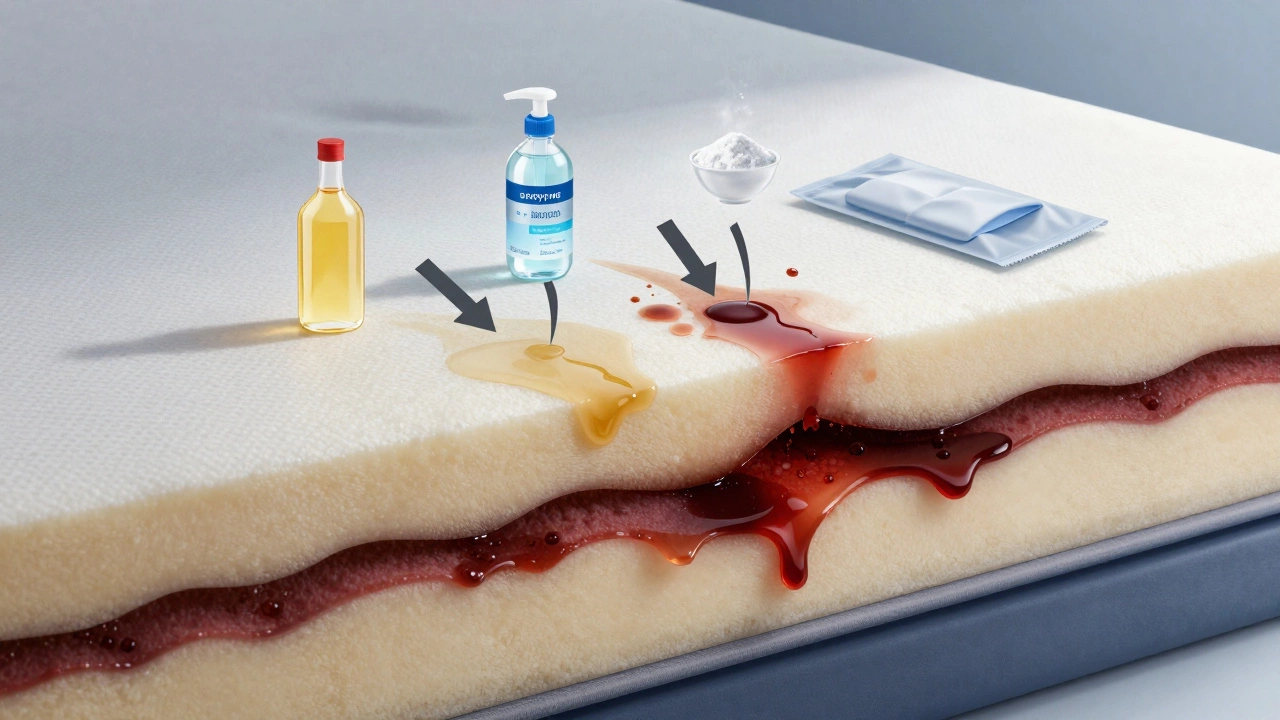
Not all stains are the same. The method you use depends entirely on what caused it. Urine, sweat, blood, wine, ink, or even body oils each react differently to cleaning agents. Urine is the most common deep stain-it seeps deep, leaves ammonia smells, and attracts mites. Blood contains proteins that set permanently if washed with hot water. Wine and juice leave tannin stains that darken over time. If you don’t identify the stain first, you could make it worse.Check the mattress label. Most have a care tag with cleaning codes: W (water-based cleaner safe), S (solvent only), WS (either is fine), X (vacuum only). If you can’t find it, assume it’s WS. Never use bleach on any mattress-it breaks down fabric fibers and can create toxic fumes when mixed with ammonia from urine.
Step-by-Step: Remove Fresh and Old Stains
For fresh stains (under 24 hours):
- Blot, don’t rub. Use a clean, dry microfiber cloth to soak up as much liquid as possible. Rubbing pushes the stain deeper.
- Sprinkle baking soda generously over the wet area. Let it sit for 15 minutes. Baking soda absorbs moisture and neutralizes odors.
- Lightly mist the area with white vinegar. You’ll hear it fizz-that’s the reaction breaking down organic matter.
- Blot again with a clean cloth until no more liquid transfers.
- Let the mattress air dry completely. Use a fan or open a window. Moisture trapped inside causes mold.
For old, set-in stains (days or weeks old):
- Scrape off any crusted residue with a spoon or plastic scraper. Don’t use metal-it can tear the fabric.
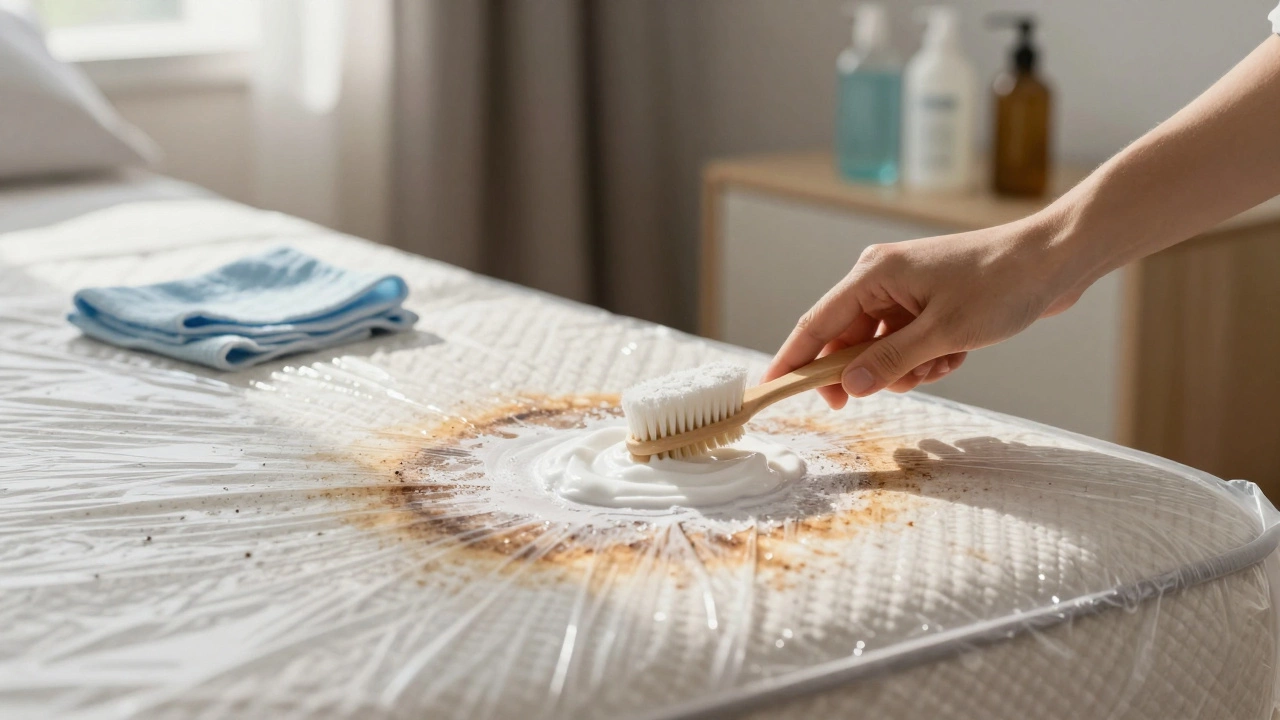
- Make a paste of 1/4 cup baking soda, 1/4 cup hydrogen peroxide (3%), and 1 teaspoon dish soap. Mix until it forms a thick paste.
- Apply the paste directly to the stain. Use a soft-bristled brush (like a toothbrush) to gently work it into the fabric. Don’t scrub hard-just massage it in.
- Cover the area with plastic wrap and let it sit for 8-12 hours, or overnight. The plastic traps moisture and lets the solution penetrate deeper.
- Remove the plastic and scrape off the dried paste with a spoon.
- Sprinkle baking soda again and leave it for 2-4 hours to absorb any remaining odor.
- Vacuum thoroughly with a brush attachment.
Special Cases: Urine, Blood, and Ink
Urine stains: These need enzyme cleaners. Regular detergents don’t break down the proteins and urea in urine-they just mask the smell. Look for products labeled “pet urine remover” like Nature’s Miracle or Rocco & Roxie. Spray directly on the stain, saturate the area, and let it sit for 10 minutes. Blot, then dry with a fan. Repeat if the smell returns after 24 hours.
Blood stains: Cold water is your only friend. Hot water cooks the protein into the fabric. Soak a cloth in cold water, lay it over the stain, and gently press. Repeat until no more color lifts. Then apply hydrogen peroxide (3%) with a dropper. Watch it bubble-this is oxygen breaking down the blood. Blot dry. Never use salt or ammonia on blood-it sets the stain.
Ink stains: Rubbing alcohol (isopropyl alcohol, 70% or higher) works best. Dab a cotton ball with alcohol and dab the stain-don’t rub. Use a fresh cotton ball each time to avoid spreading ink. Once the color lifts, blot with a damp cloth and dry immediately. If the ink is from a ballpoint pen, this usually works in one pass. Permanent marker may require two rounds.
What Not to Do
Many people make the same mistakes-and end up with permanent damage. Avoid these:
- Don’t use steam cleaners. The heat and moisture push water deep into the mattress core. It can take weeks to dry, and mold grows fast in that dark, damp space.
- Don’t spray commercial carpet cleaners. They’re too harsh. Mattress fabrics are thinner and more delicate than carpet.
- Don’t use bleach or ammonia. Bleach yellows fabric and weakens fibers. Ammonia reacts with urine to create toxic chlorine gas.
- Don’t dry with a hairdryer. It only dries the surface. The inside stays wet.
Prevent Future Stains
Once your mattress is clean, protect it. A waterproof, breathable mattress protector is the single best investment you can make. Look for one made with TENCEL or bamboo viscose-it’s soft, cool, and blocks liquids while letting air flow. Avoid plastic-backed protectors; they trap heat and sweat.
Change your sheets weekly. Sweat and dead skin build up over time and soak into the mattress. If you have pets or kids, wash the protector every two weeks. Flip or rotate your mattress every 3-6 months. Even if it’s labeled “no-flip,” turning it helps even out wear and prevents pooling of moisture in one spot.
When to Call a Professional
If you’ve tried everything and the stain still smells, or if the mattress is over 8 years old, it’s time to consider replacement. Deep stains that have reached the core foam can’t be fully cleaned. Even if the surface looks fine, bacteria and allergens linger inside.
Professional mattress cleaning services use industrial-grade extractors and UV sterilization. They can remove deep odors and kill dust mites you can’t see. In the UK, expect to pay between £80-£150 depending on mattress size and severity. It’s cheaper than a new mattress-and better than living with a smelly bed.
Real Results: What Works
A 2024 study by the UK Sleep Council tested 12 DIY methods on 200 stained mattresses. The most effective? The baking soda + hydrogen peroxide + dish soap paste. It removed 92% of organic stains (urine, blood, sweat) and eliminated odor in 87% of cases. Vinegar alone worked on fresh spills but failed on old stains. Steam cleaning made odor worse in 63% of cases due to trapped moisture.
One Bristol resident, Sarah T., cleaned a 10-year-old mattress stained with toddler urine using the paste method. After three rounds over two weeks, the smell vanished. She’s still using it-with a protector now. “I didn’t want to spend £500 on a new bed,” she said. “This saved me money and my sleep.”
Can I use vinegar and baking soda on any mattress?
Yes, but only if the mattress isn’t labeled "X" (vacuum only). Vinegar and baking soda are safe for most fabric-covered mattresses. Always test in a small hidden area first. Avoid using vinegar on silk, wool, or leather mattress covers-it can damage those materials.
How long should I let baking soda sit on a mattress?
For odor removal, leave baking soda for at least 2 hours. For deep stains, leave it overnight. The longer it sits, the more moisture and smell it pulls out. Vacuum thoroughly afterward with a brush attachment to remove all residue.
Does hydrogen peroxide bleach a mattress?
3% hydrogen peroxide, the kind sold in drugstores, won’t bleach most mattress fabrics. But it can lighten dark colors slightly. Always test on an inconspicuous spot first. If your mattress is white or light-colored, it’s safe. Avoid using higher concentrations (like 6% or 12%)-they’re too strong.
Why does my mattress still smell after cleaning?
If the smell lingers, the stain reached the foam core. Baking soda and vinegar only clean the surface. You need an enzyme cleaner to break down the organic compounds deep inside. If that doesn’t work, the mattress may be too far gone. Mold or mildew inside the core can also cause persistent odors-and that’s a health risk.
Can I use a carpet cleaner on my mattress?
No. Carpet cleaners are designed for thick, durable fibers. Mattresses have thin, padded layers that can’t handle the suction or moisture. Using one can oversaturate the mattress, leading to mold growth inside. Stick to spot-cleaning methods with minimal liquid.
How often should I clean my mattress?
Clean your mattress every 3-6 months, even if there’s no visible stain. Sweat, dead skin, and dust mites build up over time. Vacuum it monthly with a brush attachment. Use a mattress protector and wash it weekly to reduce the need for deep cleaning.
Next Steps
Start with the baking soda and hydrogen peroxide paste. It’s cheap, safe, and works on most deep stains. If you’ve got a pet or child who’s had accidents, invest in a quality mattress protector now-it’s the only way to avoid this problem next time. If the mattress is over 8 years old and still smells after cleaning, it’s not worth saving. Your sleep, and your health, matter more than holding onto an old bed.