Fabric Couch Cleaning Method Selector
Most people think the only way to clean a fabric couch is to haul it to a professional cleaner or risk ruining it with water. But you don’t need to wash your couch to get it looking fresh. In fact, washing fabric upholstery can lead to mold, shrinkage, or permanent stains if the fabric isn’t designed for it. The good news? You can remove dirt, odors, and even tough stains using simple tools you already own.
Start with Vacuuming - It’s Not Optional
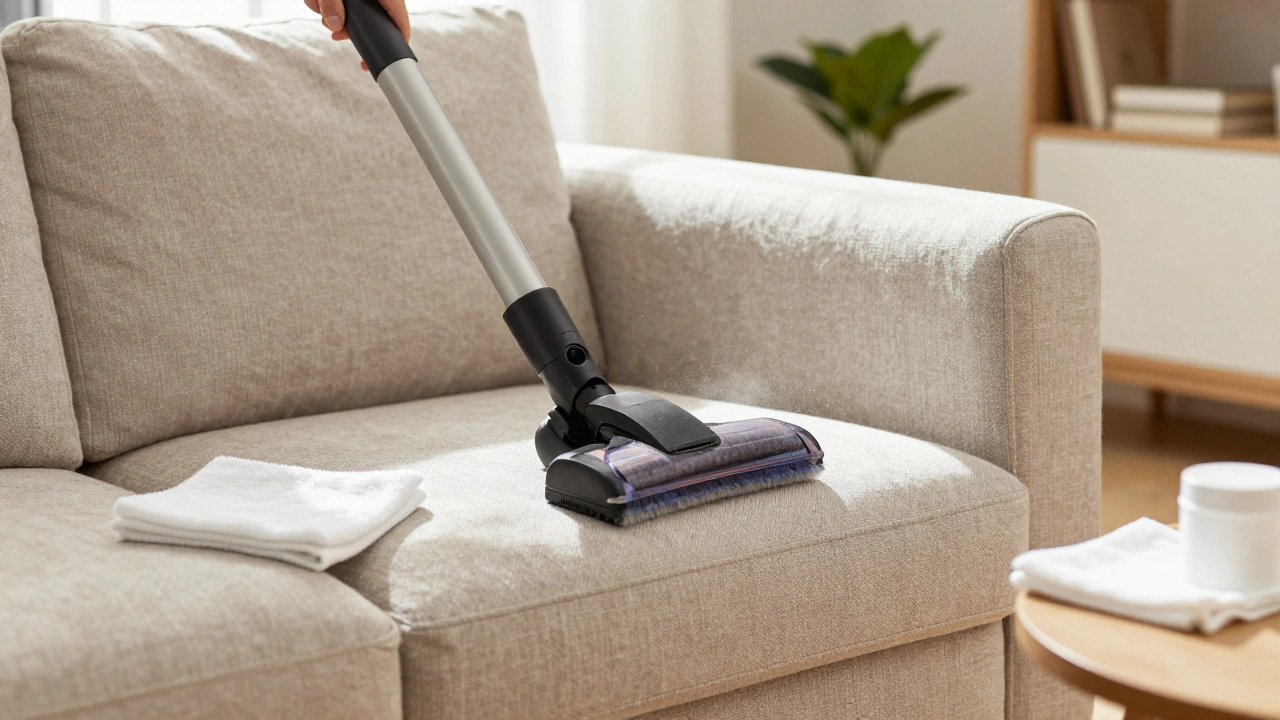
Before you even think about stain removal, vacuum your couch thoroughly. Dust, crumbs, pet hair, and skin flakes build up deep in the fabric. A regular vacuum won’t cut it - you need a brush attachment and a crevice tool. Run the brush attachment over the entire surface, including cushions, arms, and backrests. Then use the crevice tool along seams and between cushions where dirt hides. Do this every week if you have pets or kids. People who vacuum weekly report their couches stay clean for 3-4 months longer than those who skip it.
Why does this matter? Dirt acts like sandpaper. Every time you sit down, those particles grind into the fibers and break them down. Over time, your couch looks worn, faded, and feels rough. Vacuuming isn’t just about looks - it’s about extending the life of your furniture.
Identify Your Fabric Type
Not all fabric couches are made the same. Look for a small tag on the underside of a cushion or along the frame. It’ll have a code: W, S, SW, or X.
- W means water-based cleaners are safe.
- S means only solvent-based cleaners (like dry cleaning fluid) should be used.
- SW means either water or solvent works.
- X means vacuum only - no liquids or chemicals.
If you can’t find the tag, test a hidden spot. Dab a tiny bit of water on an inconspicuous area - like the back of a cushion. Wait 5 minutes. If the fabric darkens but doesn’t stain or warp, it’s probably W or SW. If it leaves a ring or feels stiff after drying, stick to solvent-only cleaning.
Spot Cleaning Stains the Right Way
Spills happen. Coffee, wine, pet accidents - they all end up on the couch. The key is to act fast and use the right method.
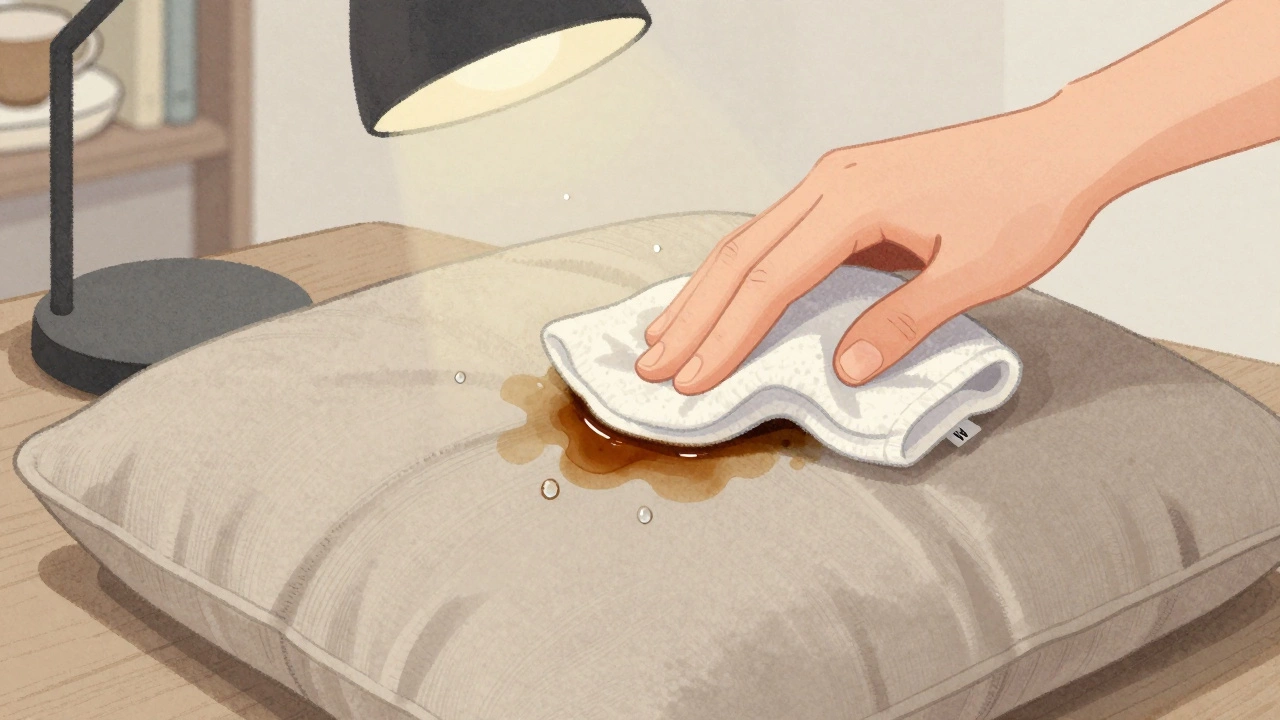
For water-safe fabrics (W or SW): Mix one teaspoon of mild dish soap with two cups of cool water. Dip a clean white cloth into the solution, then wring it out until it’s barely damp. Blot - don’t rub - the stain. Rubbing pushes the stain deeper. Keep blotting with a clean section of the cloth until the stain lifts. Then use a second cloth dampened with plain water to rinse away soap residue. Let it air dry completely.
For solvent-only fabrics (S): Use rubbing alcohol or a commercial upholstery cleaner labeled for S-code fabrics. Pour a small amount onto a white cloth and dab gently. Don’t soak the fabric. Blot until the stain fades. Alcohol evaporates quickly and won’t leave residue. Avoid vinegar, baking soda, or hydrogen peroxide on solvent-only fabrics - they can discolor or damage the fibers.
For pet urine: Blot up as much as you can with paper towels. Then sprinkle baking soda generously over the area. Let it sit for 15 minutes to absorb odor. Vacuum it up. Then spray the spot with a 50/50 mix of white vinegar and water. Blot again. The vinegar smell fades as it dries. For stubborn cases, use an enzyme cleaner designed for pet stains - these break down the proteins that cause odors.
Deodorizing Without Water
Even if your couch doesn’t have visible stains, it can still smell musty or like old pets. Baking soda is your best friend here. Sprinkle a light, even layer over the entire surface. Let it sit for at least 20 minutes - overnight is better if you can wait. Then vacuum it up with the brush attachment. This pulls out odors trapped deep in the fibers.
For a light fresh scent, add a few drops of essential oil (like lavender or tea tree) to the baking soda before sprinkling. Tea tree oil also has natural antimicrobial properties. Avoid spray air fresheners - they sit on top of the fabric and can attract more dirt.
Use a Fabric Refreshing Spray
Every few weeks, give your couch a light mist with a homemade fabric refresher. Mix one cup of distilled water, one tablespoon of rubbing alcohol, and 5-10 drops of your favorite essential oil in a spray bottle. Shake well. Hold the bottle 12 inches away and spray lightly over the surface. Don’t soak it. Let it air dry. This lifts surface dust and leaves a subtle, clean scent.
Commercial sprays often contain silicone or waxes that build up over time and make fabric sticky or attract more dirt. Homemade versions avoid that problem.
Brushing and Fluffing for Long-Term Care
After cleaning, use a clean, dry toothbrush or a soft-bristled upholstery brush to gently lift the fabric nap. This helps the fibers stand back up after being disturbed during cleaning. Brush in the direction of the weave - usually from back to front on seat cushions. This restores the texture and prevents a flat, matted look.
Flip and rotate cushions every month. This evens out wear and prevents permanent indentations. If your couch has removable covers, check the label. Some can be spot-cleaned or even machine-washed - but only if the tag says so. Never assume.
What Not to Do
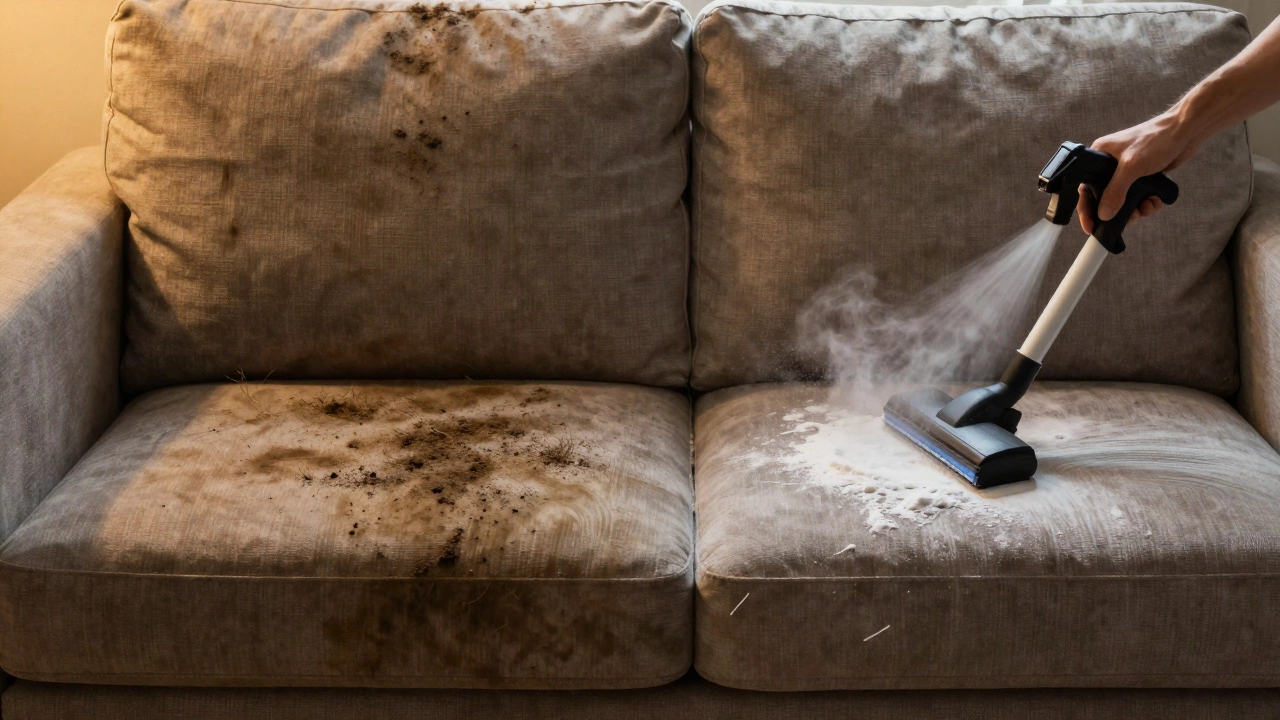
Don’t use a steam cleaner on fabric upholstery unless the manufacturer says it’s safe. Steam can force water deep into the foam and frame, causing mold or warping. Many people ruin their couches this way.
Don’t use bleach, ammonia, or carpet cleaners. They’re too harsh for upholstery and can strip dyes or weaken fibers.
Don’t scrub. Blotting is the only safe method. Scrubbing frays the threads and makes stains spread.
Don’t leave wet cloths on the fabric. Even water-safe fabrics can develop water rings if left damp too long.
When to Call a Professional
You can handle most cleaning yourself - but there are times when you need help. Call a professional if:
- Stains are older than a week and won’t lift
- The couch has a deep odor that baking soda doesn’t fix
- The fabric is velvet, silk, or brocade - these require special handling
- You’ve tried everything and the couch still looks dull or stained
Professional upholstery cleaners use extractors that remove moisture quickly and apply pH-balanced cleaners designed for specific fabrics. They charge $100-$200 for a standard three-seater, depending on your area. It’s worth it if your couch is expensive or sentimental.
Prevent Future Messes
Prevention is easier than cleaning. Use washable throw blankets or slipcovers - they’re cheap and easy to swap out. Keep a small stain removal kit nearby: a microfiber cloth, a bottle of mild soap, baking soda, and a small brush. Keep pets off the couch with a training mat or barrier. If you have kids, set up a snack zone away from the living room.
Regular maintenance cuts cleaning time in half. Vacuum once a week. Spot-clean spills the moment they happen. Deodorize with baking soda every 6 weeks. Your couch will look newer longer - and you’ll never have to wash it.
Can I use vinegar to clean my fabric couch?
Yes, but only on water-safe fabrics (W or SW). Mix equal parts white vinegar and water, spray lightly, and blot. Never use vinegar on solvent-only (S) or unknown fabrics - it can damage dyes and fibers. Always test in a hidden spot first.
How often should I clean my fabric couch?
Vacuum weekly. Spot-clean spills immediately. Use baking soda to deodorize every 6 weeks. A deep clean with a fabric refresher spray every 2-3 months keeps it looking fresh. Don’t wait for stains to set - that’s when cleaning gets harder.
Will baking soda damage my couch?
No, baking soda is safe for all fabric types. It’s a natural odor absorber and won’t stain or wear down fibers. Just make sure to vacuum it up completely afterward. Leftover powder can attract dirt over time.
Can I use a carpet cleaner on my fabric couch?
No. Carpet cleaners are too aggressive for upholstery. They often contain strong detergents and leave residue that attracts dirt. They can also over-wet the cushions, leading to mold. Stick to cleaners made for fabric sofas or use the gentle methods outlined here.
Why does my couch still smell after cleaning?
Odors often come from deep in the foam or frame, not just the fabric. Baking soda only treats the surface. For lingering smells, especially from pets or smoke, use an enzyme cleaner designed for upholstery. These break down organic matter at the source. If the smell persists, the padding may need replacement.