Upholstery Stain Removal Guide
Select a Stain Type
Choose the type of stain you're dealing with to get the right cleaning instructions.
Important Notes
Always test cleaning solutions in an inconspicuous area first. Never use hot water on wine stains or bleach on any fabric.
Select a stain to see cleaning instructions
Use the options on the left to view specific cleaning solutions for common upholstery stains.
Your couch has seen better days. The cushions are flat, the fabric is stained, and that one spot you keep pretending isn’t there? It’s gotten worse. But before you head to the furniture store for a new one, stop. You don’t need to spend £800 on a replacement. Most couches can be brought back to life with a few hours of elbow grease and the right tools. This isn’t about magic tricks-it’s about understanding fabric, stains, and how to clean them without wrecking your sofa.
First, figure out what your couch is made of
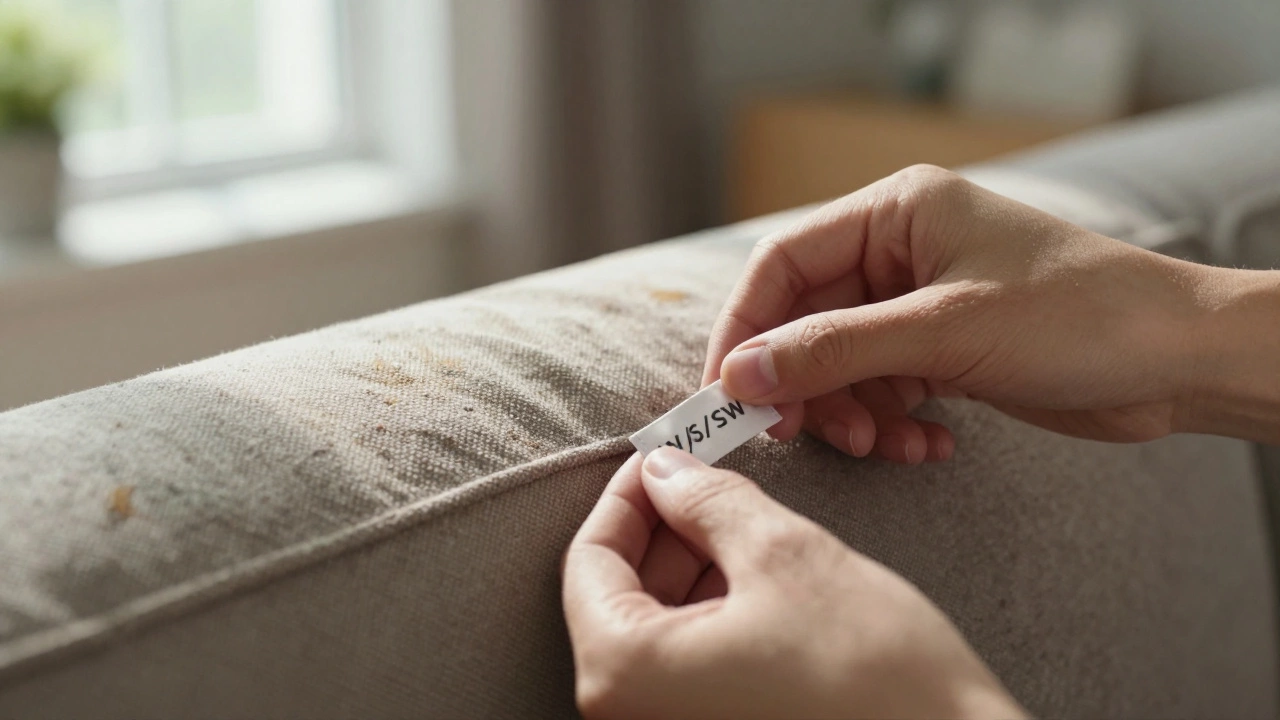
You can’t clean a fabric sofa the same way you clean a leather one. And if you use the wrong method, you could ruin it for good. Check the tag hidden under the cushions or along the bottom edge. It’ll have a code: W, S, SW, or X.
- W means you can use water-based cleaners. Most cotton, polyester, and microfiber couches fall here.
- S means solvent-only cleaners. Wool, silk, or delicate synthetics need this. No water.
- SW means either water or solvent. You’ve got flexibility.
- X means vacuum only. No liquids. Don’t even think about steam.
If the tag is missing, test a hidden spot. Dab a tiny bit of water on an inconspicuous area-like the back of a cushion-and wait 10 minutes. If it leaves a dark mark or the fabric feels stiff after drying, skip water. Go with a solvent cleaner.
Start with a deep vacuum
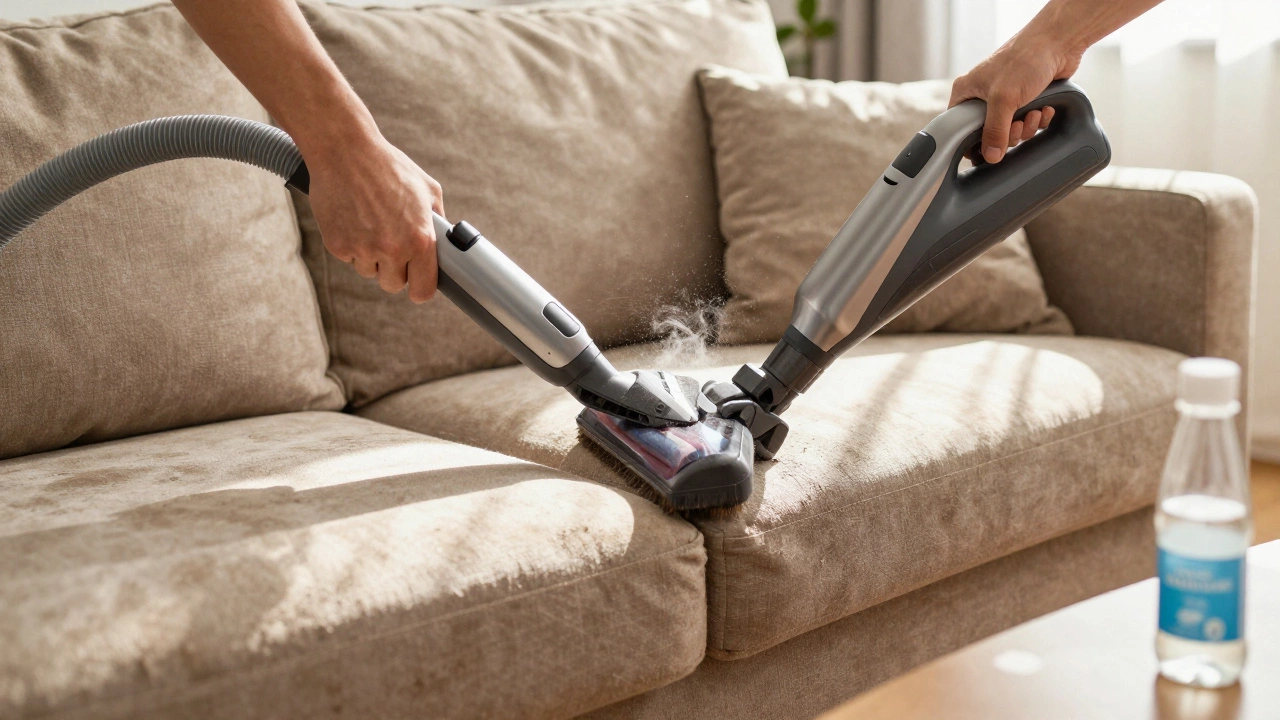
Before you even think about cleaning stains, remove the dirt. Dust, crumbs, pet hair, and dead skin build up deep in the fabric. A regular vacuum won’t cut it. Use the upholstery tool with a brush attachment. Go slow. Run it over every inch, especially the seams and crevices where crumbs hide. If you have a vacuum with a HEPA filter, use it. It’ll trap allergens instead of blowing them back into the air.
Pro tip: Flip the cushions and vacuum underneath. People forget this, but that’s where the real grime lives. Also, remove any removable covers and vacuum them separately. Wash them later if the label says it’s safe.
Tackle stains with the right solution
Not all stains are the same. Coffee? Wine? Pet accidents? Each needs a different approach.
Coffee, tea, or juice stains: Mix one cup of warm water with a teaspoon of mild dish soap. Dip a clean white cloth into the solution, then blot-not rub-the stain. Work from the outside in to avoid spreading. Blot with a dry cloth until the moisture is gone. Repeat if needed.
Red wine or berry stains: Blot up as much as you can with paper towels. Then mix one tablespoon of white vinegar, one tablespoon of dish soap, and two cups of cold water. Spray lightly on the stain and blot again. Don’t use hot water-it sets the stain. If the stain lingers, sprinkle baking soda over it after blotting. Let it sit for an hour, then vacuum it up.
Grease or oil stains: Sprinkle cornstarch or talcum powder thickly over the stain. Let it sit overnight. The powder soaks up the oil. In the morning, vacuum it off. If a ring remains, use a solvent-based cleaner meant for upholstery. Test it on a hidden spot first.
Pet urine: Act fast. Blot up the liquid with paper towels. Don’t rub. Mix one part white vinegar with two parts water and spray it on the area. Let it sit for five minutes, then blot again. Sprinkle baking soda over the spot and leave it overnight. Vacuum in the morning. If the smell returns, you might need an enzymatic cleaner designed for pet odours-these break down the urine proteins so they don’t come back.
Refresh the fabric with steam or baking soda
Even if your couch doesn’t have visible stains, it’s holding onto smells and dust. Steam cleaning works wonders on W and SW fabrics. Use a handheld steam cleaner with a fabric attachment. Go in slow, overlapping strokes. Don’t soak the fabric-just dampen it. Steam kills dust mites and lifts odours without chemicals.
If you don’t have a steamer, try baking soda. Sprinkle a light, even layer over the entire couch. Let it sit for at least 30 minutes (overnight is better). Then vacuum it up thoroughly. It pulls out odours from deep in the fibres. Works great for smoker smells, food odours, and mildew.
Revive flattened cushions
Flat cushions are the death of a good couch. They happen when the foam inside breaks down or the stuffing shifts. First, remove the cushion covers. Shake out the filling. If it’s loose fibre, you can buy new polyester fill from a craft store and add a few handfuls to plump it up. Sew the opening back up.
If the cushion has a zipper, open it and check the foam. If it’s crumbling or no longer springs back when you press it, replace it. Foam inserts cost between £15 and £40 depending on size. Cut the new foam to match the old one with a serrated knife. Slip it back in and rezip. Your couch will feel like new again.
Protect it before it gets dirty again
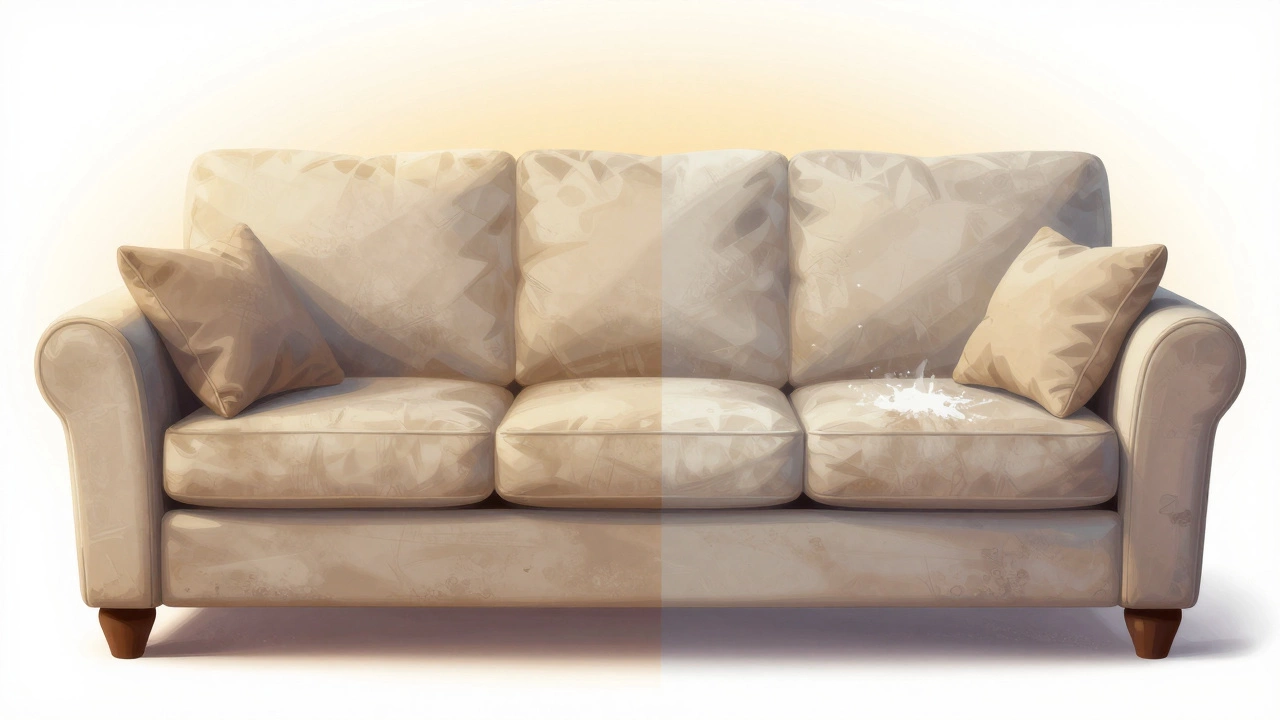
Once your couch looks good, don’t let it go back to its old state. Use a fabric protector spray. Brands like Scotchgard or Vectra are designed for upholstery. Spray it evenly from 6-8 inches away. Let it dry completely before sitting on it. It creates a barrier that repels spills and makes future cleaning easier.
Also, rotate your cushions every week. That way, the wear spreads evenly. And keep a small stain removal kit handy-microfiber cloths, white vinegar, baking soda, and a mini vacuum. When a spill happens, deal with it in five minutes. That’s the secret to keeping your couch looking fresh for years.
When to call a pro
You can do a lot yourself, but some jobs need experts. If your couch has deep-set stains that won’t budge, or if the fabric is silk, velvet, or another delicate material, hire a professional upholstery cleaner. They have industrial steamers, extraction tools, and specialty cleaners that won’t damage the fabric.
Also, if the frame is wobbly or the springs are squeaking, that’s a structural issue. No amount of cleaning will fix broken springs or loose joints. In that case, consider reupholstering or replacing the couch. But if it’s just dirty and flat? You’ve got this.
What not to do
- Don’t use bleach. It’ll fade the fabric and weaken the fibres.
- Don’t scrub hard. You’ll wear out the material and make stains spread.
- Don’t use hairdryers or heaters to dry the couch. That can shrink fabric or warp foam.
- Don’t ignore the underside. Dirt builds up there too, and it can transfer back to the top.
Most people give up after one failed attempt. But upholstery cleaning isn’t a one-time fix-it’s maintenance. Do it right, and your couch could last another 10 years. That’s £700 saved. And you’ll still have the one you actually like.
Can I use a carpet cleaner on my couch?
Only if your couch fabric is labeled W or SW, and you use the upholstery attachment-not the carpet one. Carpet cleaners are too powerful for most sofa fabrics and can leave them too wet. They also use stronger detergents that can damage delicate fibres. Stick to a handheld steam cleaner or spot cleaner designed for upholstery.
How often should I clean my couch?
Vacuum it every two weeks to keep dust and hair down. Do a full deep clean with baking soda or steam every six months. If you have pets or kids, clean it every three to four months. Stains should be treated immediately-waiting more than 24 hours makes them harder to remove.
Why does my couch smell after cleaning?
If it smells musty or sour after cleaning, it’s because the fabric didn’t dry fully. Moisture trapped in the foam or frame breeds mildew. Always let your couch air out for at least 4-6 hours after cleaning. Open windows, use fans, and avoid sitting on it until it’s completely dry. If the smell returns after drying, you might have a deeper issue like pet urine soaking into the padding-then you’ll need an enzymatic cleaner.
Can I wash removable couch covers in the washing machine?
Only if the care label says so. Most cotton or polyester covers can be washed on a gentle cycle with cold water and mild detergent. Never use fabric softener-it coats the fibres and makes them less absorbent. Air dry them flat or hang them up. Never put them in the dryer unless the label says it’s safe. Heat can shrink or warp the fabric.
Will baking soda damage my couch fabric?
No, baking soda is safe for most upholstery fabrics. It’s a natural deodoriser and mild abrasive. Just make sure to vacuum it up thoroughly afterward. Leftover powder can attract moisture and create clumps. It won’t fade colours or weaken fibres. It’s one of the safest, cheapest ways to refresh your couch.