
Office Tidiness Strategy Finder
Describe your current situation to find the most effective approach:
Recommended Approach:
Quick Tips for a Tidier Workplace
- Set clear, written standards instead of relying on "common sense."
- Lead by example-you can't ask for a clean desk if yours is buried in papers.
- Focus on the "why" (health, focus, image) rather than the "what" (crumbs, dust).
- Create easy-to-access cleaning stations so there are no excuses.
Defining the Standard with a Clean Desk Policy
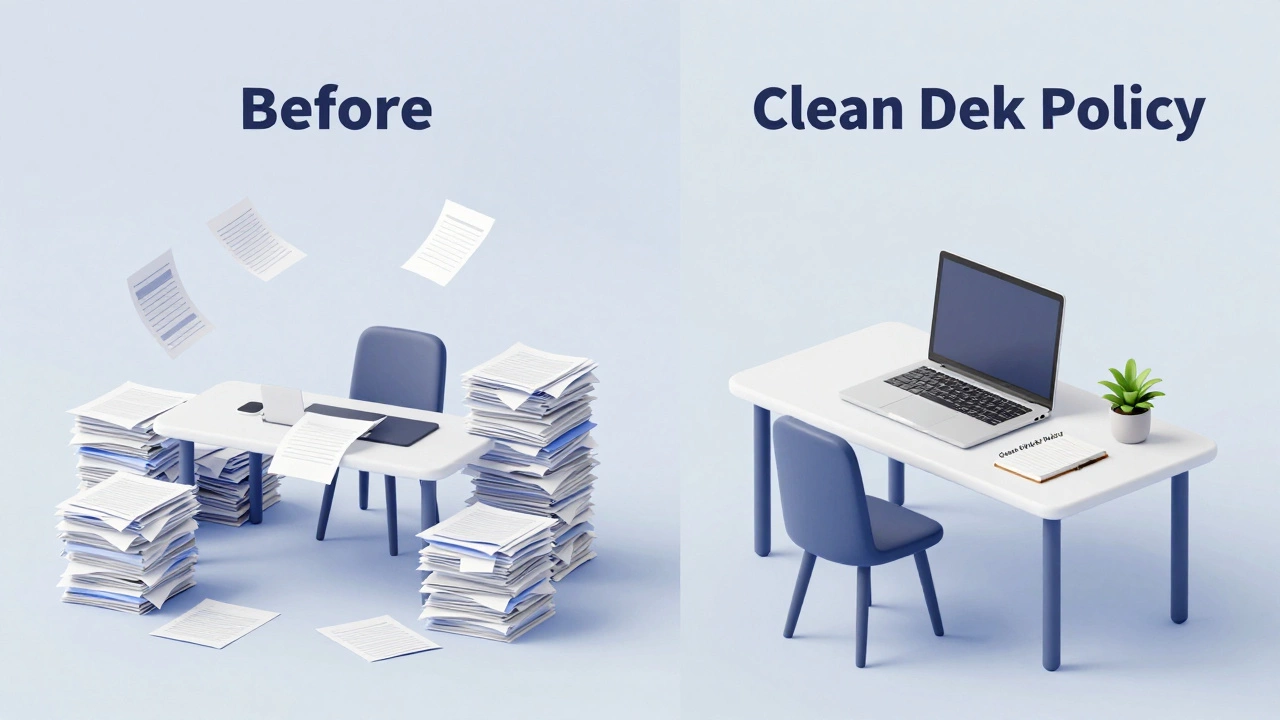
The biggest mistake managers make is assuming everyone has the same definition of "clean." To one person, clean means no trash on the floor. To another, it means every pencil is aligned. To stop the guessing game, you need a Clean Desk Policy is a set of guidelines that requires employees to clear their workspace of clutter and sensitive information at the end of each day. This isn't about micromanaging; it's about creating a baseline.
When you implement a policy, don't just send a dry email. Explain that a clear surface reduces visual distractions. According to a study by the Princeton University Neuroscience Institute, physical clutter in your surroundings competes for your attention, which actually degrades your ability to focus and process information. If you frame the request as a way to help the team work better, people are far more likely to buy in than if you just tell them to put their mugs away.
The Art of the Gentle Reminder
How you deliver the message determines whether your team listens or rolls their eyes. Avoid the "blast email" where you scold the whole office for the mistakes of two people. This alienates your tidiest employees and makes the messy ones feel like the message isn't specifically for them. Instead, try the "observation" approach.
If you see a mess in the Breakroom is a shared office space used for eating, drinking, and relaxing during breaks, don't say, "Who left this mess?" Instead, say, "I've noticed the breakroom is getting a bit cluttered lately. Let's all make sure we clear our spots before we head out so the space stays usable for everyone." By focusing on the collective benefit, you remove the shame and replace it with shared responsibility.
Creating a System That Actually Works
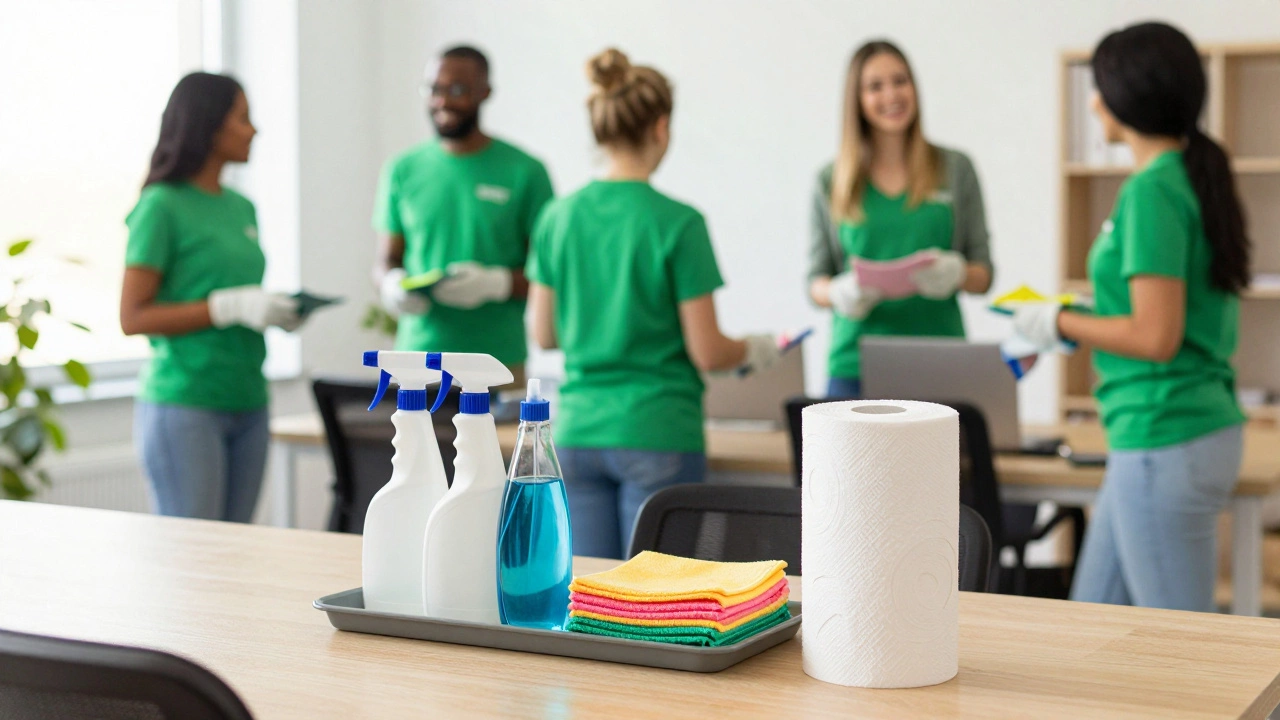
People often neglect cleaning because the friction is too high. If the trash can is across the room or the wipes are locked in a cabinet, they won't use them. You need to optimize for laziness. Place Cleaning Stations is dedicated areas equipped with sanitizers, paper towels, and surface cleaners for immediate use in high-traffic areas. If the tools are right in front of them, the barrier to cleaning is gone.
Consider a rotation system for communal areas, but avoid the "chore wheel" if it feels too juvenile. Instead, frame it as a "Community Lead" role for the week. The lead isn't there to scrub floors-they are just the point person to ensure the Office Cleaning Service is a professional company hired to perform deep cleaning and sanitation of business premises has clear surfaces to actually clean. If the desks are covered in papers, the cleaners can't wipe the dust, rendering the paid service useless.
| Approach | Pros | Cons | Best For |
|---|---|---|---|
| The Direct Request | Fast, clear, no ambiguity | Can feel aggressive or micro-managing | Repeat offenders |
| The Policy Manual | Sets a permanent standard | Can be ignored if not enforced | Onboarding new hires |
| The Cultural Shift | Long-term behavioral change | Takes time to implement | Growing teams |
Handling the Repeat Offenders
There is always one person who thinks their desk is their personal landfill. When a general reminder doesn't work, you have to move to a private, one-on-one conversation. The key is to tie the cleanliness to professional image and safety. For example, if they work in a client-facing role, point out that a messy desk can be perceived as a lack of attention to detail by a customer.
If the issue is a Health Hazard is a condition or situation that increases the risk of illness or injury, such as rotting food in a desk drawer, you can be firmer. Mention that old food attracts pests and affects the air quality for everyone. When you make it about the health of the team rather than your personal preference, the employee has less room to argue.
Integrating Hygiene into Company Culture
The best way to keep an office clean is to make it a value, not a rule. When you celebrate "Clean-up Fridays" or give a small reward to the tidiest department of the month, you gamify the process. You can even integrate this into your Employee Handbook is a formal document outlining company policies, expectations, and behavioral standards so it's clear from day one.
Remember that some people struggle with organization due to neurodiversity, like ADHD. In these cases, a strict "everything must be hidden" rule can be stressful. Offer flexibility-perhaps a designated "clutter bin" where they can keep their active projects, provided the rest of the surface is clear. This shows you care about the result (a clean office) but are empathetic to how different people work.
What if an employee refuses to clean their desk?
Start with a private conversation to understand if there is a barrier. If the behavior continues, treat it as a performance issue. A messy workspace often correlates with disorganization in work tasks. Document the requests and link the lack of tidiness to a breach of the company's professional standards policy.
Should I pay for a professional cleaning service if employees are messy?
Yes, but they are not a substitute for employee tidiness. Professional cleaners handle sanitation (vacuuming, disinfecting, bathrooms), but they generally won't sort through a person's piles of paper or wash dirty dishes. Employees must handle "tidying," while the service handles "cleaning."
How do I stop people from leaving dirty dishes in the sink?
The most effective method is removing the "holding area." If you have a dishwasher, make it the rule that everything goes straight in-no soaking in the sink. If you don't have one, provide high-quality sponges and a clear "wash and put away" sign. If it persists, implement a "clear the sink by 4 PM" rule.
Is it too harsh to give a warning for a messy desk?
It depends on the environment. In a medical or legal office, a messy desk is a compliance and security risk (confidentiality). In a creative agency, a bit of chaos is normal. However, if the mess affects others (smells, pests, or blocked walkways), a formal warning is justified after informal reminders fail.
How often should we have a deep-clean day?
Quarterly deep-clean days are usually sufficient. This is a time for employees to purge old files, wipe down keyboards, and organize drawers. Scheduling it on a Friday afternoon allows the team to bond over the process and start the next quarter with a fresh slate.
Next Steps for Managers
If you are dealing with a chaotic office right now, don't try to fix everything overnight. Start by auditing the current state of your breakroom and common areas. Identify the three biggest pain points-maybe it's the microwave splatter or the piles of mail-and address those first. Once the team sees a visible improvement in the environment, they'll be more open to a broader office cleaning strategy that keeps the space professional and inviting for everyone.