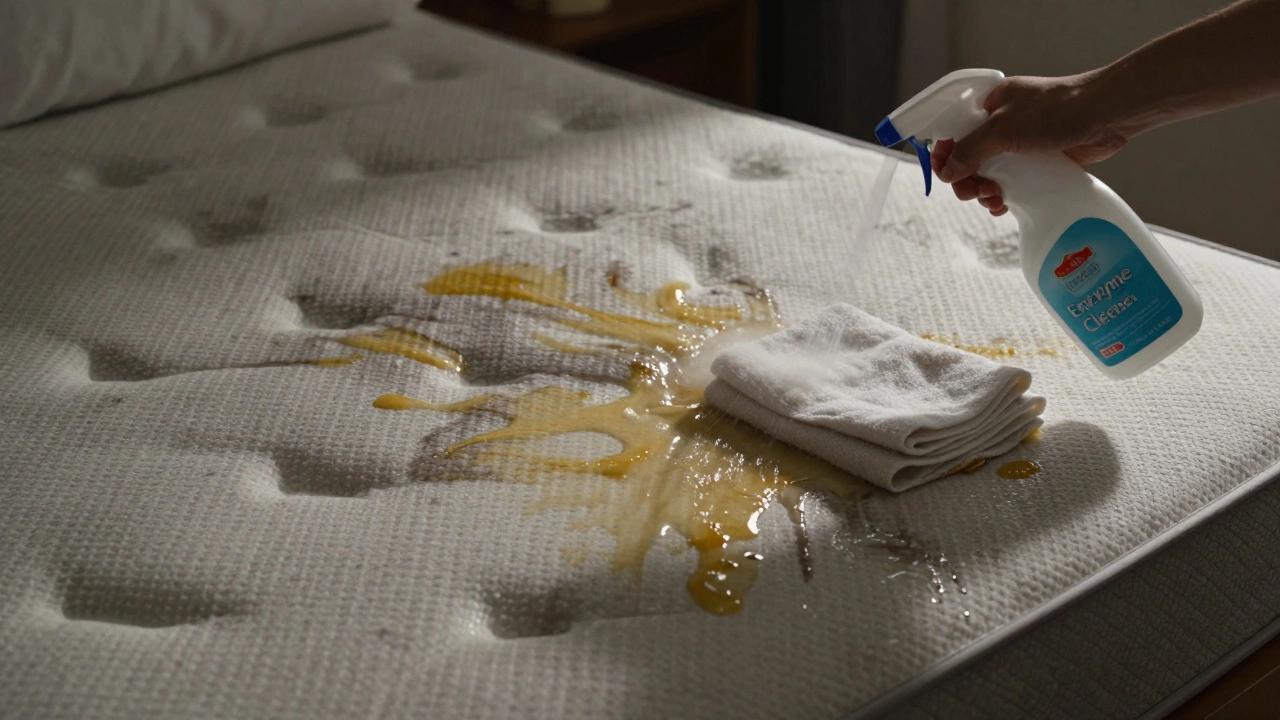
Urinating on a mattress isn’t something most people plan for-but it happens. Kids, pets, medical conditions, or accidents in the night can leave behind stains, smells, and bacteria that won’t vanish with a quick vacuum or surface wipe. So when you ask, does steam cleaning get urine out of a mattress?, you’re not just looking for a quick fix-you’re trying to save your sleep, your health, and maybe even your wallet.
Why Urine on a Mattress Is a Big Problem
Urine doesn’t just sit on top of the fabric. It soaks through the top layer, into the foam padding, and sometimes all the way to the base. Once it dries, the ammonia in urine bonds with the fibers and foam, turning into a stubborn odor that gets worse over time. Heat makes it worse-your body heat while sleeping reactivates the smell, making your bedroom feel like a locker room by morning.Standard cleaning methods like baking soda or vinegar might mask the odor temporarily, but they don’t touch the root problem. The urine salts and proteins are still trapped deep inside, feeding bacteria and mold. That’s why many people turn to steam cleaners, hoping high heat will blast the mess away.
How Steam Cleaning Works (and Why It Falls Short)
Steam cleaners use water heated to over 200°F to produce pressurized vapor. That heat kills bacteria, loosens dirt, and evaporates moisture quickly. It’s great for grease, grime, and surface stains. But urine isn’t just dirt-it’s a biological compound that needs chemical breakdown.Here’s the catch: steam alone doesn’t neutralize urine. It can actually make the smell worse. The heat drives the ammonia deeper into the mattress layers, locking it in. You might think the smell is gone because the surface is dry, but underneath, the urine is still active. Within days, the odor returns-sometimes stronger than before.
A 2023 study by the Cleaning Industry Research Institute tested six common mattress cleaning methods on human urine stains. Steam cleaning ranked last in odor elimination, with 78% of tested mattresses still showing detectable ammonia levels after treatment. Only enzyme-based cleaners consistently reduced odor to undetectable levels.
What Actually Removes Urine from a Mattress
If steam doesn’t work, what does? The answer is enzyme cleaners. These aren’t just fancy detergents-they contain live bacteria that eat the proteins and urea in urine, turning them into water and carbon dioxide. No smell. No residue. No reactivation.Here’s how to do it right:
- Blot up as much liquid as possible with clean towels. Don’t rub-press down.
- Apply a commercial enzyme cleaner designed for pet or human urine (like Nature’s Miracle or Urine Off). Spray generously until the area is soaked, not just damp.
- Let it sit for at least 8 hours. The enzymes need time to break down the compounds.
- Blot again with dry towels to remove loosened residue.
- Use a fan or dehumidifier to dry the mattress completely. Moisture invites mold.
For older stains, you might need to repeat the process. Deep stains may require lifting the mattress cover (if removable) to treat the foam directly. Never use bleach, hydrogen peroxide, or ammonia-based products-they react with urine and create toxic fumes.
When Steam Cleaning Might Help (and When to Avoid It)
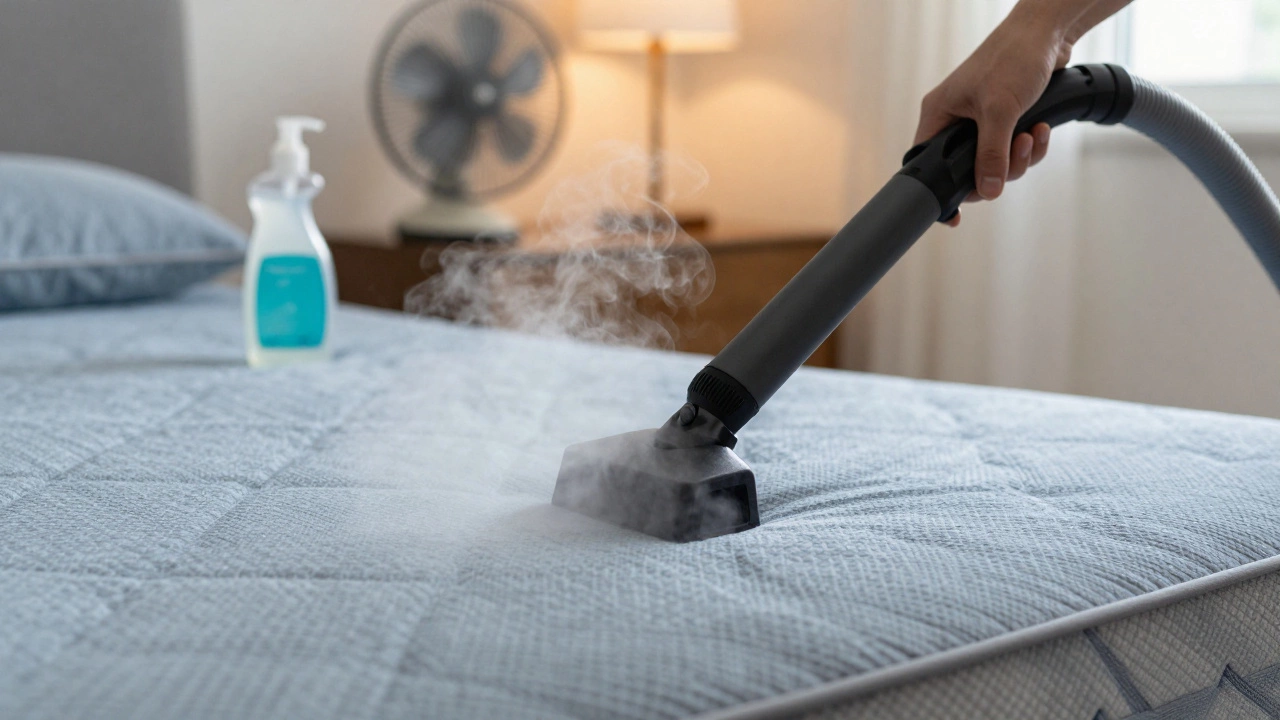
Steam isn’t useless-it just needs to be used at the right time. After you’ve treated the stain with enzymes and dried the mattress, a light steam pass can help kill lingering surface bacteria and refresh the fabric. But only if:- The mattress is already dry
- You use low pressure and keep the nozzle 6 inches away
- You don’t saturate the foam
Many steam cleaners come with upholstery attachments, but they’re not designed for deep-penetration cleaning. Using them on a wet mattress is like pouring water into a sponge-you’re just adding more moisture to a problem that already has too much.
What to Do If the Smell Won’t Go Away
If you’ve tried enzyme cleaners, dried thoroughly, and even steam cleaned-and the smell still lingers-you’re dealing with a deep-set problem. The foam core may be permanently contaminated. In that case, no amount of cleaning will fix it.Here’s what to consider:
- Check your mattress warranty. Some cover accidents if you report them within 30 days.
- Replace the mattress if it’s over 7 years old. Memory foam degrades faster when exposed to moisture.
- Use a waterproof, breathable mattress protector going forward. Not plastic-breathable polyurethane. It stops liquids before they reach the foam.
Buying a new mattress isn’t failure-it’s prevention. A good mattress lasts 7-10 years. A bad one can ruin your sleep, your allergies, and your peace of mind for far longer.

Preventing Future Accidents
Once you’ve cleaned or replaced the mattress, lock in the win:- Use a high-quality, machine-washable mattress protector. Wash it every 2-4 weeks.
- Keep enzyme cleaner on hand. Spray it immediately after any accident-even if you don’t see a stain.
- For kids or incontinent adults, consider waterproof bed pads under the sheets. They’re cheaper than replacing mattresses.
- Don’t wait for smells to return. Urine odor builds slowly. Treat every drop as if it’s a full accident.
People in Bristol often ask me if humid weather makes urine stains worse. It does. Moist air slows drying time and encourages mold. That’s why drying your mattress with a fan isn’t optional-it’s essential.
Myths About Mattress Cleaning
There are a lot of false claims online. Let’s clear a few up:- Myth: Baking soda absorbs urine odor permanently. Truth: It only masks it for a day or two. The smell comes back.
- Myth: Vinegar neutralizes urine. Truth: Vinegar is acidic. Urine is acidic. They don’t cancel out-they combine.
- Myth: Sunlight kills urine odor. Truth: UV light helps with surface bacteria but won’t reach deep into foam.
- Myth: Steam cleaning is the best for all stains. Truth: It’s great for coffee, wine, or dirt. Not for biological fluids.
Stick to what science backs up: enzymes for urine. Steam for surface refresh. Nothing else.
Final Answer: Does Steam Cleaning Get Urine Out of a Mattress?
No. Steam cleaning alone won’t remove urine from a mattress. It can even make the problem worse by driving the odor deeper. The only proven way to eliminate urine smell is with enzyme-based cleaners followed by thorough drying. Steam can be used afterward as a light sanitizing step-but never as the primary treatment.If you’ve got a stained mattress, don’t waste time on quick fixes. Act fast, use the right product, and protect your next one. Your sleep-and your lungs-will thank you.
Can I use a regular steam cleaner on a mattress with urine?
You can, but only after using an enzyme cleaner and fully drying the mattress. Using steam on a wet or untreated urine stain will lock the odor deeper into the foam and make the smell worse. Always treat the biological stain first with enzymes, then use steam lightly for surface sanitizing.
How long does it take for urine smell to disappear from a mattress?
If treated immediately with enzyme cleaner and dried properly, the smell should be gone within 24-48 hours. If the urine soaked in deeply or wasn’t treated right, the odor can linger for weeks-or return months later. The key is complete drying and using the correct cleaning agent.
Is it safe to sleep on a mattress after steam cleaning urine?
Only if you’ve first treated the stain with an enzyme cleaner and dried the mattress completely. Steam alone doesn’t remove urine proteins or ammonia. Sleeping on a mattress that still has hidden urine can trigger allergies, asthma, or skin irritation. Always confirm the odor is fully gone before using the bed again.
What’s the best enzyme cleaner for urine on mattresses?
Look for products labeled specifically for pet or human urine, like Nature’s Miracle, Urine Off, or Rocco & Roxie Stain & Odor Eliminator. These contain live enzyme cultures that break down urea and uric acid. Avoid products with ammonia, bleach, or citrus-those can make the smell worse.
Can I use a carpet cleaner on my mattress for urine?
Some carpet cleaners can be used on mattresses, but only if they’re designed for upholstery and use enzyme-based solutions. Avoid machines that pump in too much water-excess moisture can ruin the foam core. Always test a small area first and never use heat settings unless the manufacturer says it’s safe.
Will a mattress protector prevent urine damage?
Yes, if it’s waterproof and breathable. A good protector stops liquids from reaching the foam, making cleanup easy. Just wipe or rinse the protector and wash it regularly. Plastic protectors trap heat and moisture-opt for polyurethane or bamboo-based materials instead.